

Managing Editor
@ShahidNShah
@ShahidNShah
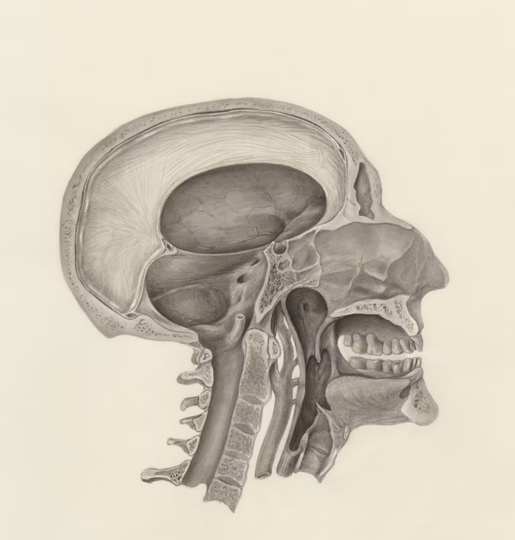
Most parents track their child’s height on a doorframe, but almost no one tracks jaw growth — and that gap has real consequences. The face and jaws develop more rapidly between birth and age twelve than at any other point in life, and the structural decisions the body makes during that window are difficult, sometimes impossible, to reverse completely once growth closes.
What makes this period especially important isn’t just aesthetics. How the jaws develop directly shapes the airway, influences sleep quality, affects speech clarity, and determines whether permanent teeth have enough room to erupt in functional positions. A child whose lower jaw lags significantly behind the upper, or whose palate narrows due to years of mouth breathing, faces compounding effects that extend well beyond a crowded smile. Understanding the biological mechanisms behind jaw growth — and knowing which signs actually warrant early evaluation — gives parents and clinicians a meaningful advantage during the years when intervention is most effective.
This article walks through how the jaws grow, what can go wrong and why, and the specific clinical thresholds that distinguish problems worth monitoring from those that benefit from active early care.
The argument for early jaw assessment isn’t simply about catching crooked teeth before they get worse. It’s about recognizing that the jaws are functional structures, not just dental scaffolding, and that abnormal growth patterns carry consequences across multiple systems simultaneously.
Consider a child who breathes primarily through the mouth due to chronic nasal congestion or enlarged adenoids. Over months and years, that postural adaptation narrows the palate, drops the tongue away from the roof of the mouth, and gradually lengthens the lower face. By the time braces seem like the obvious next step in adolescence, the underlying structural pattern has already been established — and addressing it requires significantly more effort than it would have during the growth years when the bone was still malleable.
The airway connection is clinically significant. Research published in the *American Journal of Orthodontics and Dentofacial Orthopedics* has documented associations between narrow maxillary arch width, mouth breathing, and pediatric sleep-disordered breathing — a category that includes snoring and obstructive sleep apnea in children. Sleep disruption in growing children affects attention, behavior, and cognitive development, meaning jaw structure problems can show up in classroom performance long before anyone connects them to craniofacial development.
Dental crowding is another downstream consequence that’s frequently underestimated. When arch length is insufficient for the permanent dentition, teeth don’t simply arrange themselves imperfectly — they erupt in positions that increase cleaning difficulty, create bite interferences, and in some cases accelerate wear on enamel that has decades of use ahead of it. The cost, in both complexity and treatment duration, of correcting these patterns in adulthood is substantially higher than guiding growth during childhood. Early assessment doesn’t always mean early treatment, but it does mean early knowledge — which changes the planning horizon entirely.
Jaw growth isn’t a simple expansion process where bones get bigger uniformly over time. It’s a dynamic interplay between genetic programming, mechanical forces from muscles and soft tissues, and functional demands placed on the structures daily. Bone responds to the forces acting on it — a principle called Wolff’s Law — meaning the jaws are literally shaped in part by how a child chews, swallows, breathes, and holds their tongue at rest.
The periosteal and endosteal surfaces of the jawbones undergo continuous modeling and remodeling throughout childhood. New bone is deposited where tension and growth signals demand it; existing bone is resorbed where it’s no longer mechanically needed. The result is a jaw that grows not just larger but changes in three-dimensional shape over time. Soft tissue posture — particularly tongue position and lip seal — acts as a constant low-level force that either supports or disrupts this modeling process. A tongue that rests on the floor of the mouth rather than against the palate, for example, removes a critical outward pressure on the upper arch, allowing natural muscle tension from the cheeks to constrict palatal width progressively.
The upper jaw (maxilla) and lower jaw (mandible) grow through fundamentally different mechanisms, which is why treatment approaches for each differ. The maxilla is part of the midface complex and grows primarily through sutural growth — bone deposition at the sutures connecting it to the surrounding skull. Because these sutures remain relatively responsive to orthopedic force well into early adolescence, the upper jaw can be widened or repositioned using appliances that exploit sutural patency. This is why palatal expanders work most predictably before the mid-palatal suture fuses, typically between the mid-teens.
The mandible, by contrast, grows largely through endochondral ossification at the condylar cartilage — the growth center at the jaw joint. Mandibular growth is more strongly governed by genetic factors and follows its own trajectory relative to the maxilla. When the lower jaw grows deficiently or excessively compared to the upper, the resulting Class II or Class III skeletal pattern reflects a mismatch that can be modified functionally during growth but becomes a surgical consideration if left unaddressed until adulthood.
Jaw growth doesn’t proceed at a constant rate. Two windows are particularly important clinically: the early mixed dentition period (roughly ages six to nine, when primary and permanent teeth coexist) and the pubertal growth spurt (approximately ages ten to twelve in girls and twelve to fourteen in boys).
The early mixed dentition window matters because skeletal problems — particularly transverse discrepancies like posterior crossbites — are easiest to correct when the sutures are most responsive and the child is cooperative enough for appliance wear. The pubertal spurt matters because it’s the last period of substantial mandibular growth, making it the final opportunity to use functional appliances that redirect jaw growth direction. Clinicians often time Class II functional appliance therapy to coincide with this spurt for maximum effect. Because girls enter this window one to two years earlier than boys on average, the ideal evaluation age differs slightly by sex — a detail that often goes unmentioned in general screening guidance.

Understanding the growth mechanisms described above makes the most common jaw problems easier to interpret. These aren’t random misfortunes — most have identifiable causes that, when caught early, inform both the timing and type of intervention.
Posterior crossbite is among the most consequential early problems. It occurs when the upper arch is too narrow relative to the lower, causing one or both sides of the back teeth to bite inside the lower teeth rather than outside. Beyond the mechanical bite problem, many children with crossbites develop a functional shift — a sideways displacement of the jaw on closing — to find a more comfortable bite position. Over time, this shift can drive asymmetric jaw growth, with the condyle on the shifted side modeling differently than the other. Correcting the crossbite early eliminates the functional shift and allows symmetric growth to resume.
Open bite, where the front teeth don’t overlap vertically when the back teeth meet, is strongly associated with prolonged thumb sucking, finger habits, or pacifier use beyond ages three to four. The tongue can also perpetuate an open bite through a forward resting posture or an adaptive swallowing pattern that pushes against the front teeth. Habit cessation alone resolves many mild open bites in younger children because the inherent vertical growth potential can close the gap — but the longer the habit persists, the more skeletal the open bite becomes and the less likely it is to self-correct.
Class II patterns, where the lower jaw sits behind the upper, often reflect a combination of genetics, forward maxillary position, and mandibular growth deficiency. Class III patterns, where the lower jaw protrudes, are more strongly heritable — families with a history of Class III growth should be aware that monitoring needs to begin earlier and continue through the pubertal spurt. A soft diet heavy in processed foods reduces the masticatory workload on developing jaws, and while the research is still evolving, some longitudinal studies suggest reduced chewing force correlates with narrower arch development over time.
The question parents most reasonably ask is not whether jaw problems exist, but whether treating them early actually changes anything meaningful — or whether waiting until all permanent teeth erupt produces equivalent results with less disruption to childhood.
The honest answer is: it depends on the problem. Some issues respond dramatically to early intervention; others benefit from monitoring without active treatment until adolescence. Knowing the difference requires evaluating specific clinical signs rather than relying on age thresholds alone.
Families navigating these decisions can benefit from consulting providers who specialize in growth-phase orthodontic assessment — orthodontic care for children involves a different clinical framework than standard adolescent treatment, focusing on skeletal modification rather than just tooth alignment.
Several findings consistently indicate that waiting is likely to worsen outcomes:
When intervention targets the right problem at the right time, the realistic benefits include redirecting maxillary or mandibular growth before it’s fixed, eliminating functional shifts that drive structural asymmetry, expanding the upper arch while sutures are still responsive (avoiding surgical expansion later), and interrupting habits before skeletal compensation becomes permanent. These are meaningful outcomes — but they have limits.
Early treatment rarely eliminates the need for comprehensive orthodontics later. What it changes is the complexity and scope of that later treatment, and in some cases the need for orthognathic surgery. The goal is not a finished result at age nine — it’s a growth trajectory that gives the permanent dentition and facial structures the best possible starting point for the adolescent phase. Parents should expect a monitoring phase after early treatment, not a conclusion.
The children who benefit most from this approach are those whose jaw growth is still actively underway and whose problem involves a skeletal component rather than purely dental crowding. For those children, the window isn’t unlimited — and knowing which side of that window a child currently sits on is exactly what early assessment is designed to determine.

Roughly one in six adults avoids the dentist entirely because of fear — not forgetfulness, not cost, but genuine psychological dread that makes the thought of sitting in that chair feel impossible. …
Posted Sep 13, 2026 Dental Care Dentistry
Connecting innovation decision makers to authoritative information, institutions, people and insights.

Medigy accurately delivers healthcare and technology information, news and insight from around the world.
Medigy surfaces the world's best crowdsourced health tech offerings with social interactions and peer reviews.
© 2026 Netspective Foundation, Inc. All Rights Reserved.
Built on Oct 27, 2026 at 6:06pm