

Managing Editor
@ShahidNShah
@ShahidNShah
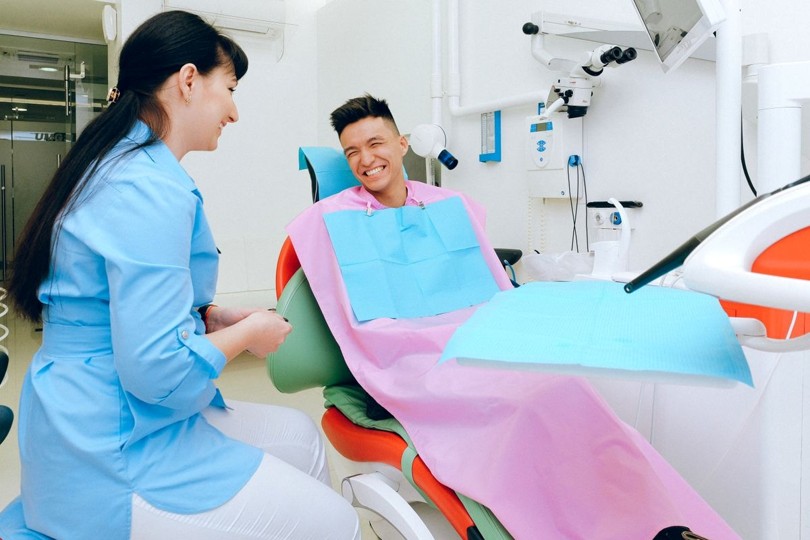
Roughly one in six adults avoids the dentist entirely because of fear — not forgetfulness, not cost, but genuine psychological dread that makes the thought of sitting in that chair feel impossible. That’s a striking figure, and the oral health consequences that follow are equally striking: untreated cavities that become root canals, gum disease that progresses silently, and conditions that affect systemic health because they simply never got addressed. The anxiety that starts as a manageable case of nerves can harden, over years of avoidance, into a full phobia that becomes increasingly difficult to overcome without structured support.
What makes this problem tractable, though, is that the anxiety typically peaks *before* you arrive. Anticipatory fear — the hours and days of mental rehearsal leading up to an appointment — often exceeds the discomfort of the procedure itself. That gap between expectation and reality is where most practical strategies do their best work. This article walks through five concrete areas: understanding the real cost of avoidance, preparing in the days beforehand, managing fear in the chair, exploring evidence-based psychological treatment, and knowing when pharmacological support is the right call.
The connection between anxiety and avoidance seems obvious once you’ve experienced it, but the downstream consequences are less visible. People who delay dental care because of fear don’t just end up with more cavities — they often end up needing more invasive treatment when they finally do go, which reinforces the very fear that kept them away. A study published in the *British Dental Journal* found that patients with high dental anxiety were significantly more likely to report tooth loss compared to those with low anxiety, a direct reflection of care deferred too long.
There’s also a physiological dimension that matters in the chair itself. Anxiety activates the sympathetic nervous system — raising heart rate, tensing muscles, heightening pain sensitivity. That last effect is particularly important: anxious patients genuinely experience more discomfort during procedures, not because they’re weaker, but because their nervous system is primed to amplify sensation. This creates a self-fulfilling cycle where each appointment confirms the fear rather than eroding it.
Who carries the highest burden? Research consistently identifies several risk factors: previous traumatic dental experiences (even minor ones from childhood), generalized anxiety disorders, a strong gag reflex, and a sense of helplessness or lack of control during care. Women and younger adults tend to report higher anxiety scores on standardized measures, though dental fear cuts across demographics broadly. Understanding where the fear originates — past experience, perceived loss of control, sensory sensitivity, or specific triggers like needles or the drill — matters because different origins respond to different strategies.
The good news is that dental anxiety is neither permanent nor untreatable. Every approach covered in this article — from simple preparation habits to formal psychotherapy — has a demonstrated evidence base. The question isn’t whether anxiety can be reduced, but which tools fit the severity of what you’re dealing with.
The window between scheduling an appointment and arriving for it is where anticipatory anxiety does the most damage. Left unmanaged, those days fill with catastrophic mental rehearsal — imagining pain, embarrassment, or loss of control. The strategies that interrupt this process are low-effort but require deliberate implementation.
Schedule strategically. Morning appointments on less busy days reduce the hours available for pre-appointment rumination. Choosing a time when you won’t be rushing from work or dealing with other stressors removes one layer of activation before you even arrive.
Tell your dental team in advance. This single step is disproportionately valuable. Letting the office know you experience anxiety before your arrival — ideally when booking — allows the team to adjust pacing, explain each step before performing it, and flag you for a practitioner who communicates carefully. Practices like Wenatchee Dental Arts that emphasize patient communication tend to create environments where this kind of upfront disclosure is genuinely welcome and acted upon.
Set realistic expectations, not worst-case ones. Most routine visits involve sounds and sensations that are unfamiliar rather than painful. Knowing in concrete terms what a cleaning or exam actually involves — the scraping instrument, the water spray, the light — removes the threat of the unknown. Many dental offices provide procedural walkthroughs on request; asking for one before your first visit with a new provider costs nothing.
Protect sleep and nutrition in the 24 hours prior. Sleep deprivation and low blood sugar both amplify anxiety responses measurably. Arriving tired and hungry isn’t just uncomfortable — it physiologically lowers your threshold for fear and pain perception. A light meal and a full night’s rest are legitimate preparation steps, not incidentals.
The pre-visit work described above reduces the kindling. But once you’re in the chair, you need tools that interrupt the fear response as it’s happening — tactics that lower physiological arousal and restore a sense of agency in a setting that can feel the opposite.
Diaphragmatic breathing — also called belly breathing — is one of the most effective and accessible tools for managing acute anxiety, and it works directly against the shallow, rapid breathing pattern that anxiety triggers. The protocol is simple: inhale slowly through the nose for a count of four, letting your abdomen expand rather than your chest; hold briefly for two counts; then exhale through the mouth for a count of six. That extended exhale is the key — it activates the parasympathetic nervous system, counteracting the stress response directly.
Practicing this technique before your appointment, not just during, makes it significantly more effective. Spending five minutes with it the night before and again in the waiting room means it’s already accessible when you need it. If full breathing cycles feel awkward mid-procedure, a simpler variation works: focus attention on making each exhale twice as long as each inhale, even while breathing normally through your nose.
Progressive muscle relaxation — systematically tensing and releasing muscle groups starting from your feet — pairs well with breathing if you have a few quiet minutes in the waiting room and can feel tension accumulating in specific areas.
Distraction reduces the attentional resources available to process threat signals, which is why it works. Listening to an audiobook or podcast through earbuds pulls cognitive load away from anticipating pain. Counting ceiling tiles, practicing mental arithmetic, or running through a familiar mental routine — a song, a route you know well — occupy the parts of the brain that would otherwise amplify sensory input from the procedure.
What amplifies distraction’s effectiveness is pairing it with a genuine sense of control. Establishing a stop signal with your dentist before treatment begins — raising your hand means “pause immediately, no questions asked” — changes the psychological context of the appointment fundamentally. The procedure isn’t something happening *to* you; it’s something you can interrupt. Requesting brief check-ins at natural pause points, or simply being told what comes next before it happens, reduces the helplessness that underlies much dental fear. These are easy, low-cost accommodations that most practitioners are willing to provide when asked directly.
For patients whose anxiety persists despite the self-management strategies above, or whose fear has hardened into avoidance over many years, structured psychological treatment offers a more durable path. These aren’t last resorts — for moderate to severe dental anxiety, they’re often the most efficient route to long-term change.
Cognitive-behavioral therapy (CBT) for dental anxiety works on two levels simultaneously. The cognitive component targets the distorted beliefs that fuel avoidance — assumptions like “the dentist won’t care if I’m in pain” or “something will definitely go wrong” — and replaces them with more accurate appraisals through structured examination of evidence. The behavioral component uses graded exposure: beginning with low-anxiety steps (sitting in a dental chair with no treatment occurring, then having the dentist explain instruments, then tolerating a brief exam) and progressing systematically toward more challenging procedures as tolerance builds.
A 2018 Cochrane systematic review found that CBT-based interventions significantly reduced dental anxiety and increased dental attendance compared to control conditions. Short-course CBT — sometimes as few as four to six sessions with a psychologist or trained therapist — can produce meaningful gains. This is important to know because many anxious patients assume therapy means years of work; for situational fears, the timeline is often much shorter.
The Modified Dental Anxiety Scale (MDAS) is a five-item questionnaire that takes under two minutes to complete and provides a validated score that distinguishes moderate anxiety from severe phobia. Scores above 19 (out of 25) typically indicate dental phobia — a level of fear that self-management strategies alone are unlikely to overcome. At that threshold, a referral to a psychologist with experience in anxiety disorders, or to a specialist dental service with sedation capabilities, is clinically appropriate rather than optional.
If you score in the high range on the MDAS or similar tools — or if you’ve cancelled multiple appointments in the past year specifically because of fear — that’s a concrete signal to raise the subject explicitly with your dentist. The conversation is straightforward: describe your pattern of avoidance, ask whether the practice offers any accommodations or can recommend a referral pathway. Most dentists welcome this disclosure; it lets them plan appropriately rather than discover mid-procedure that a patient is in significant distress.
Behavioral strategies and psychotherapy cover a broad range of anxiety severity, but some patients need pharmacological support — either temporarily, to break the avoidance cycle long enough to complete necessary care, or as an ongoing accommodation for severe phobia.
Nitrous oxide (inhalation sedation) is the lowest-intensity option: it reduces anxiety rapidly, wears off within minutes after the mask is removed, and allows patients to drive themselves home. It’s appropriate for mild to moderate anxiety and requires no pre-appointment fasting. Oral anxiolytics — typically a benzodiazepine taken an hour before the appointment — offer a step up in anxiety reduction but require someone else to provide transportation and may leave residual sedation for several hours. Conscious sedation (IV sedation) is reserved for more complex cases or severe phobia, requires specialist administration, and involves more preparation and recovery time.
The indication for escalating pharmacological support isn’t simply “feeling nervous” — it’s when anxiety prevents adequate cooperation for necessary treatment despite reasonable behavioral accommodations. Before pursuing sedation, it’s worth discussing what specific accommodations or modifications might allow treatment without it; many anxious patients succeed with behavioral strategies once those are systematically applied.
One red flag worth naming: if anxiety is accompanied by active medical conditions that affect cardiovascular response or medication metabolism, sedation options require medical clearance and careful coordination between your dentist and physician. Disclosing all medications and health history before any sedation appointment isn’t optional paperwork — it’s safety-critical.
The most useful frame for thinking about all of this: anxiety is a spectrum, and the tools available match that spectrum. Starting with preparation and breathing costs nothing, requires no referral, and works for a significant portion of anxious patients. For those it doesn’t fully resolve, structured psychological treatment and pharmacological options represent a clear escalation pathway — not a sign that something is fundamentally wrong, but a recognition that different problems require different tools.

Most people don’t think much about a single missing tooth — at least not at first. It’s in the back, it’s not visible, and the mouth feels mostly normal within a few weeks. What …
Posted Sep 13, 2026 Dental Care Dentistry
Connecting innovation decision makers to authoritative information, institutions, people and insights.

Medigy accurately delivers healthcare and technology information, news and insight from around the world.
Medigy surfaces the world's best crowdsourced health tech offerings with social interactions and peer reviews.
© 2026 Netspective Foundation, Inc. All Rights Reserved.
Built on Oct 27, 2026 at 6:06pm