

Managing Editor
@ShahidNShah
@ShahidNShah
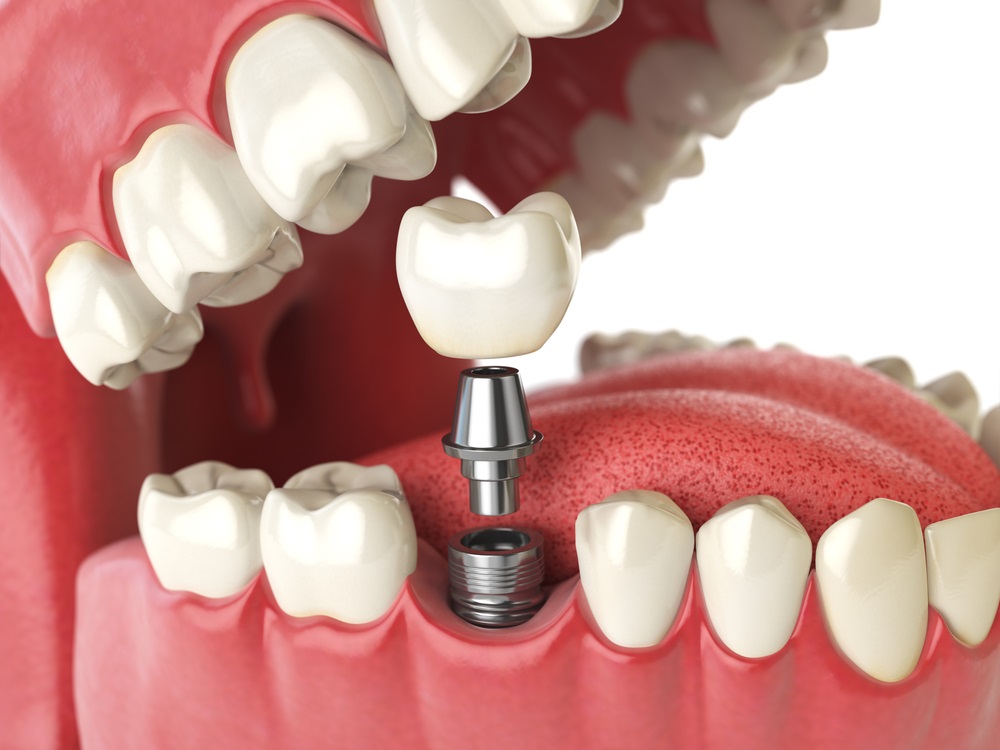
Artificial intelligence is becoming increasingly integrated into dentistry, particularly in diagnostic imaging and digital treatment planning. Dental implantology is one area where these tools have significant potential.
Modern implant planning already generates large amounts of digital information. Cone-beam computed tomography (CBCT) provides three-dimensional views of a patient’s anatomy, intraoral scanners create detailed digital models of the teeth and soft tissues, and planning software allows clinicians to virtually position implants before surgery.
AI can help analyze and organize some of this information. But while the technology may make parts of the planning process faster and more efficient, it does not eliminate the need for clinical judgment.
Understanding that distinction is important as AI-assisted tools become more common in dental practices.
Planning a dental implant requires clinicians to evaluate several anatomical and restorative factors.
These can include available bone volume, the location of nerves and sinuses, neighboring teeth, existing restorations and the position required for the final implant-supported tooth.
Traditionally, much of this information is identified and interpreted manually by the clinician using radiographs, CBCT scans and clinical examination.
AI-assisted software can increasingly help with some of these tasks.
For example, algorithms may be used to identify or segment anatomical structures within CBCT scans. Software can help distinguish the jawbone, teeth, mandibular canal and other structures that need to be considered during implant planning.
Automating parts of this process can potentially reduce the amount of time required to prepare a digital case for treatment planning.
One of the most promising applications of AI in implant dentistry involves diagnostic imaging.
CBCT produces hundreds of individual image slices that together create a three-dimensional representation of the patient’s anatomy. Reviewing these images remains an important responsibility of the clinician, but AI can assist by identifying structures and highlighting areas that may warrant closer examination.
This can make digital planning workflows more efficient, particularly when combined with software that allows clinicians to virtually position implants within the CBCT dataset.
However, automated identification should not be treated as a substitute for reviewing the underlying imaging.
“AI can be useful for processing imaging and helping us visualize the anatomy, but the clinician still has to determine what that information means for the individual patient,” says Dr. Geoffrey R. Cunningham of Durham Dental Implants & Cosmetic Dentistry. “Implant planning involves anatomy, but it also involves the restoration, the bite, the soft tissue and the overall treatment goals.”
AI may also play a growing role in virtual implant positioning.
Digital planning software already allows a clinician to select an implant and virtually place it within a three-dimensional model of the patient’s jaw. Some systems can suggest potential implant positions based on the available anatomy and planned restoration.
This can provide a useful starting point, but an automatically generated position is not necessarily the final clinical position.
Implants ultimately support restorations. Their position therefore needs to account for where the final tooth should emerge, how forces will be distributed during biting and chewing, whether the restoration can be properly cleaned and how the result will integrate with surrounding teeth and tissues.
These considerations can be difficult to reduce to a single automated calculation.
Another important development in digital implant dentistry is the ability to combine different types of patient data.
A CBCT scan provides detailed information about structures below the surface, particularly bone and important anatomical landmarks. An intraoral scan provides highly detailed information about the visible teeth and soft tissues.
When these datasets are combined, clinicians can evaluate the relationship between the proposed implant, the underlying bone and the future restoration within the same digital environment.
AI may make the process of aligning and analyzing these datasets increasingly automated.
Once a treatment plan has been finalized, the digital information can also be used to design a surgical guide that transfers the virtual plan to the patient’s mouth during implant placement.
The limitations of AI become particularly important when a case is more complex.
An algorithm may identify available bone, for example, but that does not automatically determine whether bone grafting is appropriate. Similarly, software may suggest that an implant fits within a particular anatomical space without fully accounting for the biological and restorative consequences of that position.
Patient-specific factors also extend beyond imaging.
Periodontal health, tissue quality, medical history, healing capacity, smoking, parafunctional habits and the condition of the remaining teeth can all influence treatment decisions.
There is also a difference between identifying what is technically possible and deciding what is clinically appropriate.
“Technology can give us better information and help us plan more efficiently, but it doesn’t make the treatment decision for us,” Cunningham explains. “The value comes from combining those digital tools with a thorough clinical examination and an understanding of what we’re ultimately trying to achieve with the restoration.”
AI will likely continue to become more deeply integrated into implant dentistry as imaging, scanning and treatment-planning platforms evolve.
Its greatest near-term value may not be autonomous treatment planning, but assisting clinicians with repetitive and data-intensive parts of the digital workflow.
Automatically segmenting CBCT scans, identifying anatomical structures, combining digital datasets and generating preliminary implant positions could make planning faster and allow clinicians to spend more time evaluating the decisions that require professional judgment.
That distinction matters.
The goal of dental implant planning is not simply to find a location where an implant fits. It is to develop a treatment plan that considers anatomy, biology, function and the final restoration together.
AI can provide increasingly sophisticated tools to support that process. For the foreseeable future, however, deciding how those tools should be applied to an individual patient remains firmly in the hands of the clinician.


Getting into healthcare does not always mean spending four years in college first. For many people, healthcare certifications can be a practical way to start a career without earning a bachelor’s …
Posted Oct 5, 2026 Workforce Education
Connecting innovation decision makers to authoritative information, institutions, people and insights.

Medigy accurately delivers healthcare and technology information, news and insight from around the world.
Medigy surfaces the world's best crowdsourced health tech offerings with social interactions and peer reviews.
© 2026 Netspective Foundation, Inc. All Rights Reserved.
Built on Oct 6, 2026 at 5:35pm