

Managing Editor
@ShahidNShah
@ShahidNShah
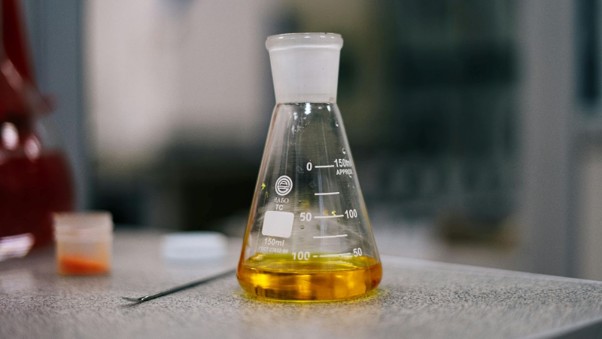
Walk into any functioning clinical laboratory and you will find machines running constantly. Urinalysis analyzers, dipstick readers, automated chemistry platforms they process hundreds of samples a day. What most people never see is the behind-the-scenes work that keeps those machines honest. Before a single patient sample goes through, technicians verify that each analyzer is reading correctly. The material they use for that verification matters more than most people realize.
Urine simulation the use of chemically formulated fluids that replicate human urine sits at the center of this process. When the simulation is accurate, laboratories catch errors before they reach patients. When it falls short, those errors slip through. The gap between a well-formulated urine simulant and a poor one is not abstract. It shows up in test results, diagnostic decisions, and ultimately in patient outcomes.
To understand why accurate urine simulation matters, start with the core problem it solves.
Human urine changes constantly. Hydration levels, dietary choices, medications, kidney function, and metabolic state all influence its composition on any given day. Creatinine concentrations shift. Specific gravity moves up and down. pH fluctuates between 4.5 and 8.5 depending on what a person ate for breakfast. Even samples collected from the same individual hours apart can differ measurably.
For quality control purposes, this variability is a serious liability. A laboratory running a calibration check needs to know exactly what the control material contains. If the composition is unknown or inconsistent, the check loses its meaning. The machine might read the control correctly and still misread a patient sample, and no one would catch it until a result came back wrong.
Accurate urine simulation eliminates this problem. Quick Fix synthetic urine simulant delivers the same chemical profile every time. Technicians know what it contains. They know how the machine should respond to it. Deviations from expected results signal a real problem rather than natural biological variation.
Formulating a urine simulant that works reliably in laboratory equipment testing is more demanding than it might appear. Real human urine contains dozens of compounds in specific concentration ranges. A simulant that misses key components or gets concentrations wrong will not interact with testing equipment the way real urine does and that undermines the entire purpose of using it.
The core components that a high-quality simulant must replicate include creatinine, urea, uric acid, sodium, potassium, chloride, and sulfates. These compounds affect how analyzers read specific gravity, osmolality, and various chemical markers. A simulant needs accurate pH — typically between 4.5 and 8.5 — and specific gravity that falls within the physiologically normal range of 1.003 to 1.030.
Color and turbidity matter too. Optical analyzers use light transmission and reflection to assess certain urine properties. A simulant that looks nothing like real urine will produce optical readings that do not reflect how the machine handles actual samples.
Temperature stability is another factor. Simulants used in equipment testing often need to remain stable across storage periods and perform consistently when warmed to body temperature for testing. Formulations that degrade over time or behave differently after heating introduce another source of variability — the very thing accurate simulation is supposed to eliminate.
The consequences of poor urine simulation are not theoretical. They work their way through the testing process in specific and traceable ways.
Consider a urinalysis analyzer calibrated with a simulant that has incorrect creatinine concentration. Creatinine is a key marker in assessing kidney function and is used to normalize other measurements in urine. If the calibration check passes because the simulant’s creatinine reads within range — but that range does not reflect real urine — the machine’s creatinine readings may be systematically off for actual patient samples.
A physician receiving those results might not flag them as suspicious. Creatinine values that are slightly elevated or slightly low due to analyzer error could influence decisions about kidney disease staging, medication dosing, or the need for further testing. Multiply that scenario across hundreds of patient samples and the clinical impact becomes significant.
The same logic applies to glucose detection, protein quantification, and leukocyte esterase readings. Each marker carries diagnostic weight. Each depends on the analyzer performing accurately. And analyzer accuracy depends on the quality of the materials used to verify it.
Urine simulants do not operate in isolation. They belong to a larger category of materials known as synthetic biofluids laboratory-formulated fluids designed to replicate the properties of human biological specimens for testing and validation purposes. This category includes simulated blood, saliva, sweat, and cerebrospinal fluid, all used across medical device development, diagnostic validation, and biomedical research.
The principles that govern accurate urine simulation apply across this entire category. A synthetic biofluid is only useful if it behaves like the real specimen it is meant to represent. For urine specifically, the stakes are high because urinalysis is one of the most commonly ordered diagnostic tests in clinical medicine. The World Health Organization has identified urinalysis as a core diagnostic tool in primary care settings globally — which means the volume of testing that depends on well-calibrated equipment is enormous.
Medical device manufacturers developing urinalysis equipment face strict requirements before their products reach clinical use. Regulatory agencies including the FDA require performance data across a range of test conditions. That data needs to be reproducible — meaning the test conditions must be controlled precisely.
Urine simulants make this possible. A manufacturer testing a new dipstick analyzer can use the same formulation across multiple facilities and testing phases. Each site generates data under identical chemical conditions. The resulting dataset is statistically stronger and easier to defend during regulatory review than data collected with human specimens that varied from site to site.
This is not a workaround. It is standard practice in medical device development. The consistency that simulants provide is a feature, not a compromise.
The commercial market for urine simulants varies widely in quality. Products developed specifically for laboratory and clinical use undergo batch testing to confirm their composition before release. Each batch comes with documented specifications — pH range, specific gravity, creatinine concentration, and other key parameters.
This documentation allows laboratory professionals to verify that what they are using matches their protocol requirements. It also creates a traceable record that supports quality management systems in accredited laboratories. Facilities operating under ISO 15189 or CAP accreditation standards need to demonstrate that their control materials meet defined specifications. A simulant with documented batch testing satisfies that requirement. One without it does not.
Laboratories selecting a urine simulant for equipment testing should prioritize products with published formulation data and batch-specific testing certificates. The time spent verifying those documents upfront is far less than the time spent investigating a quality control failure after the fact.
Diagnostic accuracy in clinical medicine rests on a chain of dependencies. Physicians depend on test results. Test results depend on analyzers. Analyzers depend on calibration. Calibration depends on the quality of control materials. Urine simulants sit inside that chain not at the glamorous end, but at a foundational one.
Improving the accuracy of urine simulation is not a niche technical concern. It is part of the broader project of making diagnostic medicine more reliable. Every improvement in simulant formulation, every tighter batch specification, every better-validated control material contributes to a system that serves patients more accurately.
That connection between laboratory materials and patient outcomes is easy to lose sight of. But it is real and it is direct. Accurate urine simulation is not just good laboratory practice — it is part of what keeps clinical medicine trustworthy.
Author Bio

John Llanasas is a freelance content writer specializing in clinical laboratory science, diagnostic medicine, and biomedical research. He translates complex scientific topics into clear, accurate content that both industry professionals and general readers can appreciate. His work covers laboratory quality assurance, medical device validation, and point-of-care diagnostics, always grounded in credible sources and real scientific context. John believes the best science writing does not just inform, it builds a genuine understanding of how modern medicine actually works behind the scenes.


Alcohol and drug rehab programs are essential resources for those seeking to overcome substance use disorders. By providing structured care, therapy, and support, these addiction treatment programs …
Posted Mar 23, 2026 Addiction
Connecting innovation decision makers to authoritative information, institutions, people and insights.

Medigy accurately delivers healthcare and technology information, news and insight from around the world.
Medigy surfaces the world's best crowdsourced health tech offerings with social interactions and peer reviews.
© 2026 Netspective Foundation, Inc. All Rights Reserved.
Built on Mar 23, 2026 at 3:29pm