

Managing Editor
@ShahidNShah
@ShahidNShah

Finding out you’re pregnant often triggers the same immediate question: When should I book my first scan? It’s a practical decision, but it’s also emotional—many people want reassurance as soon as possible. The trick is balancing that understandable urge with what ultrasound can realistically show at each stage.
Book too early and you may leave with more uncertainty than clarity. Wait a little longer and the scan is more likely to answer the questions that matter: Is the pregnancy in the right place? Is it progressing as expected? How many weeks along are you, really?
Below is a clear, week-by-week guide to help you choose the right timing for your first ultrasound, plus the scenarios where earlier scanning is medically sensible.
A first pregnancy ultrasound isn’t just a “peek.” Clinically, it can help to:
That said, ultrasound has limits—especially in very early pregnancy—so the best timing depends on what you need from the scan.
At this stage, even high-quality ultrasound may show very little. Sometimes a gestational sac is visible, sometimes not. If you scan now, the most common outcome is, “Come back in a week.” That can create anxiety rather than reduce it.
When it can be appropriate: If you have significant risk factors for ectopic pregnancy (for example, a previous ectopic, tubal surgery, or an IUD in place at conception) or you have concerning symptoms, earlier assessment may be advised—but it’s often paired with blood tests (hCG) and a follow-up scan.
For many pregnancies, a scan from around 6 weeks can begin to answer the big questions. A fetal pole may be visible, and cardiac activity is often detectable by the latter part of this window.
If you’re hoping for reassurance, this is typically the earliest point at which a scan can provide it—particularly if a transvaginal approach is used (common in early pregnancy because it gives clearer images than an abdominal scan at this stage).
If your cycle is irregular, you’re not sure of your dates, or you simply want a clearer result, waiting until 7–8 weeks can reduce the chance of an inconclusive scan. By then, the embryo is usually more visible, the heartbeat is easier to confirm, and measurements are more reliable.
This is also a common time for people to book an early private scan alongside routine care, especially if they’re between NHS appointments or want confirmation before telling family or work. If you’re researching options for advanced prenatal scanning in London, the key is to look for clinics that explain what can and can’t be seen at your gestational age—and that are clear about follow-up steps if results are uncertain.
Light spotting can be common in early pregnancy, but bleeding with pain, shoulder tip pain, dizziness, or feeling faint should be assessed urgently. In these situations, the goal of ultrasound is not curiosity—it’s safety, including ruling out ectopic pregnancy or identifying other causes that need prompt treatment.
If you’ve had an ectopic pregnancy before, clinicians often recommend earlier monitoring. The timing depends on your history and symptoms, and may include serial hCG blood tests plus a scan at the appropriate point.
With IVF, gestational age is known more precisely, and early scans are often scheduled as part of routine follow-up—commonly around 6–7 weeks. Even then, a scan too early can still be inconclusive, so clinics time it carefully.
In the UK, the first routine NHS ultrasound is usually the dating scan, typically performed between 11 and 14 weeks. This scan confirms gestational age, checks viability, and may include the nuchal translucency measurement if you’re having combined screening for chromosomal conditions.
A second routine scan, the anomaly scan, is usually offered between 18 and 21 weeks, focusing on fetal anatomy and development.
So where does that leave the “first scan” question? If you’re low-risk and asymptomatic, waiting for the 11–14 week dating scan is often perfectly reasonable. Many people, however, choose an earlier scan at 7–8 weeks for reassurance or more accurate dating—particularly if their cycles are irregular or they had recently stopped contraception.
Different goals point to different timings:
This is the most overlooked part. An early scan that can’t yet confirm a heartbeat doesn’t automatically mean something is wrong—it may simply mean your dates are off by a few days. If you know an inconclusive result would cause significant stress, waiting a week can be the kinder option.
A scan is short, and it’s easy to forget what you meant to ask. If you want to be prepared, here’s a simple checklist:
For many people, 7–8 weeks is the most practical time to book a first ultrasound if you want meaningful reassurance without a high chance of ambiguity. If you’re low-risk and feeling well, waiting for the 11–14 week NHS dating scan is also a sound choice. And if you have worrying symptoms or risk factors, earlier assessment may be appropriate—because in those cases, the scan is about health and safety, not just milestones.
If you’re unsure, speak to your midwife, GP, or fertility team. A well-timed scan doesn’t just deliver better images; it gives you clearer answers—and, ideally, a calmer start to pregnancy.

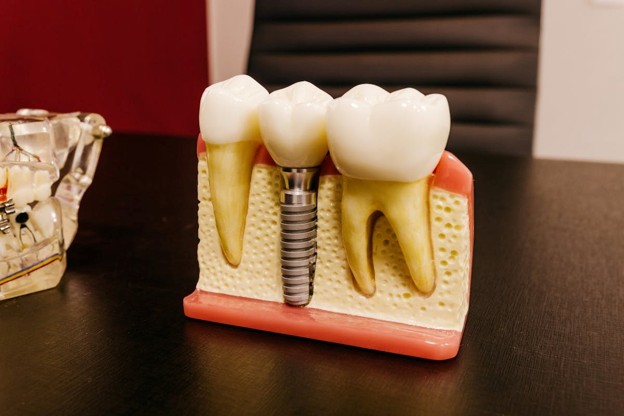
Most parents assume orthodontics starts with braces in the teenage years. And for many kids, that’s true. But there’s a growing understanding in dentistry that timing matters just as much as …
Posted Mar 14, 2026 Dental Care Dentistry
Connecting innovation decision makers to authoritative information, institutions, people and insights.

Medigy accurately delivers healthcare and technology information, news and insight from around the world.
Medigy surfaces the world's best crowdsourced health tech offerings with social interactions and peer reviews.
© 2026 Netspective Foundation, Inc. All Rights Reserved.
Built on Apr 7, 2026 at 1:37pm