

Managing Editor
@ShahidNShah
@ShahidNShah
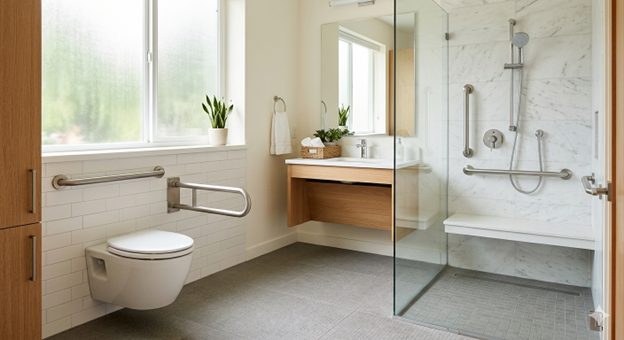
Falls are not random events. They are often the result of a predictable interaction between the human body and the built environment.
As people age or experience changes in mobility, balance, or vision, the home — once familiar and effortless — can quietly become a source of risk. According to the World Health Organization (WHO), falls are among the leading causes of injury-related hospitalization in older adults globally, with a significant proportion occurring inside the home (WHO, 2021). In the United States alone, the Centers for Disease Control and Prevention (CDC) reports that one in four adults aged 65 and older experiences a fall each year, with many resulting in serious injury, reduced mobility, and loss of independence (CDC, 2023).
The important question, then, is not whether falls can happen. It is whether they can be prevented.
Scientific studies consistently show that fall risk is strongly linked to environmental factors. A landmark Cochrane systematic review by Gillespie et al. (2012), which analyzed over 159 randomized controlled trials, found that environmental and home safety interventions — particularly when targeted to individuals assessed as high risk — produced statistically significant reductions in fall rates.
Identified risk factors include:
Research published in leading public health and gerontology journals highlights that even minor hazards — such as loose rugs or uneven flooring — can significantly increase fall risk when combined with reduced mobility or slower reflexes (Pighills et al., 2011). In other words, the home itself can either amplify or reduce a person’s vulnerability.
This is where the evidence becomes particularly compelling. Multiple studies — including systematic reviews and population-level analyses — have found that targeted home modifications can meaningfully reduce fall risk, especially when they address known high-risk areas.
Key findings across research include:
A widely cited insight from prevention research is that fall prevention is not about a single solution — it is about reducing multiple small risks simultaneously. Think of it less like installing a feature and more like reshaping a system.
Across studies, bathrooms consistently emerge as one of the highest-risk zones in the home. The reasons are physiologically and biomechanically straightforward:
Research shows that installing support structures and undertaking tailored bathroom modifications significantly improves safety and confidence, particularly for older adults. These interventions — which include installing grab bars, non-slip flooring, walk-in showers, and improved spatial layouts — reduce the likelihood of sudden slips or loss of balance during routine daily activities.
The CDC’s STEADI (Stopping Elderly Accidents, Deaths & Injuries) initiative specifically highlights bathroom modifications as a Tier 1 environmental intervention, recommending them for all adults who are assessed as moderate to high risk for falls (CDC, 2023). For healthcare innovation practitioners and care coordinators, this is a straightforward, evidence-backed recommendation that translates directly into patient safety improvements.
If bathrooms are high-risk zones, stairs are high-risk transitions. Climbing stairs requires strength, coordination, depth perception, and balance — all simultaneously. Research consistently identifies stair-related falls as a major contributor to injury in multi-level homes, accounting for approximately 1 million emergency department visits per year in the United States (Startzell et al., 2000).
What makes stairs especially challenging is the factor of repetition. Unlike occasional hazards, stairs are navigated multiple times a day, increasing cumulative exposure to risk. This is where mobility-focused assistive technology becomes relevant. Solutions such as stairlifts reduce the physical demand of navigating stairs entirely. For many families beginning to evaluate these solutions, understanding factors such as cost of installing a stairlift (new or refurbished model) becomes part of determining whether such an intervention is practical and sustainable over the long term.
The decision between a new and a reconditioned stairlift ultimately comes down to individual circumstances. For staircases with bends, curves, or non-standard layouts, a custom-configured unit is typically required. However, for those navigating a straight staircase and seeking a more cost-effective route to improved mobility, a reconditioned model sourced from a reputable local dealer can be a practical and reliable alternative — often delivering the same functional safety benefit at a significantly lower cost.
One of the most compelling findings across this body of research is that home modifications do more than prevent falls. They actively help preserve independence — a critical and measurable outcome in both geriatric care and broader population health management.
When individuals feel safer moving through their home, they are more likely to:
From a healthcare system perspective, this matters significantly. Preventing a single injurious fall has been estimated to save between $9,000 and $30,000 in acute care costs (Florence et al., 2018). At scale, home modification programs represent a high-value, low-cost intervention within population health strategies. For innovation practitioners exploring care-at-home models and digital health delivery, this positions environmental modification as a scalable, evidence-based lever for improving outcomes.
What the research ultimately suggests is simple, but powerful: fall prevention is not just a medical issue — it is a design issue. The way a home is structured, its surfaces, transitions, lighting, and support systems, plays a direct and quantifiable role in safety outcomes.
The most effective changes are often not dramatic renovations, but targeted, evidence-guided adjustments:
The science is remarkably consistent. Home modifications, when implemented thoughtfully and grounded in clinical assessment, reduce fall risk, improve independence, and enhance quality of life. They achieve this not by eliminating risk entirely, but by reshaping the environment so that everyday movement becomes safer and more predictable.
And that is the quiet insight hidden in the research: You do not need to change the person. You need to change the environment they move through.
Because when the environment supports the body, safety stops being a struggle — and starts becoming the default.


If you’ve ever attended an industry event, whether as a visitor or an exhibitor, you know how competitive these environments are. Medical congresses bring together hundreds of companies, research …
Posted Apr 1, 2026 Career and Jobs Healthcare Conferences Workforce Education
Connecting innovation decision makers to authoritative information, institutions, people and insights.

Medigy accurately delivers healthcare and technology information, news and insight from around the world.
Medigy surfaces the world's best crowdsourced health tech offerings with social interactions and peer reviews.
© 2026 Netspective Foundation, Inc. All Rights Reserved.
Built on Apr 2, 2026 at 12:49pm