

Managing Editor
@ShahidNShah
@ShahidNShah
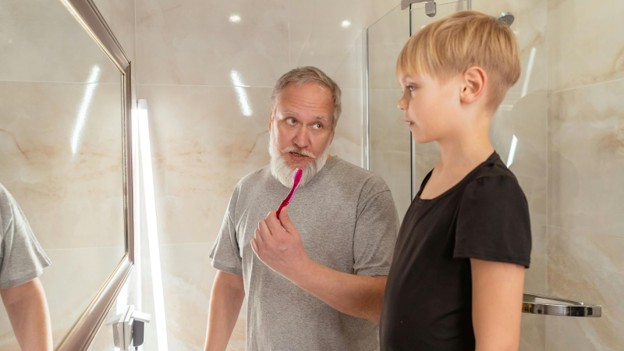
When pediatric dentists analyze the root cause of childhood dental problems, they consistently identify one critical factor: children who establish proper brushing habits early in life maintain better oral health throughout their developmental years and into adulthood. Yet establishing these habits proves challenging for many families, with parents often uncertain about the best timing and methods for teaching independent brushing skills.
The challenge has intensified as families increasingly recognize that early dental habits shape lifelong oral health outcomes. With childhood tooth decay affecting approximately 1 in 4 children before kindergarten—making it the most common chronic disease among children—the importance of early intervention has never been clearer. The window for establishing these foundational skills is narrow but critical, typically spanning from toddlerhood through early elementary years.
What makes this particularly complex is that effective tooth brushing requires a sophisticated combination of motor skills, cognitive understanding, and behavioral consistency that develops differently in every child. Rather than a one-size-fits-all approach, successful dental hygiene education requires understanding developmental readiness, systematic skill-building, and adaptive strategies that grow with your child’s capabilities.
The transition from parent-controlled brushing to guided instruction doesn’t happen overnight—it unfolds across several distinct developmental phases, each with specific markers that signal readiness for increased independence. Understanding these phases helps parents time their teaching efforts when children are most receptive and physically capable of learning.
Most children show initial readiness for structured brushing instruction between 18 months and 2 years, but true skill development typically occurs between ages 3 and 6. The key isn’t age alone but rather the convergence of motor skill development, cognitive capacity, and behavioral cooperation. Children need sufficient fine motor control to manipulate a toothbrush, enough cognitive development to follow multi-step instructions, and the behavioral maturity to engage in routine activities.
During the 18-month to 3-year phase, children primarily learn through observation and mimicry rather than formal instruction. Their hand coordination isn’t yet refined enough for effective independent brushing, but this stage establishes crucial foundations. Toddlers can hold a toothbrush and make brushing motions, even if those movements aren’t technically correct or thorough.
The focus should be on making brushing a familiar, positive experience while parents maintain primary responsibility for actual tooth cleaning. Children at this stage benefit from having their own child-sized toothbrush to manipulate while parents perform the real cleaning with a separate brush. This parallel play approach builds comfort and familiarity without pressure to perform correctly.
Between ages 3 and 5, most children develop the fine motor skills necessary for guided brushing instruction. They can grip objects with more precision, follow simple sequences, and understand cause-and-effect relationships. This is when systematic technique teaching becomes both possible and productive.
Preschoolers can learn basic brushing patterns, understand timing concepts (like counting to 10 for each section), and begin to internalize the routine structure. However, they still require significant supervision and occasional hand-over-hand guidance to ensure thorough cleaning. Their attention spans limit effective brushing to 1-2 minutes, even with guidance.
Around age 6-7, children typically possess the motor skills, cognitive capacity, and behavioral consistency needed for largely independent brushing. They can execute complex sequences, understand abstract concepts like “thorough cleaning,” and maintain focus for the recommended 2-minute duration.
However, independence doesn’t mean complete autonomy. Even school-age children benefit from periodic supervision and technique reinforcement. The transition to independence should be gradual, with parents shifting from active guidance to quality checking and encouragement.
Teaching proper brushing technique requires breaking down complex movements into digestible steps that children can master progressively. The most effective approach focuses on establishing consistent patterns rather than perfect execution initially, then refining technique as motor skills develop. For comprehensive guidance on preventive dentistry for kids, professional resources can provide additional strategies tailored to your child’s specific needs.
The foundation of good brushing technique starts with proper positioning and systematic coverage. Children need to understand that brushing isn’t random scrubbing but rather methodical cleaning of all tooth surfaces. This conceptual understanding helps them approach brushing as a problem-solving task rather than a mindless chore.

Begin by teaching the correct toothbrush grip—holding the brush like a pencil rather than a hammer, with fingers positioned about an inch from the bristles. This grip provides better control and prevents excessive pressure that can damage developing gums. Children often naturally grip too high or too low on the handle, reducing their ability to maneuver the brush effectively.
The angle of approach is equally critical. Position the toothbrush at a 45-degree angle to the gum line, allowing bristles to reach both tooth surfaces and the crucial area where teeth meet gums. This angle concept can be challenging for young children to visualize, so demonstrate using a large model or mirror work where they can see the positioning clearly.
For children under 5, consider starting with a straight-on approach to tooth surfaces before introducing the 45-degree angle concept. This simplification reduces cognitive load while still achieving reasonable cleaning effectiveness.
Establish a consistent pattern that children can memorize and repeat automatically. The most effective sequence divides the mouth into sections: outside surfaces of back teeth, inside surfaces of back teeth, chewing surfaces, and front teeth (both outside and inside). This systematic approach prevents missed areas and builds routine.
Teach children to start in the same location every time—many dental professionals recommend beginning with the outside surfaces of upper back teeth on their dominant hand side. Moving in a logical sequence (upper outside, upper inside, upper chewing surfaces, then repeating for lower teeth) creates a mental map that becomes automatic with practice.
Within each section, demonstrate small circular or gentle back-and-forth motions rather than aggressive scrubbing. Children should brush 2-3 teeth at a time before moving to the next group, ensuring adequate time for each area. This methodical approach typically takes 30-45 seconds per section when performed correctly.
The standard 2-minute recommendation can feel impossibly long for young children, so build duration gradually. Start with 30-45 seconds for toddlers, increasing to 1 minute for preschoolers, and eventually reaching the full 2 minutes for school-age children. Using timers, songs, or apps can help children gauge appropriate duration without constant parental monitoring.
Pressure awareness is particularly challenging for children to master. Demonstrate the difference between effective cleaning pressure and harmful scrubbing by having them brush their palm—effective brushing should feel like a gentle massage, not scratching. Many children brush too aggressively, especially when parents emphasize “cleaning well” without clarifying the technique.
Consider using pressure-sensing toothbrushes designed for children, which provide immediate feedback about appropriate force. These tools can accelerate learning while preventing damage to developing tooth enamel and gum tissue.
The right tools significantly impact a child’s ability to learn and execute proper brushing technique. Toothbrush and toothpaste selection should prioritize safety, appropriate sizing, and developmental suitability over adult preferences or convenience factors.
Tool selection affects both the physical mechanics of brushing and the child’s engagement with the activity. A properly sized toothbrush enables better control and access, while age-appropriate toothpaste ensures safety if swallowed. These considerations become particularly important as children transition toward independence.
Manual toothbrushes remain the gold standard for teaching proper technique because they provide direct feedback about pressure and movement. Children learn to control the brush movement, developing motor skills and muscle memory that translate to lifelong habits. Manual brushes also eliminate concerns about batteries, water damage, or mechanical failure.
However, electric toothbrushes can benefit children who struggle with motor coordination or those who find manual brushing tedious. The vibration can be more effective at plaque removal with less technique precision required. Many electric models designed for children include built-in timers and pressure sensors that support learning.
The choice often depends on the individual child’s needs and preferences. Some children find electric toothbrushes more engaging and are more willing to brush for appropriate durations. Others are sensitive to vibration or find electric brushes overwhelming. Consider allowing children to try both types to determine their preference, recognizing that engagement often matters more than the specific tool type.
Fluoride toothpaste is recommended for children as soon as teeth appear, but the quantity matters significantly for safety. Children under 3 should use a rice grain-sized amount, while those 3-6 years old can use a pea-sized amount. These small quantities provide dental benefits while minimizing fluorosis risk if swallowed.
Toothpaste flavor can significantly impact compliance, especially for children who are sensitive to mint or traditional “adult” flavors. Many manufacturers offer child-friendly flavors like strawberry, bubble gum, or mild fruit varieties. While flavor preference shouldn’t override fluoride content, finding an acceptable taste can reduce daily battles.
Supervise toothpaste dispensing until children consistently use appropriate amounts. Many children squeeze far too much toothpaste, wasting product and increasing swallowing risk. Teaching proper dispensing—including placing toothpaste across the bristles rather than in a large blob—becomes part of the overall routine mastery.
Successful tooth brushing education extends beyond technique instruction to encompass routine establishment and environmental optimization. Children thrive with predictable patterns and supportive settings that make dental hygiene feel natural and achievable rather than burdensome.
The physical environment, timing consistency, and family integration all influence how readily children adopt and maintain proper brushing habits. These contextual factors often determine whether technique instruction translates into lasting behavioral change.
Integrate tooth brushing into existing routine anchors rather than treating it as a separate activity. Morning brushing works best when connected to getting dressed or eating breakfast, while evening brushing should link to bedtime preparations like putting on pajamas or reading stories.
The sequence within these routines matters for practical reasons. Morning brushing typically works better after breakfast to remove food particles, while evening brushing should occur after the last snack or drink (except water) to maximize overnight protection. However, family schedules and individual needs may require flexibility in timing.
Create clear routine signals that help children anticipate and prepare for brushing time. This might include specific phrases (“time to brush those teeth clean”), visual cues like placing toothbrushes on the counter, or routine songs that signal the transition to dental care activities.
Effective supervision involves active guidance rather than passive watching. During the learning phase, parents should provide real-time feedback about technique, pressure, and coverage while gradually reducing hands-on assistance. This scaffolding approach builds confidence while ensuring thoroughness.
The transition to independence should be gradual and responsive to individual development. Some children are ready for independent brushing by age 5, while others need guidance until age 7 or 8. Signs of readiness include consistent technique demonstration, ability to follow the full sequence without prompting, and appropriate duration without reminders.
Even after achieving independence, periodic supervision helps maintain quality and catch developing bad habits before they become entrenched. Monthly “brush-along” sessions where parents and children brush simultaneously can provide ongoing assessment opportunities without feeling like criticism or regression.
Despite best intentions and systematic instruction, most families encounter behavioral resistance, technique problems, or environmental challenges that disrupt consistent dental hygiene practices. Anticipating these common issues and having response strategies prepared prevents minor problems from becoming major battles.
The most persistent challenges typically involve behavioral resistance, sensory sensitivities, and technique regression. These issues require different approaches than initial instruction, often focusing more on problem-solving and adaptation than fundamental teaching.
Brushing resistance often stems from control issues, sensory discomfort, or negative associations rather than defiance or laziness. Children who resist brushing may be responding to feeling rushed, experiencing discomfort from aggressive technique, or lacking sufficient autonomy in the process.
Address resistance by examining the entire brushing experience for sources of stress or discomfort. This might include adjusting toothbrush firmness, changing toothpaste flavors, modifying bathroom lighting, or allowing more choice in routine elements like brush color or timing sequence.
When tantrums occur, avoid power struggles that can create lasting negative associations with dental care. Instead, acknowledge the child’s feelings while maintaining the expectation that teeth cleaning will happen. Offering limited choices—like “would you like to brush first or have me brush first?”—can restore some sense of control while maintaining the non-negotiable nature of the activity.
Once poor technique becomes habituated, correction requires patience and systematic retraining. Common problems include inadequate duration, missed areas, excessive pressure, or incorrect brush positioning. These habits often develop when children transition to independence too quickly or without sufficient ongoing supervision.
Address technique problems through positive reinforcement rather than criticism. Focus on one improvement area at a time—trying to correct multiple issues simultaneously often overwhelms children and creates resistance. Use phrase reinforcement like “I noticed you remembered to brush your back teeth today” rather than pointing out what’s still wrong.
Visual aids can help children self-monitor technique improvements. Plaque-revealing tablets (used occasionally under supervision) can show missed areas, while mirror work helps children see their own brush positioning and movements. These tools should supplement, not replace, parental guidance and encouragement.
Engagement strategies can transform tooth brushing from a chore into an enjoyable activity that children anticipate rather than resist. However, the goal is sustainable motivation rather than constant entertainment—children need to develop intrinsic motivation for dental hygiene that doesn’t depend on external rewards or games.
Effective engagement balances fun elements with serious health education, helping children understand why dental hygiene matters while making the daily practice enjoyable. This balance prevents trivialization of dental health while maintaining enthusiasm for consistent practice.
Age-appropriate games can reinforce proper technique while maintaining engagement. Simple activities like “tooth counting” (brushing each visible tooth individually), “bubble hunts” (creating toothpaste foam), or “germ fighting” (explaining how brushing removes harmful bacteria) combine education with play.
Technology can support learning through apps designed for children’s dental education, though these should supplement rather than replace hands-on instruction. Apps that include timers, technique reminders, or progress tracking can be particularly helpful for children who respond well to digital feedback.
Role-playing activities where children teach proper brushing to dolls or stuffed animals can reinforce their own learning while building confidence in their knowledge. This teaching-others approach often reveals gaps in understanding while strengthening correct technique through repetition.
Visual progress tracking helps children see their developing skills and consistency over time. Simple charts that track daily brushing, technique milestones, or dental health goals provide tangible evidence of improvement and commitment.
Celebration should focus on effort and consistency rather than perfection, helping children develop intrinsic motivation for dental health. Recognize achievements like “brushing every day this week” or “remembering to brush back teeth without reminders” rather than only celebrating perfect technique.
Consider involving children in choosing their own celebration methods, whether that’s picking a new toothbrush color, selecting healthy snacks, or earning extra story time. This autonomy in reward selection increases engagement while maintaining focus on dental health achievement rather than external prizes.
The foundation of lifelong dental health truly begins in childhood, but it requires more than just handing a child a toothbrush and hoping for the best. As research consistently demonstrates, children who master proper technique early maintain healthier mouths throughout their lives—a gift that compounds in value over decades.
The families succeeding with dental hygiene education understand that this isn’t a six-week teaching unit but rather a multi-year developmental process that adapts to changing capabilities and circumstances. They recognize that patience during the learning phase prevents years of remedial dental work later. Most importantly, they view dental hygiene education as an investment in their child’s overall health and self-care skills, not just tooth cleaning.
The path forward isn’t complicated, but it does require consistency and attention to individual developmental needs. Start where your child is now, focus on building positive associations with dental care, and trust that systematic skill-building will yield lasting results. The effort invested in proper technique instruction today directly translates to confident, healthy smiles tomorrow.


There is a reason people say “Home Sweet Home.” Home is where we feel safe, comfortable, and truly ourselves. For older adults, this feeling becomes even more important. Home holds memories, routines, …
Posted Dec 27, 2025 Elderly
Connecting innovation decision makers to authoritative information, institutions, people and insights.

Medigy accurately delivers healthcare and technology information, news and insight from around the world.
Medigy surfaces the world's best crowdsourced health tech offerings with social interactions and peer reviews.
© 2026 Netspective Foundation, Inc. All Rights Reserved.
Built on Mar 27, 2026 at 12:44pm