

Managing Editor
@ShahidNShah
@ShahidNShah
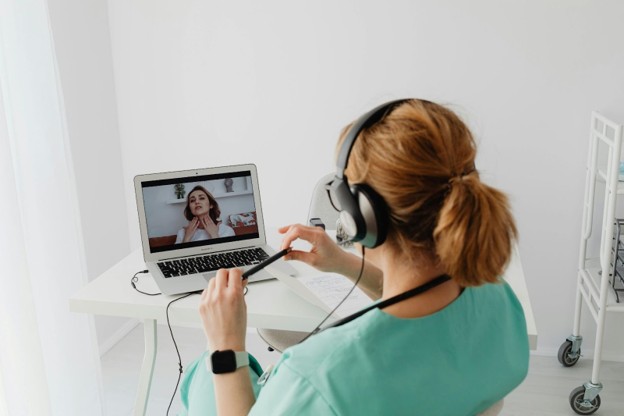
Telehealth has moved from a supplementary access channel to a primary interface for care delivery. This transition has been accelerated by infrastructure maturity, patient expectations, and the normalization of remote care across specialties.
At the center of this shift is mobile application development. Not as a feature layer, but as a core delivery mechanism through which patients access care, providers coordinate services, and health systems manage digital workflows.
While both iOS and web-based platforms remain relevant, Android app development plays a critical role due to its global device penetration and accessibility across diverse populations. In many regions, Android devices represent the primary access point to digital healthcare services, making platform optimization and performance essential for equitable care delivery.
However, telehealth application strategy cannot be reduced to platform choice alone. The real transformation lies in how mobile applications are designed, integrated, and operationalized within healthcare systems.
The concept of the “digital front door” is increasingly mobile-first. Patients no longer begin their care journey through physical intake or even desktop interfaces. They initiate it through mobile applications that serve as continuous access points to healthcare services.
Modern telehealth apps are expected to support:
These capabilities are not differentiators anymore. They are baseline expectations.
What distinguishes high-performing telehealth applications is how seamlessly these functions are integrated into a unified patient experience, where transitions between communication, scheduling, and clinical interaction occur without friction.
The effectiveness of a telehealth application is determined less by its interface and more by its integration with backend systems.
Standalone telehealth apps create fragmentation. Integrated applications create continuity.
High-value telehealth platforms connect directly with:
This integration ensures that virtual care is not isolated from the rest of the healthcare system. Instead, it becomes an extension of it.
Without this level of connectivity, telehealth remains a parallel channel rather than an embedded care modality.
In traditional healthcare, patient experience was often treated as a secondary consideration. In telehealth, it becomes a primary operational factor.
Mobile applications must now support:
Drop-off points in mobile workflows directly impact care access and system efficiency. If patients cannot easily book appointments or connect with providers, demand is lost before it reaches clinical workflows.
This makes user experience design a core operational concern, not just a design discipline.
Telehealth applications are not limited to episodic interactions. They are increasingly used for continuous data capture and patient monitoring.
Mobile platforms enable:
This transforms telehealth from a transactional model into a continuous care model.
Data generated through mobile apps feeds into clinical decision-making, enabling earlier interventions and more personalized care pathways.
Healthcare mobile applications operate within strict regulatory environments. Security and compliance are not optional features, they are foundational requirements.
Telehealth apps must ensure:
In mobile environments, this is particularly challenging due to device variability, network conditions, and user behavior.
As a result, security architecture must be embedded into the development process from the outset, rather than added as an afterthought.
Telehealth applications are increasingly designed to improve operational efficiency, not just patient access.
Mobile-driven workflows can:
These efficiencies extend beyond the patient interface, impacting provider workflows and overall system performance.
In this context, mobile applications function as operational tools, not just communication channels.
Building and maintaining telehealth applications requires significant technical and regulatory expertise. As a result, many healthcare organizations are turning to managed development solutions.
These solutions provide:
This approach reduces time-to-market and allows organizations to focus on care delivery rather than infrastructure development.
It also ensures that applications remain aligned with evolving regulatory and technological requirements.
Telehealth is evolving beyond video consultations into a broader digital care ecosystem.
Mobile applications are increasingly supporting:
This expansion reflects a shift from isolated virtual visits to comprehensive digital care delivery.
Mobile platforms serve as the central interface through which these services are accessed and coordinated.
The trajectory of telehealth points toward a mobile-centric model where applications are not just access points, but primary environments for care delivery.
In this model:
Mobile app development remains a critical component of this ecosystem, particularly in expanding access and ensuring inclusivity. However, its role is part of a larger, integrated system that spans multiple platforms and services.
Mobile app development in telehealth is no longer a technical consideration. It is a strategic and operational priority.
The ability to deliver care through reliable, integrated, and user-centric mobile applications directly impacts access, efficiency, and patient outcomes.
As telehealth continues to scale, organizations that invest in robust mobile infrastructure, across mobile apps and beyond, will be better positioned to deliver care that is accessible, continuous, and aligned with the expectations of a digitally connected patient population.

Chief Editor - Medigy & HealthcareGuys.

Texas practices contend with over 100 active commercial and Medicaid managed care payers, one of the densest payer environments in the country. Nationally, initial claim denial rates climbed to …
Posted Mar 23, 2026 Claims Management Coding / Billing And Claims
Connecting innovation decision makers to authoritative information, institutions, people and insights.

Medigy accurately delivers healthcare and technology information, news and insight from around the world.
Medigy surfaces the world's best crowdsourced health tech offerings with social interactions and peer reviews.
© 2026 Netspective Foundation, Inc. All Rights Reserved.
Built on Mar 23, 2026 at 3:29pm