Managing Editor
@ShahidNShah
@ShahidNShah

Sterility is critical in healthcare settings. From surgical tools to packaged medical products, contamination can affect patient safety and product quality. A sterile barrier is the system that keeps harmful elements out while maintaining the integrity of the item inside. Mapping this barrier helps teams identify risks and maintain consistent protection. Clear processes and controlled environments support reliable outcomes.
A sterile barrier system includes all materials and processes used to keep a product free from contamination. This may involve packaging, sealing methods, and storage conditions. The goal is to prevent microorganisms from entering while allowing the product to remain usable.
Materials must be strong enough to resist damage but also allow for proper sterilization. Packaging design plays a key role in this balance. Even small defects can lead to exposure, which makes careful planning essential.
Mapping the sterile barrier means tracking every step where contamination could occur. This includes handling, transport, storage, and final use. Each stage presents different risks that must be controlled.
For example, improper sealing during packaging can create weak points. Rough handling during transport may cause tears or punctures. Even storage conditions, such as humidity or temperature changes, can affect barrier performance.
Identifying these risks allows teams to take preventive action. Regular inspections and testing help confirm that the barrier remains intact.
Containment works alongside the sterile barrier to limit exposure. Controlled environments, such as cleanrooms, reduce the presence of contaminants during production and packaging. These spaces are designed to manage airflow, temperature, and particle levels.
Containment also includes proper handling procedures. Staff must follow clear protocols when working with sterile items. This reduces the chance of accidental contamination.
Equipment used in these settings must support these standards. For example, systems that rely on biopharmaceutical tubing must maintain clean internal surfaces to prevent contamination during fluid transfer.
Sterility is not a one-time condition. It must be maintained throughout the product lifecycle. This includes storage, transportation, and final use. Each step must protect the barrier from damage.
Routine monitoring helps detect issues early. This may include visual checks, seal testing, and environmental monitoring. Documentation also plays a role by tracking conditions and identifying patterns.
Training is another key factor. Staff must understand how their actions affect sterility. Clear guidelines help maintain consistency across teams.
A strong sterile barrier system depends on consistent design and execution. Standardized processes reduce variation and improve reliability. This includes using approved materials, validated sealing methods, and controlled environments.
Clear labeling and storage instructions also support proper handling. When systems are easy to follow, the risk of error decreases. Consistency helps maintain quality across different locations and teams.
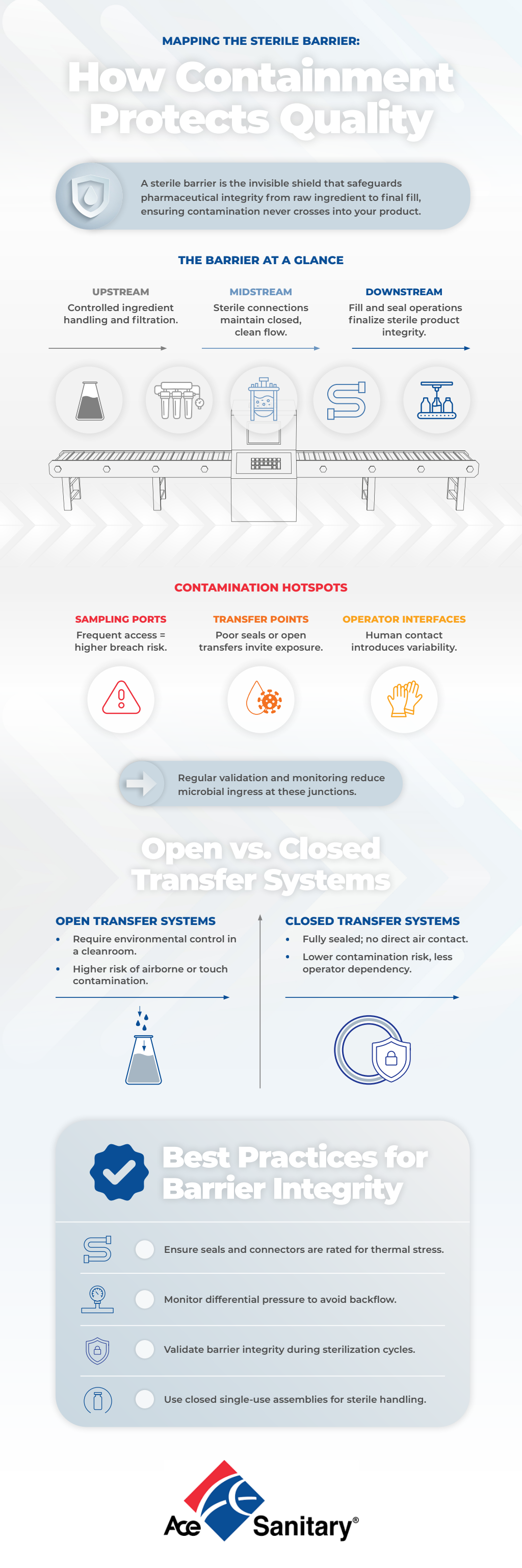
Mapping the sterile barrier and supporting it with strong containment practices protects both products and patients. Each step, from packaging to final use, plays a role in maintaining sterility. With careful planning and ongoing monitoring, healthcare facilities can reduce risk and support safe, reliable care. Look over the infographic below for more information.


Medical facilities can be difficult to navigate, especially for first-time visitors. Large buildings, unclear signage, and unfamiliar layouts can create confusion. This often leads to stress, missed …
Posted Apr 6, 2026 Healthcare
Connecting innovation decision makers to authoritative information, institutions, people and insights.

Medigy accurately delivers healthcare and technology information, news and insight from around the world.
Medigy surfaces the world's best crowdsourced health tech offerings with social interactions and peer reviews.
© 2026 Netspective Foundation, Inc. All Rights Reserved.
Built on Apr 8, 2026 at 1:06pm