

Managing Editor
@ShahidNShah
@ShahidNShah
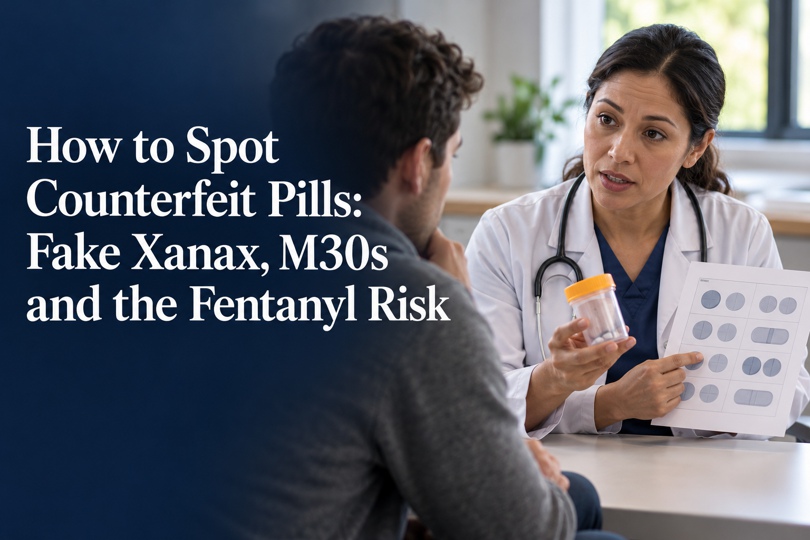
A pill bought from a friend, a social media contact, or an online seller may look exactly like a prescription medication. It might have the right color, shape, and markings. But in recent years, many of these pills have turned out to be counterfeit, and many contain fentanyl.
Counterfeit pills are one of the most dangerous trends in the drug supply today. Educational resources from Better Addiction Care, a national treatment directory, and public health agencies aim to help people understand these risks. Here is what to know about fake pills and how to stay safer.
Counterfeit pills are made to look like legitimate prescription medications but are produced illegally. Common examples include fake versions of:
These pills may contain fentanyl, methamphetamine, other synthetic drugs, or unpredictable mixtures.
Fentanyl is many times stronger than morphine. A very small amount can cause a fatal overdose, especially for someone who does not regularly use opioids.
Counterfeit pills are not made under quality controls. One pill may contain little fentanyl, while another from the same batch may contain a lethal amount.
Someone who believes they are taking a sedative or stimulant may have no tolerance to opioids, increasing the risk of overdose.
Some counterfeit pills and drugs have been found to contain additional sedatives, such as xylazine, which can increase risks.
The U.S. Drug Enforcement Administration has warned that a large share of counterfeit pills it tests contain potentially lethal amounts of fentanyl.
Usually not. Counterfeit pills are often made to look nearly identical to real medications. While some may have slight differences in color, texture, or markings, these are not reliable ways to determine safety.
The safest assumption is that any pill not obtained directly from a licensed pharmacy with a valid prescription could be counterfeit.
If pill use has already become a problem, it is worth exploring treatment centers by location and type of care, since professional support can lower the risks described here.
Many states have Good Samaritan laws that provide some legal protections for people who call for help during an overdose.
Many people see pills as safer than powders or injected drugs because they look like medicine. That perception is part of what makes counterfeit pills so dangerous. A pressed pill that resembles a familiar prescription can lower people’s guard, even when it contains a potent synthetic opioid.
Parents and caregivers can help by having honest conversations about counterfeit pills. Explain that pills from friends or social media may contain fentanyl, even if they look real. Encourage young people to reach out if they ever feel unsafe.
If you or someone you love is using pills without a prescription, treatment can help. Outpatient, residential, and medication-assisted treatment options are available in every state.
Counterfeit pills are a serious and growing danger. Understanding the risks, carrying naloxone, and seeking help for substance use can protect lives.
If you or someone you love is in crisis, call or text 988, or call 911 in an emergency. For free, confidential treatment referrals, you can also call the SAMHSA National Helpline at 1-800-662-4357, available 24/7.


A missed appointment can prompt a question about what happened or a verdict that the person is beyond help. When a history of addiction becomes shorthand for dishonesty or lack of commitment, an …
Posted Oct 22, 2026 Addiction
Connecting innovation decision makers to authoritative information, institutions, people and insights.

Medigy accurately delivers healthcare and technology information, news and insight from around the world.
Medigy surfaces the world's best crowdsourced health tech offerings with social interactions and peer reviews.
© 2026 Netspective Foundation, Inc. All Rights Reserved.
Built on Oct 22, 2026 at 6:05pm