

Managing Editor
@ShahidNShah
@ShahidNShah
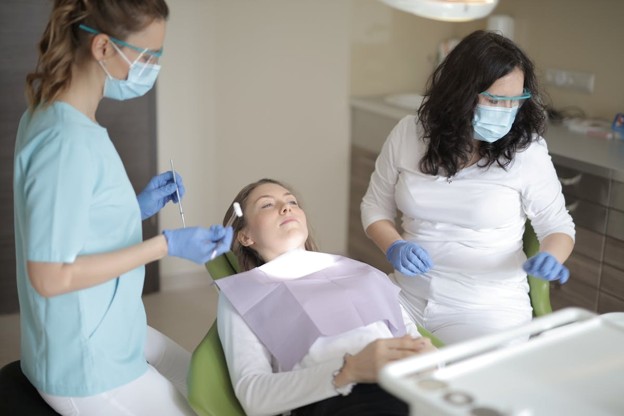
When a damaged tooth needs restoration, traditional crown procedures have long required patients to endure weeks of waiting with temporary crowns that frequently break or fall out. According to the American Dental Association’s 2024 practice guidelines, complications with temporary crowns occur in approximately 15% of cases, often requiring emergency visits that disrupt both patient schedules and treatment timelines.
The dental industry has witnessed a dramatic shift toward digital solutions that eliminate these frustrations entirely. Computer-aided design and manufacturing (CAD/CAM) technology now allows dentists to create, customize, and place permanent crowns in a single appointment — transforming what was once a multi-week ordeal into a same-day solution.
For patients dealing with cracked teeth, large cavities, or failed fillings, this advancement addresses a critical gap between urgent need and traditional treatment timelines. Whether you’re managing tooth pain that can’t wait weeks for resolution or simply prefer efficient care that fits modern schedules, understanding how same-day crown technology works reveals why this approach has become the standard at progressive dental practices nationwide.
The science behind this transformation involves more than just speed — it represents a fundamental reimagining of how dental restorations can preserve natural tooth structure while delivering superior long-term outcomes.
The process begins with comprehensive digital mapping that captures precise measurements impossible to achieve with traditional impression materials. Using an intraoral scanner, your dentist creates a three-dimensional model of the damaged tooth and surrounding area, eliminating the discomfort and inaccuracy associated with putty impressions. This digital foundation ensures the crown will fit perfectly on the first attempt.
Once scanning is complete, the damaged or decayed portions of the tooth are carefully removed, preserving as much healthy structure as possible. Unlike traditional preparations that often require aggressive reduction to accommodate impression materials and temporary crowns, same-day techniques allow for more conservative tooth preparation. The scanning process continues throughout preparation, capturing the exact contours needed for optimal crown design.
The digital crown design phase typically takes 10-15 minutes, during which specialized software analyzes bite patterns, adjacent teeth, and aesthetic requirements. This isn’t simply creating a tooth-shaped cap — the software calculates precise contact points, chewing surfaces, and marginal fit based on your individual oral anatomy. Many patients find watching this design process fascinating, as they can see their new tooth taking shape on screen in real time.
Manufacturing occurs in-office using a precision milling unit that carves the crown from a solid ceramic block. The milling process takes approximately 15-20 minutes, during which the machine cuts your crown to tolerances measured in microns. Modern ceramic materials used in this process often exceed the strength characteristics of traditional lab-fabricated crowns, while providing superior aesthetics that match natural tooth translucency.
After milling, the crown undergoes polishing and any necessary characterization to match surrounding teeth. Your dentist then tries in the crown, checking fit, bite, and appearance before final cementation. Any adjustments happen immediately, ensuring perfect comfort and function before you leave the office.
What to expect during recovery: Most patients experience minimal discomfort following same-day crown placement, often less than with traditional procedures since there’s no need for multiple injections or extended chair time. The tooth may feel slightly different for 24-48 hours as you adjust to the new restoration, but normal eating and drinking can typically resume within hours. Unlike temporary crowns, there are no dietary restrictions or concerns about the restoration dislodging.
Maintenance requirements: Same day dental crowns require the same care as natural teeth — regular brushing, flossing, and professional cleanings. The ceramic materials resist staining better than many natural teeth, often maintaining their appearance for decades with proper care. Most dentists recommend avoiding extremely hard foods like ice or hard candies, though same-day crowns typically withstand normal chewing forces without issue.
The most obvious benefit extends beyond simple convenience — eliminating the temporary crown phase prevents the complications that plague traditional procedures. Temporary crowns, made from weaker materials and held with temporary cement, frequently break, come loose, or cause sensitivity. Emergency visits to repair or replace failed temporaries account for a significant portion of unscheduled dental appointments, creating stress for both patients and practices.
Time efficiency transforms the entire treatment experience. Rather than scheduling multiple appointments weeks apart, patients complete their restoration in 2-3 hours. This proves particularly valuable for busy professionals, parents managing children’s schedules, or anyone who prefers to address dental problems immediately rather than living with discomfort while waiting for lab work.
The precision of digital technology often produces superior marginal fit compared to traditional impression-based methods. Traditional impressions can distort during setting, transport to labs, or stone model fabrication, leading to crowns that require significant chairside adjustment. Digital workflows eliminate these variables, frequently producing crowns that require minimal or no adjustment at delivery.
Tooth preservation represents another significant advantage. Traditional procedures often require additional tooth reduction to accommodate impression materials and ensure adequate space for temporary crowns. Same-day techniques allow dentists to prepare teeth more conservatively, preserving healthy tooth structure that supports long-term oral health. This conservative approach often results in less post-operative sensitivity and better long-term prognosis for the treated tooth.
Material consistency provides additional benefits. Same-day crowns are milled from solid ceramic blocks with uniform properties throughout, unlike traditional crowns that may have variations in thickness or density from the fabrication process. This consistency typically translates to more predictable long-term performance and fewer unexpected failures.
Modern same-day crowns utilize advanced ceramic materials engineered specifically for CAD/CAM fabrication. Lithium disilicate ceramics, such as those found in IPS e.max blocks, offer exceptional strength-to-aesthetics ratios that often exceed traditional porcelain-fused-to-metal crowns. These materials achieve flexural strengths over 400 MPa while maintaining the translucency and color-matching capabilities that create natural-looking restorations.
Zirconia-based ceramics provide the highest strength option for posterior teeth subjected to heavy chewing forces. These materials can withstand forces exceeding 1000 MPa, making them suitable for patients with bruxism or particularly demanding functional requirements. Recent advances in zirconia processing have improved translucency, allowing these ultra-strong materials to achieve acceptable aesthetics even in visible areas.
Hybrid ceramic materials combine the best characteristics of traditional ceramics with enhanced fracture resistance. These newer materials, incorporating polymer networks within the ceramic matrix, provide excellent shock absorption while maintaining the wear characteristics and biocompatibility patients expect from ceramic restorations.
The CAD/CAM milling process itself represents a significant technological advancement. Modern milling units operate with precision measured in microns, creating restorations with internal and external accuracy that consistently exceeds hand-fabricated alternatives. The controlled environment of chairside milling eliminates variables introduced during traditional lab processes, such as temperature fluctuations during firing or human error in layering techniques.
Digital color matching integrates spectrophotometry with visual assessment to achieve optimal aesthetic results. Rather than relying solely on subjective color evaluation, dentists can now capture precise optical measurements that guide both material selection and characterization procedures. This technology-assisted approach reduces the guesswork traditionally associated with anterior crown aesthetics.
Software algorithms that drive the design process incorporate extensive databases of anatomical information, ensuring that crown morphology matches both functional requirements and natural tooth forms. These systems can automatically generate appropriate contact points, marginal adaptation, and occlusal surfaces based on the patient’s specific oral anatomy and functional patterns.
Many patients assume same-day crowns represent a compromise in quality for the sake of convenience, but research consistently demonstrates comparable or superior clinical outcomes compared to traditional methods. A longitudinal study published in the Journal of Prosthetic Dentistry in 2023 found that CAD/CAM crowns showed a 96.4% survival rate at five years, matching or exceeding traditional crown survival rates while demonstrating better marginal integrity over time.
The misconception that “faster means inferior” stems from outdated assumptions about dental manufacturing. Modern chairside milling operates under more controlled conditions than many traditional lab processes, with consistent material properties and elimination of variables like shipping damage, temperature fluctuations during firing, or variations in technician technique. The digital workflow actually increases quality control compared to traditional methods that involve multiple hand-off points between office and laboratory.
Another common belief suggests same-day crowns can’t achieve the same aesthetic results as lab-made alternatives. However, clinical photography studies demonstrate that properly executed CAD/CAM crowns often show superior color stability and surface characteristics over time. The solid ceramic construction resists staining and wear patterns that can affect traditional crowns, particularly those with metal substructures that may show through over time.
Durability concerns often arise when patients compare same-day options to metal-ceramic crowns they’ve heard are “strongest.” Current ceramic materials used in same-day fabrication frequently exceed the strength of traditional porcelain-fused-to-metal crowns while eliminating the aesthetic compromises associated with metal substructures. Fracture rates for modern CAD/CAM crowns fall well within acceptable clinical ranges established for traditional crown types.
Cost perceptions sometimes position same-day crowns as premium services, but analysis of total treatment costs often reveals comparable expenses when factoring in the reduced appointment time, elimination of temporary crown complications, and decreased need for adjustments. The value proposition becomes particularly clear when considering the productivity benefits of completing treatment in a single visit rather than managing multiple appointments and potential emergency visits for temporary crown issues.
Rather than viewing same-day crowns as a newer, less-proven alternative, current evidence positions them as the evolution of crown technology — offering patients both improved convenience and clinical outcomes that meet or exceed traditional benchmarks. As this technology continues advancing, the question isn’t whether same-day crowns work as well as traditional methods, but whether patients can justify choosing the slower, more complicated traditional approach when superior alternatives exist.


Hair loss affects millions of people, and the search for effective, non-surgical solutions has never been more active. Across the country — and right here in cities like Long Island — patients are …
Posted May 29, 2026 Dermatology
Connecting innovation decision makers to authoritative information, institutions, people and insights.

Medigy accurately delivers healthcare and technology information, news and insight from around the world.
Medigy surfaces the world's best crowdsourced health tech offerings with social interactions and peer reviews.
© 2026 Netspective Foundation, Inc. All Rights Reserved.
Built on Oct 22, 2026 at 6:05pm