

Managing Editor
@ShahidNShah
@ShahidNShah
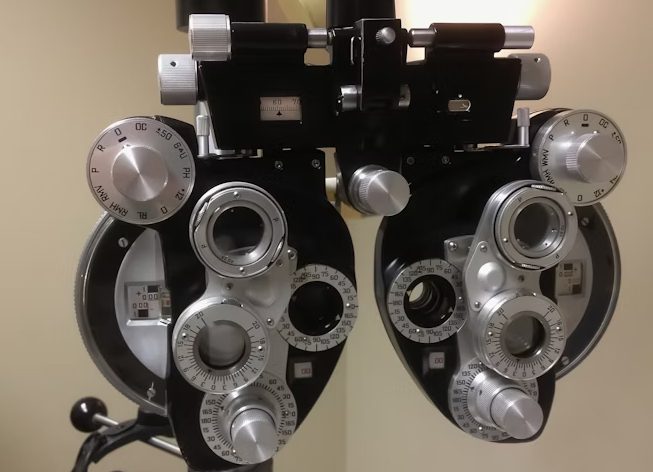
Patients often suffer from frequent headaches, dizziness, blurred vision, difficulty reading, and eye strain that they don’t understand may be related to binocular issues. Due to the wide-ranging nature of these symptoms and their overlap with things like general fatigue, binocular vision disorders, including accommodative and vergence dysfunctions can be missed during routine vision screenings or exams that do not include targeted binocular and accommodative testing. However, today the clinical diagnostics landscape is evolving: new medtech tools allow clinicians to go beyond symptom checklists and leverage advanced diagnostic systems that help identify/quantify underlying binocular problems. This can ultimately improve outcomes via more targeted care.
By their nature, binocular vision problems concern how the eyes team dynamically, and how the brain interprets input. Traditional eye exams focus on static metrics like visual acuity and eye health. Thus, 20/20 vision can coexist with poor visual efficiency, the ability to maintain clarity and singleness of vision during sustained near work.
This is one reason binocular issues seem to be invisible: often the size of measured findings (heterophorias, for example) don’t correlate with the severity of reported symptoms. Some patients with relatively small misalignments can nonetheless experience significant asthenopia as they fight to maintain comfortable binocular vision, while others with larger deviations may simply suppress an image and report less strain. This creates a diagnostic gap where patients pass the screens but experience significant functional symptoms. Uncovering these hidden issues requires a binocular vision assessment that includes evaluating accommodation, vergence, and eye alignment under sustained demands that trigger real-world symptoms.
Signs of binocular vision dysfunction are often attributed to general fatigue, overuse from screens, stress, and other vague factors. However, truly persistent headaches, dizziness, severe eye strain, and blurred vision may reflect a functional vision disorder poorly captured during routine eye exams. These symptoms are not specific to binocular problems and can also occur with dry eye, refractive error, migraine, vestibular disorders, neurologic conditions, and other causes.
Encountered symptoms may include:
In a modern, screen-heavy society, such symptoms are increasingly prevalent. According to the BMJ Open Ophthalmology article on digital eye strain, greater than 50% of computer users experience these symptoms. That article highlights “eye strain” as a nonspecific symptom capturing both external complaints (dryness, irritation) and internal symptoms (accommodative/vergence stress manifesting as headaches and ache behind the eyes).
Internally focused complaints suggest binocular/accommodative issues versus merely dry eye. This further intersection of sustained digital demands exacerbates pre-existing binocular/accommodation inefficiencies, thereby producing a headache/blurring/dizziness response. The overall effect is that screen usage is neither necessary nor sufficient to cause the problem, but it tends to unmask and exacerbate underlying limitations.
For decades, identifying accommodative/vergence/visual efficiency problems relied heavily on symptom checklists, questionnaires, and subjective clinical judgement. While symptom reports remain important, they lack specificity given the nonspecificity of “eye strain,” which could mean dry eye, ergonomics, refractive error, accommodation, vergence, or other mechanisms.
The landscape is changing to incorporate objective and structured clinical measures to increase specificity and capture sustained demands not just “can you read letters on the wall?” but “can you sustain clear, single vision over prolonged periods?”
Examples of now commonly recommended objective/structured elements within a binocular workup include:
These steps are critical because they provide repeatable metrics for clinical monitoring, which is especially useful given that complaints are often intermittent and exacerbated by fatigue, environmental factors, and screen use.
Many new systems have been introduced to objectively evaluate binocular single vision and quantify patients’ subjective impressions of diplopia and related experiences.
VR-based solutions provide highly controlled, repeatable stimuli in a virtual environment, making patient responses more comparable and enabling clinicians to reproduce the testing conditions consistently over time something that’s challenging with purely free-space systems.
Additionally, eye-tracking and video capture can quantify binocular fixation behavior as well as pupil/blink dynamics. Autorefraction during accommodative tasks can quantify accommodative lags versus accurate responses. Quantifying subtle misalignments that relate to fixation disparity can describe the underlying strain on vergence systems even when patients perceive single vision.
Collectively, such objective tools can add granularity to traditional clinical testing approaches particularly for subtle, intermittent, or fatigue-driven issues. And crucially, these objective metrics reduce ambiguity. When a provider can measure and monitor changes in convergence, accommodative capability, or binocular alignment over time, it improves the diagnostic clarity needed to differentiate:
This enables more specific targeting of therapies and the ability to objectively evaluate when they’re producing physiological effects.
There is considerable overlap between prolonged screen-use symptoms and underlying binocular/accommodation problems. Digital eye strain is often conceptualized as primarily an external problem, decreased blinking rates, environmental airflow, humidity, and other aspects contribute to dryness. However, evidence supports a substantial internal component as well.
The BMJ Open Ophthalmology article strongly differentiates between symptoms that are external vs internal, with internal symptoms (headache/strain/ache behind the eyes versus burning/irritation/dryness) being more consistent with accommodative/vergence stress. The conceptual model for binocular/accommodative stress is that the compounded demands of sustained near work push the vulnerable system past its limits. If there are lags in accommodation or inadequacies in vergence reserves, patients must compensate with sustained effort to maintain clear and single vision, leading to headaches, blurred vision, dizziness, and other responses. Further, screen use can exacerbate inefficient binocular/accommodation systems over time. Again, screen use is neither necessary nor sufficient to cause an underlying binocular or accommodative disorder, but it can unmask or worsen symptoms in susceptible patients.
While expanding medtech tools better quantify and diagnose visual dysfunctions, these tools are only as impactful as the clinicians integrating them into practice. Eye care providers are vital for diagnosing organic eye disease and prescribing glasses, yet may not regularly test binocular/accommodative components needed to uncover systemic fatigue/functional failure within the ocular system.
Patients with chronic headaches, dizziness, blurred vision, and reading difficulty benefit from seeing clinicians specifically equipped to test accommodation, vergence, and ocular motor function under sustained, realistic paradigms. For readers wishing to explore next steps, it is highly recommended to find a specialist for BVD using a comprehensive provider-locator directory to ensure you are receiving specialized functional vision care.
If symptoms described herein sound familiar, the goal is to go from “I feel terrible” to “We can measure what’s happening, and address it.” To that end, here’s a checklist of practicable recommendations:


Cardiovascular imaging plays a vital role in the U.S. healthcare system, offering non-invasive methods that help detect, evaluate, and manage heart disease with greater accuracy and safety. As …
Posted Mar 31, 2026 Cardiology
Connecting innovation decision makers to authoritative information, institutions, people and insights.

Medigy accurately delivers healthcare and technology information, news and insight from around the world.
Medigy surfaces the world's best crowdsourced health tech offerings with social interactions and peer reviews.
© 2026 Netspective Foundation, Inc. All Rights Reserved.
Built on Apr 1, 2026 at 1:11pm