

Managing Editor
@ShahidNShah
@ShahidNShah
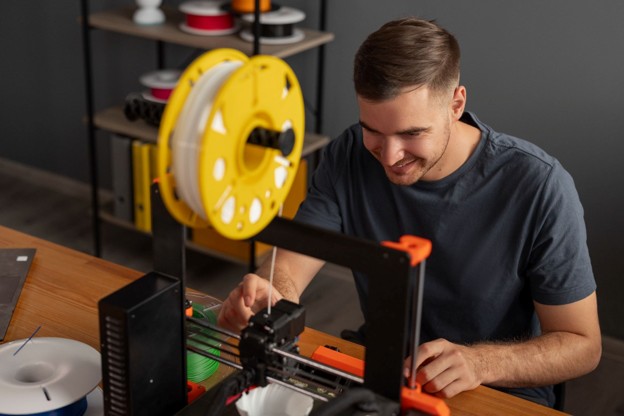
Bringing a new product to market quickly is a major goal for many companies, but speed alone is not enough. The product also needs to be reliable, consistent, and cost-effective to produce. This is where injection molding plays an important role in rapid product development. It allows manufacturers to produce high-quality parts in large volumes with strong accuracy and repeatability.
Once a design is finalized, injection molding helps move it from concept to full production without long delays. This makes it a key process for businesses that want to test, refine, and scale products efficiently in competitive markets.
Today’s best manufacturing teams don’t just move fast, they move with intention. The injection molding manufacturing process compresses development lifecycles by helping teams get from digital file to physical part without sacrificing dimensional accuracy or material integrity. That combination is rarer than it sounds. In many modern workflows, it also works alongside technologies like large scale 3d printing, which helps teams quickly validate designs before committing to expensive tooling.
Simulation software, modern CAD environments, and smarter tooling strategies are now converging in ways that used to be theoretical. The practical outcome? Products that once needed months to finalize are now clearing design-to-production cycles in weeks.
Modern CAD tools let engineers simulate part performance long before anyone picks up a mold. Costly assumptions get eliminated early. Timelines stay intact. Rapid product development techniques depend entirely on this kind of digital-first discipline; skipping it is expensive in ways that aren’t always obvious until it’s too late.
Running virtual mold-fill and thermal analysis before any tooling begins dramatically cuts first-shot failure rates. Teams that skip this step don’t just lose money, they lose weeks. Sometimes months. The calendar doesn’t forgive rework the way budgets occasionally can.
Think of it as a well-choreographed sequence: design validation, tooling fabrication, mold setup, material injection, part ejection, finishing. Every stage offers real opportunities to save time if you manage them deliberately.
Teams applying Design for Manufacturability principles from day one sidestep the kind of mid-process corrections that quietly kill launch dates. Wall thickness consistency, draft angles, and gate placement- get these right in early design reviews, and you’ll rarely be surprised during production.
Rapid prototyping with injection molding, particularly using bridge tooling, gives teams functional, near-production-quality parts in days rather than weeks. Bridge tooling lives in that practical middle ground between early prototyping and full hard tooling investment.
Rapid tooling can shrink mold production time from several weeks down to just 5–15 business days. For teams staring down a launch deadline, that’s a meaningful difference.
Understanding the process is one thing. Knowing what it delivers in practice is what changes decisions.
Teams across medical devices, automotive, and consumer electronics report launch timelines cut by weeks, sometimes entire quarters, after shifting to injection molding-based workflows. Cycle times are repeatable, scalable, and predictable. Those three words matter enormously when stakeholders are watching every milestone on a roadmap.
The benefits of injection molding go well beyond speed. Advanced polymers, bio-based plastics, and hybrid compounds give engineers material flexibility that handles complex geometries and demanding performance requirements. Tolerances tight enough for regulated industries? Achievable. That’s not always true with competing methods.
From first prototype to full production run, injection molding delivers consistent cost advantages. Material waste stays minimal, energy efficiency stays high, and per-unit costs drop steadily as volumes climb. That cost curve matters when you’re planning production three quarters out.
The tools supporting rapid product development techniques are advancing faster than most people realize. Smart tooling, digital twins, and hybrid manufacturing aren’t concepts anymore; they’re production realities.
Molds equipped with embedded sensors now monitor fill pressure, temperature, and cycle performance in real time. When paired with digital twins, this data enables predictive maintenance and dramatically reduces unplanned downtime. You’re essentially giving the mold its own diagnostic system.
This is where things get genuinely exciting. Forward-thinking teams are integrating large scale 3d printing with injection molding to unlock workflows that weren’t practical even a few years ago. Directly printed molds, insert molding with printed components, and on-demand customization are all moving from pilot programs into actual production lines.
Biodegradable polymers, recycled plastics, and energy-efficient process controls are making injection molding a credible option for sustainability-focused product lines. This isn’t compromise manufacturing, it’s becoming a genuine competitive differentiator.
Knowing about innovations is useful. Applying them within a disciplined development process is what separates good intentions from fast launches.
Wall thickness, draft angles, mold design, these decisions made during early design reviews prevent the kind of expensive re-tooling that quietly devastates timelines. DFM isn’t paperwork. It’s insurance.
Partners with digital quoting systems, short-lead mold shops, and integrated prototyping capabilities keep your development momentum from stalling at supplier bottlenecks. Agility in a partner is underrated until you desperately need it.
The global plastic injection molding market is projected to grow from $192.7 billion in 2024 to $235.7 billion by 2029, at a CAGR of 4.1%. That’s not speculative enthusiasm, that’s sustained industry confidence built on demonstrated results.
AI-driven design tools and cloud-based manufacturing platforms are already compressing lead times further. Multi-material molding and adaptive tooling innovations are next. And next-generation robotics handling part removal, quality inspection, and secondary operations are turning “rapid development” from an aspiration into a repeatable standard.
How do you choose materials for prototyping versus production?
Start with lower-cost resins for early functional prototypes, then align with production-grade polymers once geometry and performance requirements are confirmed. Let your manufacturing partner’s DFM review guide final material selection, that expertise exists for a reason.
What actually changes when you shift from 3D printed prototypes to injection molded parts?
Wall thickness inconsistencies, undercuts, and geometries that print fine often need real redesigning for injection molding. Early DFM reviews and simulation tools catch these before tooling investment begins. Don’t skip that step.
When does ROI show up?
For runs above several thousand units, most teams see a return within their first production cycle. Per-unit cost reductions and faster cycle times typically offset tooling investment within a plannable timeframe, which makes the business case straightforward.
Injection molding versus large scale 3d printing: how do you choose?
3D printing wins for initial design validation and complex geometries in early stages. Injection molding takes over when your design stabilizes and volume requirements justify tooling investment. They’re complementary, not competing.
Are there actually viable sustainable options here?
Absolutely. Recycled resins, bio-based polymers, and energy-efficient press technologies are all production-ready for teams that need to meet sustainability commitments without sacrificing part quality.
Injection molding for product development is a strategic decision as much as it is a manufacturing one. Combined with simulation software, smart tooling, and hybrid additive approaches like large scale 3d printing, it gives development teams a real speed advantage from prototype through full production.
Take an honest look at your current workflow; there’s a good chance injection molding fills gaps you didn’t even know were costing you time. The teams winning product races right now aren’t always the most innovative ones. They’re often just the ones who figured out how to move from idea to finished product faster than everyone else, and made that repeatable.


Stress has become the background noise of modern life. Relentless work demands, screen fatigue, and the pressure to stay perpetually “on” have pushed millions of people past their limits. …
Posted May 22, 2026 Mental Health
Connecting innovation decision makers to authoritative information, institutions, people and insights.

Medigy accurately delivers healthcare and technology information, news and insight from around the world.
Medigy surfaces the world's best crowdsourced health tech offerings with social interactions and peer reviews.
© 2026 Netspective Foundation, Inc. All Rights Reserved.
Built on Oct 18, 2026 at 6:05pm