

Managing Editor
@ShahidNShah
@ShahidNShah
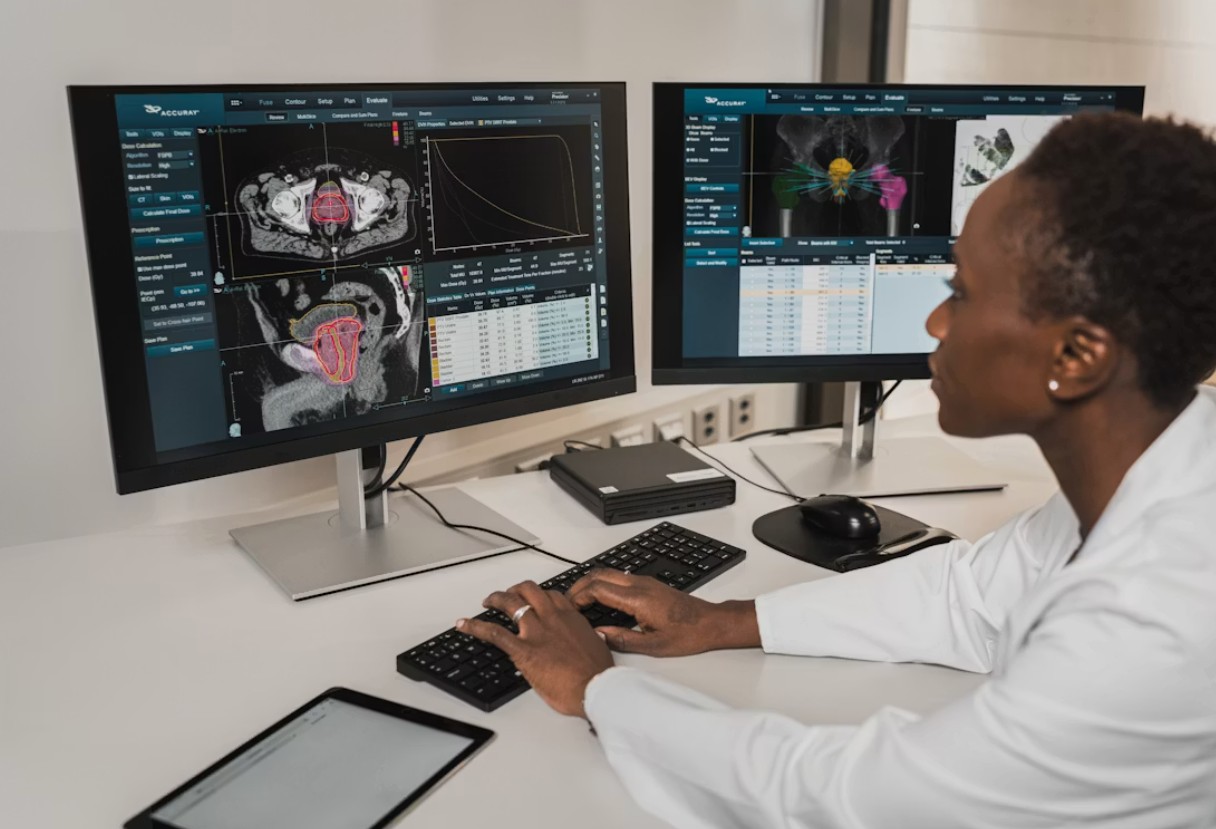
Healthcare marketing and communications teams are under constant pressure to produce patient-facing visuals, brochures, condition explainers, clinic posters, and campaign graphics, faster than traditional design workflows typically allow. Higgsfield offers the most advanced & accurate AI Image Generator with multiple models, that healthcare marketing teams are beginning to adopt for exactly this purpose, using it to shorten the timeline between a content need and a finished, distributable asset.
That shift reflects a broader pattern across healthcare communications, where the volume of educational material a system needs to produce has grown faster than most internal design teams have been able to scale. What used to be a manageable quarterly output of new patient materials has, for many organizations, become a near-constant production demand spanning dozens of service lines at once.
A single patient education piece, a brochure on a chronic condition, a poster promoting a vaccination clinic, a post-visit instruction sheet, typically moves through several stages before it reaches a patient. Clinical staff draft or approve the underlying content, a designer builds the layout, a compliance reviewer checks accuracy and messaging, and only then does the material get finalized for print or digital distribution. Tools like Higgsfield are aimed squarely at compressing that middle design stage, not at replacing the clinical and compliance steps on either side of it.
Each of those stages is necessary, but the design stage in particular has traditionally been a bottleneck. Internal design teams at most healthcare organizations are small relative to the volume of communications a hospital system, clinic network, or health plan needs to produce across service lines, departments, and patient populations. A single designer might be responsible for materials spanning cardiology, oncology, pediatrics, and general wellness campaigns simultaneously, with no realistic way to give each request the turnaround time a single-department marketing team would expect.
Written explanations alone often fail to convey medical information clearly, particularly for patients with limited health literacy or complex conditions. Diagrams, illustrations, and visual examples consistently help patients understand disease progression, procedures, and medication instructions in ways plain text cannot on its own.
That makes visual quality more than a branding concern. A poorly designed or generic patient handout can genuinely reduce comprehension, while a clear, well-illustrated one supports better engagement and more informed conversations between patients and their care teams. The stakes attached to getting these visuals right, and getting them out quickly, are higher in healthcare than in most other marketing contexts, where a delayed campaign asset is an inconvenience rather than a gap in a patient’s understanding of their own care.
As healthcare organizations have expanded their digital communication efforts, telehealth onboarding materials, condition-specific microsites, social media health campaigns, the sheer volume of visual content needed has outpaced what small internal design teams can reasonably produce through traditional workflows. Some organizations have responded by hiring additional design staff, but headcount growth rarely keeps pace with the rate at which new campaigns, service lines, and patient communication channels continue to multiply. This mirrors a broader trend Medigy has covered in leveraging modern technologies for enhanced patient interaction, where digital tools are increasingly expected to meet patients where they already are, rather than requiring patients to adapt to legacy communication formats.
AI image generation addresses that volume problem directly. Instead of briefing a designer and waiting on a production queue, a marketing team can generate a first-draft visual directly from a description of what the material needs to communicate, then route that draft through the same clinical and compliance review process the organization already has in place. The design bottleneck shrinks without changing who approves the final content, which matters for organizations wary of loosening clinical oversight in the name of speed.
Not every AI image tool is suited to healthcare marketing. Medical accuracy, brand consistency across a health system, and the ability to make quick edits without regenerating an entire asset all matter more here than in most consumer marketing contexts, where a slightly imperfect image is a minor issue rather than a potential source of patient confusion. Platforms built around a single fast, casual generation mode tend to fall short on exactly these requirements, which is part of why healthcare marketing teams evaluating Higgsfield have focused their testing on the specific capabilities covered below rather than treating the platform as a generic image tool.
Higgsfield is structured as a broader AI creative suite rather than a single-purpose generator, bringing image, video, and voice generation together with editing and upscaling in one platform. For a healthcare marketing team, that structure matters because patient communications rarely stop at a single image, a campaign might need a poster, a matching social graphic, and eventually a short explainer video, and having those produced from the same workspace keeps visual style consistent across formats.
Higgsfield gives users access to 15 or more leading image models in a single workspace, including Nano Banana Pro, GPT Image, Seedream, and FLUX, letting a marketing team compare outputs and select whichever model renders medical concepts most clearly and accurately for a given piece of content. That flexibility matters more in healthcare than in most marketing contexts, since a model that handles a lifestyle campaign well is not automatically the right choice for illustrating a medical procedure or anatomical detail.
Marketing teams evaluating Higgsfield for this use case have generally started small, testing the platform on lower-stakes materials such as wellness campaign graphics or general health tip infographics before extending its use to more clinically sensitive content, a cautious rollout pattern that mirrors how most healthcare organizations approach any new communications tool.
A handful of specific features determine whether an AI image generator actually holds up for healthcare communications work, and Higgsfield’s design choices reflect an attempt to address each of them directly.
Patient materials depend heavily on text, headlines, instructions, dosage information, clinic hours, that needs to render correctly every time. Nano Banana Pro, one of the models available through Higgsfield, is built on a reasoning engine designed to render legible, accurately spelled text directly inside a generated image, addressing a persistent weak point in earlier AI image tools where overlaid text came out garbled or illegible. For a clinic poster listing appointment times or a medication guide with specific dosage figures, that reliability is not a minor convenience, it is the difference between a usable draft and one that needs to be rebuilt in traditional design software regardless.
Healthcare marketing materials change constantly, a clinic’s hours shift, a new provider joins a practice, a vaccination date moves. Higgsfield’s inpainting tools let a specific region of a generated image be edited directly, updating a date, a phone number, or a detail without regenerating the entire piece, a workflow far closer to how design teams already handle routine content revisions. This matters particularly for materials distributed across multiple locations, where a single template might need dozens of minor location-specific edits rather than a full redesign for each site.
Larger healthcare organizations often manage dozens of service lines and locations, each needing materials that stay visually consistent with the parent brand. Higgsfield supports direct brand color input through hex or RGB codes, letting generated visuals match an organization’s exact color guidelines rather than approximating them, which matters when materials from different departments end up displayed side by side in a waiting room or shared across a patient portal. Marketing teams managing a system-wide brand refresh have found this particularly useful for regenerating existing material libraries without a full manual redesign of every asset.
The practical difference between traditional design production and AI-assisted generation shows up most clearly in timeline and volume, a distinction that matters more to a marketing director managing dozens of concurrent campaigns than to anyone judging a single asset in isolation.
| Factor | Traditional Design Production | AI-Assisted Generation |
| Turnaround time | Days to weeks per asset, dependent on designer availability | Minutes to hours for a first draft |
| Cost per asset | Designer time, potentially outside agency fees | A fraction of the cost within a platform subscription |
| Revision process | Often requires rebuilding the layout | Specific elements can be edited directly |
| Volume capacity | Limited by internal design team size | Scales without adding design headcount |
| Best suited for | Flagship campaigns, brand identity work | High-volume patient education and departmental materials |
That comparison does not eliminate the need for design expertise or clinical review, it changes where that expertise gets applied, shifting time away from producing first drafts and toward refining, verifying, and approving the content that actually reaches patients. Teams running Higgsfield alongside their existing design process report that this reallocation of time, rather than any single generated asset, is the change that actually shows up in their production calendars.
AI-generated visuals do not remove the need for clinical and compliance oversight in healthcare marketing, and organizations adopting these tools have generally treated generation as a drafting step rather than a final publishing step. Medical illustrations depicting anatomy, procedures, or medication use still require review by qualified clinical staff before distribution, the same standard applied to traditionally designed materials.
Organizations that have built AI image generation into their workflow typically maintain the same approval chain they already use, clinical accuracy review, brand and messaging review, and final sign-off, simply applied to a draft that arrived faster than it would have from a traditional design queue. The efficiency gain sits in the drafting stage, not in bypassing verification. Teams using Higgsfield for this purpose have generally treated its output the same way they would treat a first pass from a junior designer, useful, fast, and still subject to the same scrutiny before anything reaches a patient.
Hospital and health system marketing departments managing communications across many service lines and locations see the most direct benefit, since the volume of materials needed scales with the number of departments and campaigns running simultaneously. Smaller practices and clinics without a dedicated design resource benefit differently, gaining access to professional-quality visuals that would previously have required outsourcing to an agency or design freelancer for even routine materials.
Patient education and community health teams focused specifically on health literacy also stand to benefit, since the ability to quickly generate and test different visual approaches to explaining a condition or procedure supports the kind of iteration that improving patient comprehension actually requires. A team that can produce and compare five visual explanations of the same procedure, rather than committing to a single approach out of necessity, is better positioned to identify which version patients actually understand best.
As healthcare organizations continue expanding digital patient communication, condition explainers, telehealth onboarding, community health campaigns, the volume of visual content needed is likely to keep growing faster than internal design capacity unless workflows change. AI image generation offers a way to close that gap without requiring healthcare organizations to expand design headcount at the same rate their communication needs are expanding.
For marketing and communications leaders evaluating where to invest, the more durable shift may not be any single tool’s capabilities but the move toward platforms that handle image, video, and editing together in one workspace, reducing the friction of stitching together output from multiple disconnected tools while keeping the clinical review process that patient-facing content in healthcare will always require. Platforms structured this way, Higgsfield among them, position healthcare marketing teams to scale visual output without treating design capacity as a fixed constraint on how much patient education content the organization can realistically produce in a given year.


Plastic surgery billing is one of the most challenging specialties in healthcare revenue cycle management. Unlike many other specialties, plastic surgeons often provide a combination of cosmetic, …
Posted Jul 30, 2026 Cosmetics Diagnostic Techniques and Procedures Coding / Billing And Claims
Connecting innovation decision makers to authoritative information, institutions, people and insights.

Medigy accurately delivers healthcare and technology information, news and insight from around the world.
Medigy surfaces the world's best crowdsourced health tech offerings with social interactions and peer reviews.
© 2026 Netspective Foundation, Inc. All Rights Reserved.
Built on Oct 24, 2026 at 6:05pm