

Managing Editor
@ShahidNShah
@ShahidNShah
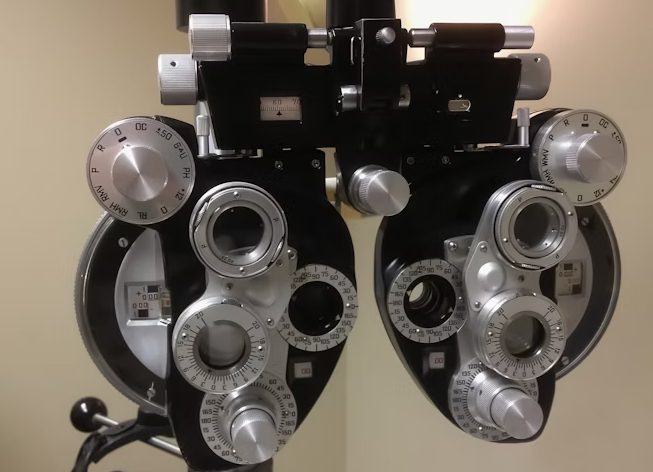
Eye care has undergone significant changes over the last decade. What once relied heavily on manual testing and visual checks is now guided by advanced medical technology. Today, specialists in Manhattan and beyond utilize detailed imaging, computer-guided testing, and precision devices to understand the eye in ways that were previously impossible. These tools help detect problems earlier, guide treatment decisions, and improve overall clinical results.
Technology in eye care is not about replacing clinical judgment. It is about supporting it with accurate data. When specialists can see more clearly what is happening inside the eye, they can respond more precisely. This article explores the key technologies used in modern eye care and explains how each one contributes to better outcomes.
Accurate diagnosis is the foundation of effective eye care, and advanced imaging has transformed this stage of the process. One of the most widely used technologies is optical coherence tomography, or OCT. It creates detailed cross-sectional images of the retina, allowing specialists to see layers of tissue that cannot be examined with the naked eye. This is especially useful for detecting conditions such as glaucoma, macular degeneration, and retinal swelling at an early stage.
Digital retinal imaging also plays a key role. High-resolution photographs of the back of the eye are captured and stored, creating a visual record that can be reviewed over time. This allows specialists to monitor subtle changes and compare images across visits, which is critical for managing progressive eye conditions.
Corneal topography adds another layer of insight by mapping the surface of the cornea. These maps help identify irregularities that affect vision and guide decisions related to corrective treatments. Together, these imaging tools provide objective, measurable data that improves diagnostic confidence and reduces reliance on estimation.
Once diagnostic information is available, laser technology plays a key role in how many eye treatments are delivered. Medical lasers use focused light to reshape or treat specific areas of the eye, guided by precise data from corneal maps and digital measurements. This allows treatment to be planned around the structure of each eye.
Because laser systems follow exact measurements, they offer a high level of control during procedures. This precision helps limit impact on surrounding tissue and supports consistent results, which is especially important in vision correction.
Many eye care centers now rely on laser technology as part of everyday clinical care. Dr. Giyaur at NY Laser Vision, a trusted name for people searching for an eye doctor in Manhattan, is one such example. Her team uses modern laser and diagnostic systems to support procedures such as:
These laser procedures depend on accurate measurements taken before treatment. By connecting diagnostic data directly to laser-guided care, specialists can tailor each procedure more precisely, helping outcomes feel controlled and predictable.
Vision testing has also evolved through the use of computerized systems. Automated refraction tools analyze how light moves through the eye to determine corrective prescriptions with greater consistency than manual methods. Digital visual acuity testing provides standardized conditions, reducing variability and improving reliability across exams.
Visual field testing is another important advancement. These systems assess peripheral vision and help detect blind spots that may indicate pressure-related or neurological conditions. By relying on objective measurements rather than subjective responses alone, computerized testing helps specialists gain a clearer understanding of visual function and detect issues that may not be immediately obvious.
Technology continues to play an important role even after treatment decisions are made. Digital planning systems allow specialists to bring together imaging results, vision measurements, and treatment data into a single clinical view. This helps ensure that each step of care is aligned with the original diagnosis and tailored to the patient’s specific needs.
Long-term monitoring is also strengthened through technology. Digital records make it possible to store images and test results over time, allowing specialists to compare changes across visits. This is particularly valuable for managing progressive eye conditions or evaluating how the eye responds after a procedure.
Technology supports ongoing care in several ways:
By using technology to guide both planning and follow-up, eye care specialists can maintain a clearer picture of eye health over time. This data-driven approach helps support more informed decisions, steadier outcomes, and better long-term clinical results.
Technology has become central to modern eye care. Advanced imaging, laser-guided treatment, computerized testing, and digital monitoring all contribute to more accurate diagnoses and better clinical results. The true benefit comes from how these tools support informed decision-making and precise care. When technology is used thoughtfully alongside clinical expertise, it helps create safer, more effective eye care and supports stronger outcomes over time.

Chief Editor - Medigy & HealthcareGuys.

Key Takeaways: Holistic addiction care views recovery as a full-person process shaped by emotional, physical, and social factors. Integrated programs use varied clinical and lifestyle supports to …
Posted Dec 12, 2025 Rehabilitation Addiction
Connecting innovation decision makers to authoritative information, institutions, people and insights.

Medigy accurately delivers healthcare and technology information, news and insight from around the world.
Medigy surfaces the world's best crowdsourced health tech offerings with social interactions and peer reviews.
© 2026 Netspective Foundation, Inc. All Rights Reserved.
Built on Apr 2, 2026 at 12:49pm