

Managing Editor
@ShahidNShah
@ShahidNShah
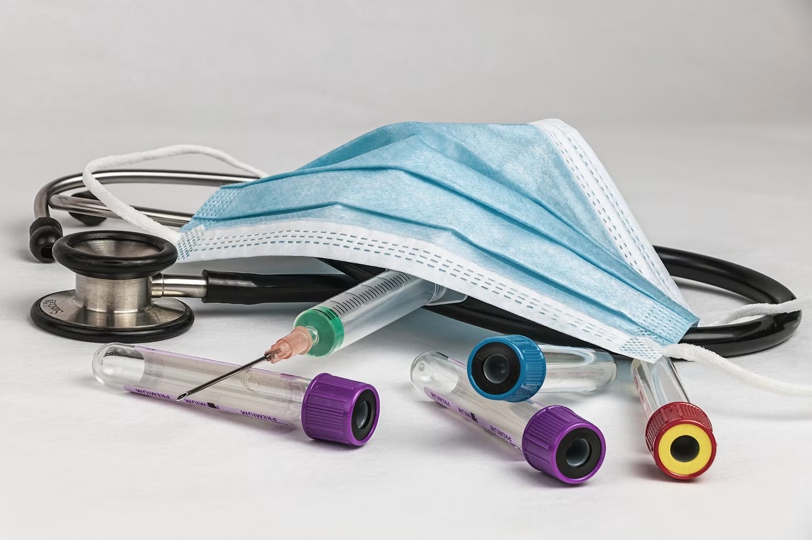
The order of draw is one of the first sequences a phlebotomy student memorizes. It is also one of the first details to become uncertain when a real patient is waiting, a vein is difficult, and several collection steps demand attention at once.
That tension matters as more phlebotomy education moves partly or fully online. An online phlebotomy course can present venipuncture procedures clearly, but screen-based study changes how students learn and rehearse a sequence they must later perform from memory. The practical question is which parts of digital training genuinely build order-of-draw recall under pressure and where that preparation stops being enough for a new collector.
The standard order of draw is blood cultures, light blue coagulation tubes, red or gold serum tubes, green heparin tubes, lavender EDTA tubes, and gray glycolytic inhibitor tubes. Following this sequence during venipuncture protects the integrity of each collected specimen.
The sequence is not simply tradition. Tube additives can carry over on the needle, which is why collection tubes are drawn in a specific sequence. EDTA carryover can falsely elevate potassium and lower calcium, clot activator can distort coagulation results, and heparin can interfere with EDTA-based hematology testing.
The CLSI venipuncture standards define the sequence rather than individual employers, so it remains consistent across laboratories. Accordingly, proper tube order supports accurate specimen handling and labeling as part of the same collection process.
An out-of-sequence draw does not always cause an obvious problem at the collection chair. The error often surfaces later, after testing produces an implausible result or the laboratory rejects the specimen. By then, the patient may have left, making a repeat venipuncture harder to arrange.
A contaminated specimen can also appear valid. For instance, EDTA carryover can produce an elevated potassium result in a patient who was never hyperkalemic. That result can shape clinical decisions unless the laboratory identifies the interference and requests a redraw.
The consequences extend beyond the test itself. A redraw means another needle stick for the patient, lost turnaround time for the laboratory, and an incident associated with the collector’s name. Correct specimen handling and labeling cannot repair contamination that occurred during collection.
These mistakes cluster during difficult draws, rushed collections, and moments when a required tube is missing from the tray. Hiring managers and clinical instructors expect a new collector to know the order of draw cold before the first unsupervised patient because there is no time to consult a chart with a needle in a vein. Recall must remain available while attention is divided among the patient, the vein, and the collection equipment.
Reading a tube chart builds recognition, but recognition is not the same as retrieving the sequence without a prompt. Under time pressure, the training format determines whether students can perform the order of draw or merely recognize the correct answer afterward.
A virtual lab simulation places tube order inside the full collection workflow. Instead of dragging colors into a memorized row, the student completes patient identification verification, selects supplies, performs the simulated draw, fills and mixes tubes, and finishes with labeling. This process turns isolated knowledge into a habit chain.
Branching scenarios strengthen simulation-based training because real collections do not always match a clean textbook example. A program can introduce a missing tube, a short draw, a butterfly set, or an additional test ordered during collection. The student must then preserve the correct sequence while adapting the procedure.
The same environment can rehearse newer workflow components, including barcode patient identification checks and point-of-care testing steps. These technologies change what the collector does before or after collection, even though they do not change the underlying tube sequence. Recorded demonstrations can show this workflow, but watching each decision does not test whether the learner can make it independently.
Spaced repetition requires students to retrieve tube order, additives, and test associations after progressively longer intervals. When an answer is missed, the material returns sooner. This structure builds more durable recall than rereading the same chart several times in one sitting.
Timed question banks add another necessary constraint. A student might remember the sequence with unlimited time yet hesitate when a question combines tube color, additive, specimen type, and an interrupted collection. Repeated retrieval under a clock exposes that hesitation before it reaches the bedside.
Self-paced learning works only if it does not mean completing an online phlebotomy course in one uninterrupted run. Forced review intervals, mixed question sets, and cumulative checks prevent earlier material from disappearing as new modules begin.
In contrast, downloadable PDFs and one-pass module quizzes do not create the same retrieval demand. They can support review, but they often reward short-term recognition and allow a passing score without automatic recall.
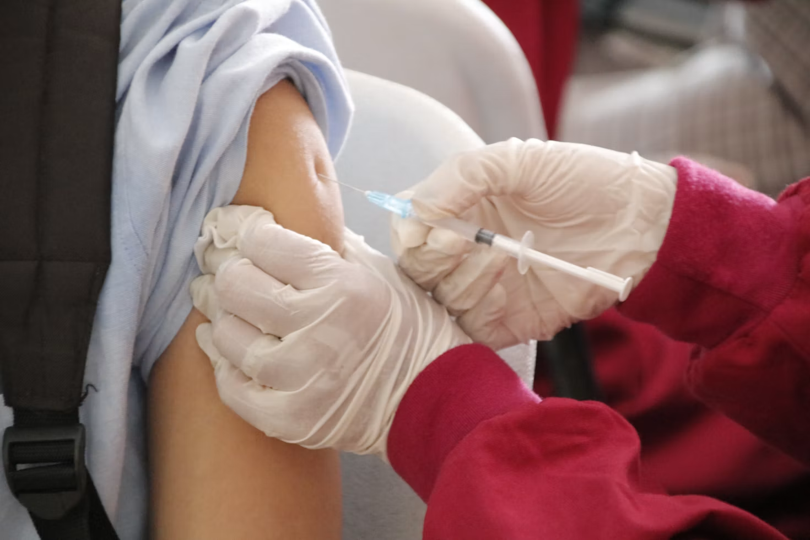
Two gatekeepers test order-of-draw competence. A certification exam measures whether the student can apply the knowledge, while supervised clinical practice shows whether that knowledge holds with an actual patient.
The NHA phlebotomy exam for the NHA Certified Phlebotomy Technician (CPT) credential does not reduce preparation to reciting tube colors. Questions can connect the order of draw with additives, specimen handling, and collection scenarios, requiring the student to identify what happens next or where an error occurred.
That approach makes timed, mixed practice more useful than memorizing a color mnemonic alone. A learner might know that lavender follows green but still struggle to connect lavender with EDTA or recognize how additive carryover affects the specimen.
The National Healthcareer Association (NHA) is not the only certification body using applied knowledge. Credentials from the National Center for Competency Testing (NCCT), American Society for Clinical Pathology (ASCP), and American Medical Certification Association (AMCA) draw on the same standard sequence. Preparation that builds clinical reasoning therefore transfers across phlebotomy certification pathways rather than serving a single test.
Phlebotomy coursework can be completed online, but competence sign-off cannot. Certification eligibility and employer readiness depend on documented collection experience, including successful venipunctures and skin punctures performed under appropriate supervision. A screen can prepare a student for those procedures, but it cannot generate them.
That limitation explains the hybrid program model: theory and digital exercises online, followed by in-person laboratories and a clinical externship. During those sessions, an instructor or preceptor can observe tube selection, fill order, mixing technique, and labeling in real time.
Program recognition also matters because training hours and placement arrangements must satisfy applicable credential requirements. A NAACLS-recognized or otherwise appropriately accredited program provides a structured route from online study to supervised practice rather than treating digital completion as proof of bedside competence.
Digital training earns its place when it requires retrieval instead of passive review. Timed questions strengthen access to the order of draw, while simulation places that knowledge inside patient verification, collection, mixing, and labeling. Lectures and PDFs can explain the material, but they cannot show whether recall will hold during a demanding venipuncture.
Supervised practice completes the process by testing performance with real equipment, specimens, and interruptions. Because the order of draw follows the same CLSI framework across laboratories, making it automatic supports more than one certification exam or clinical placement. It becomes a repeatable collection habit that carries from the first supervised draw into everyday laboratory work.


Achieving reliable results in formulation research requires careful control of the variables involved throughout the process. Among these, the quantities of ingredients used can be particularly …
Posted Sep 8, 2026 Biological Products Research
Connecting innovation decision makers to authoritative information, institutions, people and insights.

Medigy accurately delivers healthcare and technology information, news and insight from around the world.
Medigy surfaces the world's best crowdsourced health tech offerings with social interactions and peer reviews.
© 2026 Netspective Foundation, Inc. All Rights Reserved.
Built on Oct 20, 2026 at 5:05am