

Managing Editor
@ShahidNShah
@ShahidNShah
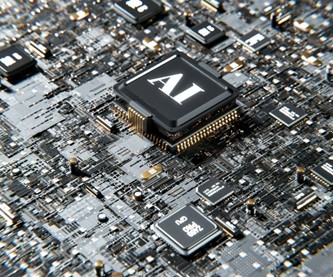
Healthcare has entered a new era of digital transformation. For years, artificial intelligence (AI) was primarily used to automate repetitive administrative tasks such as appointment scheduling, claim processing, and documentation. While these innovations significantly reduced operational burdens, today’s AI is evolving far beyond simple automation. It is becoming an intelligent clinical assistant capable of supporting physicians, improving patient outcomes, and enhancing healthcare decision-making.
The next evolution of AI in healthcare is no longer just about reducing paperwork—it’s about delivering clinical intelligence. By integrating AI with electronic health records (EHRs), diagnostics, revenue cycle management, and workflow optimization, healthcare organizations are creating smarter, more efficient systems that empower providers to focus on what matters most: patient care.
Healthcare organizations have long struggled with excessive administrative work. Physicians often spend nearly as much time documenting patient encounters as they do treating patients. Front-office staff manage scheduling, insurance verification, billing, coding, and countless manual processes.
The first generation of AI addressed these challenges by automating routine operations, including:
These technologies helped reduce operational costs, minimize human errors, and improve staff productivity. However, they primarily focused on business operations rather than clinical decision-making.
Today, healthcare providers are demanding more sophisticated AI solutions that actively contribute to patient care.
Modern AI systems don’t simply complete administrative tasks—they analyze massive volumes of healthcare data to generate actionable clinical insights.
AI can now:
Rather than replacing physicians, AI acts as an intelligent assistant that provides relevant information at the right time, helping clinicians make faster and more informed decisions.
One of the most impactful innovations in this transformation is the AI Medical Scribe.
Traditional documentation consumes hours of physician time every day. During patient visits, clinicians must divide their attention between the patient and the computer screen. This contributes to physician burnout and reduces the quality of patient interactions.
An AI Medical Scribe automatically listens to patient-provider conversations, captures clinically relevant information, and generates structured medical notes in real time. It can document:
Instead of manually typing notes after every visit, physicians simply review and approve AI-generated documentation.
The benefits include:
As natural language processing continues to improve, AI medical scribes are becoming one of the fastest-growing technologies in healthcare.
Healthcare AI has expanded far beyond note generation.
Today’s intelligent platforms analyze structured and unstructured medical data to support clinicians throughout the patient journey.
Examples include:
AI identifies patients who are at higher risk for chronic diseases, hospital readmissions, or treatment complications.
Providers can intervene earlier, improving outcomes while reducing healthcare costs.
AI compares patient information against millions of clinical cases and current medical guidelines to assist physicians during diagnosis and treatment planning.
Rather than replacing clinical judgment, it enhances it.
AI can analyze genetics, medical history, lifestyle factors, and previous treatment responses to recommend individualized treatment strategies.
Personalized care is becoming increasingly practical with AI-driven insights.
The evolution of AI is also transforming Medical Practice Management Software.
Traditional practice management systems handled scheduling, billing, registration, and reporting. Modern AI-powered platforms are becoming intelligent operational hubs.
Advanced systems can now:
By analyzing historical operational data, AI helps healthcare administrators make proactive decisions rather than reacting to problems after they occur.
This improves both operational efficiency and patient satisfaction.
Revenue cycle management has always been one of healthcare’s most complex administrative functions.
Billing errors, coding mistakes, incomplete documentation, and payer-specific requirements often lead to claim denials and delayed reimbursements.
Modern Medical Billing Software now uses AI to automate many of these processes.
Key capabilities include:
AI can identify potential billing issues before claims are submitted, significantly improving first-pass claim acceptance rates.
Healthcare organizations benefit from:
Rather than simply processing claims, AI-powered billing systems continuously learn from historical data to improve future performance.
The real power of AI emerges when clinical intelligence and administrative intelligence work together.
Imagine a physician completing a patient consultation.
An integrated AI platform can simultaneously:
Instead of using multiple disconnected systems, providers benefit from a unified workflow that reduces administrative burden while improving clinical quality.
This seamless integration allows clinicians to spend more time treating patients rather than managing technology.
Physician burnout remains one of healthcare’s most pressing challenges.
Long documentation hours, administrative complexity, and increasing patient volumes contribute to stress and workforce shortages.
AI directly addresses many of these pain points by:
By removing unnecessary workload, AI helps restore the physician-patient relationship and improves job satisfaction.
Ultimately, healthcare technology should improve patient care—not just operational efficiency.
Clinical AI supports better outcomes by enabling:
Patients receive faster diagnoses, more personalized care, and fewer administrative delays.
Healthcare providers benefit from improved quality metrics, stronger patient engagement, and better long-term outcomes.
Despite rapid progress, AI adoption must be approached responsibly.
Healthcare organizations should address:
AI should support clinicians—not replace their expertise. Human judgment remains essential for delivering safe, ethical, and compassionate healthcare.
The healthcare industry is moving beyond simple automation toward intelligent, data-driven care delivery.
Future AI systems will become increasingly capable of:
Healthcare organizations that embrace AI today will be better positioned to improve efficiency, reduce costs, and deliver higher-quality care in the years ahead.
Artificial intelligence has progressed far beyond administrative automation. What began as a tool for scheduling appointments and processing claims is rapidly evolving into a trusted clinical partner that enhances decision-making, streamlines workflows, and improves patient outcomes.
Technologies like the AI Medical Scribe are reducing documentation burdens, while intelligent Medical Practice Management Software is optimizing operations and AI-powered Medical Billing Software is strengthening revenue cycle performance. Together, these innovations represent the next evolution of healthcare—one where administrative efficiency and clinical intelligence work hand in hand.
As AI continues to mature, the organizations that successfully integrate these technologies into both clinical and operational workflows will be best equipped to deliver more efficient, patient-centered, and sustainable healthcare.
Nathan Bradshaw is a digital health and healthcare IT expert specializing in EHR, RCM, and practice management systems. With 10+ years of industry experience, he helps healthcare organizations bridge the gap between clinical care and technology. He regularly shares insights on AI in healthcare, operational efficiency, and the future of medical practice transformation.


Shopping for a dental plan used to mean calling insurers one by one, comparing paper brochures, and hoping the fine print matched what a sales rep described over the phone. It was slow, confusing, and …
Posted Jul 31, 2026 Dentistry Health Technology
Connecting innovation decision makers to authoritative information, institutions, people and insights.

Medigy accurately delivers healthcare and technology information, news and insight from around the world.
Medigy surfaces the world's best crowdsourced health tech offerings with social interactions and peer reviews.
© 2026 Netspective Foundation, Inc. All Rights Reserved.
Built on Oct 26, 2026 at 5:05am