

Managing Editor
@ShahidNShah
@ShahidNShah
When Angela Morrison lost her back molar to decay at 45, her dentist presented three options: a bridge, a partial denture, or a dental implant. The implant cost twice as much and required surgery, but her dentist mentioned something that caught her attention—it would help preserve her jawbone. Five years later, Angela’s glad she chose the implant. Not only does she eat steak without thinking twice, but her face hasn’t developed the sunken appearance she’d noticed in her mother, who wore dentures for decades.
Angela’s experience reflects a growing understanding in dentistry: tooth replacement isn’t just about filling gaps—it’s about maintaining long-term oral and overall health. According to the American Academy of Implant Dentistry, over 3 million Americans currently have dental implants, and that number grows by 500,000 annually. For those seeking both functional and aesthetic benefits, consulting advanced implant dentistry in New Brunswick can provide personalized solutions that address long-term oral health as well as smile restoration.
The stakes extend beyond appearance. When you lose a tooth, the underlying jawbone begins resorbing—essentially dissolving—at a rate of 25% in the first year alone. This bone loss affects facial structure, bite alignment, and even nutrition, as people unconsciously avoid foods they can no longer chew effectively. Understanding how dental implants address these cascading health effects helps explain why dental professionals increasingly recommend them as the gold standard for tooth replacement.
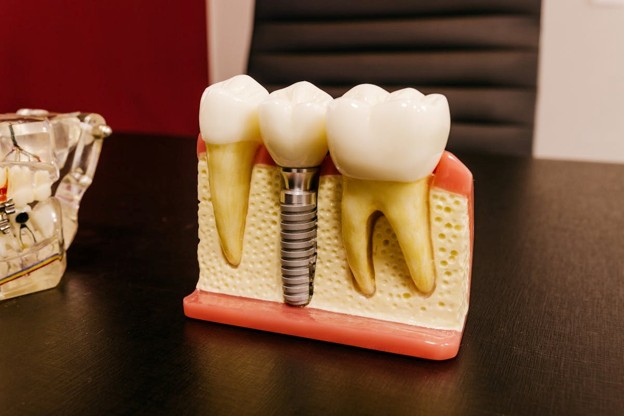
Think of a dental implant as an artificial tooth root. Unlike dentures that sit on your gums or bridges that rely on adjacent teeth for support, implants integrate directly into your jawbone through a remarkable biological process called osseointegration.
The implant itself is typically a titanium post, roughly the size and shape of a tooth root, that’s surgically placed into the jawbone where your natural tooth root used to be. Over the following three to six months, bone cells grow around and literally fuse with the titanium surface. This biological integration creates a foundation as stable as—and in some cases stronger than—a natural tooth root.
Once osseointegration is complete, your dentist attaches an abutment (a small connector piece) to the implant, then places a custom-made crown on top. The result is a tooth replacement that looks, feels, and functions like your original tooth. Unlike bridges, which require grinding down healthy adjacent teeth, or dentures, which can slip and cause sore spots, implants stand independently while stimulating the jawbone just like natural tooth roots do.
This stimulation is crucial. Your jawbone maintains its density through constant, gentle pressure from tooth roots during normal chewing. When that stimulation disappears after tooth loss, the bone begins to atrophy—a process that conventional tooth replacements can’t prevent but implants can.
Not all implant surgeries follow the same timeline. Delayed loading, the traditional approach, allows the implant to heal completely before placing the final restoration. This conservative method offers the highest success rates, particularly for patients with compromised bone density or those who grind their teeth.
Immediate loading, sometimes called “teeth in a day,” places a temporary crown on the implant immediately after surgery. While convenient, this approach requires ideal bone conditions and careful patient selection. Success rates are excellent when used appropriately, but the implant can fail if too much pressure is applied during the critical healing period.
Some patients need additional procedures before implant placement. Bone grafting builds up insufficient jawbone using either the patient’s own bone, processed donor bone, or synthetic materials. Sinus lifts create space for upper back teeth implants by gently lifting the sinus membrane and adding bone underneath. While these procedures extend treatment time, they make implants possible for patients who would otherwise be told they’re “not candidates.”
Titanium remains the gold standard for implant materials. Its biocompatibility is exceptional—the human body accepts titanium so well that it’s used in hip replacements, pacemakers, and aerospace applications. Titanium implants have over 50 years of clinical research supporting their long-term success, with 10-year survival rates exceeding 95% in healthy patients.
Zirconia offers an alternative for patients with metal sensitivities or those preferring a completely metal-free option. This ceramic material is white rather than gray, which can be advantageous in the aesthetic zone where gum recession might reveal the implant. However, zirconia implants have less long-term research data and can be more challenging to place due to their brittleness.
Recent innovations in surface treatments have improved implant integration. Modern titanium implants feature specially treated surfaces that encourage faster, stronger bone attachment. These advances have reduced healing times and improved success rates, particularly in challenging cases like immediate placement after tooth extraction.
The most significant long-term benefit of dental implants is bone preservation. Research published in the Journal of Periodontology shows that areas with dental implants maintain 98% of their original bone volume over 10 years, compared to a 40-60% loss in areas left empty after tooth extraction.
This bone preservation has dramatic implications for facial appearance. When back teeth are missing, the distance between your nose and chin gradually decreases as the jawbone shrinks. The lower face develops a collapsed appearance, creating deeper wrinkles around the mouth and a more aged look. Dental implants prevent this premature aging by maintaining the bone structure that supports your facial features.
The effect is particularly pronounced for patients missing multiple teeth. Complete denture wearers often develop the characteristic “sunken” look because dentures don’t stimulate bone. In contrast, implant-supported dentures maintain facial height and provide the bone stimulation necessary for long-term facial support.
Dental implants restore bite force to nearly normal levels—typically 80-90% of natural teeth compared to 20-30% for conventional dentures. This restoration enables patients to eat nutritious foods they may have avoided, including fresh fruits, vegetables, nuts, and lean proteins that require effective chewing.
Speech improvements are equally significant. Missing front teeth or ill-fitting dentures can cause lisping, whistling sounds, or clicking noises during conversation. Because implants are fixed in place and don’t cover the roof of your mouth like upper dentures, they enable clear, confident speech.
The psychological benefits are substantial. A study in the International Journal of Oral and Maxillofacial Surgery found that implant patients reported significantly higher satisfaction with their ability to eat, speak, and smile compared to denture wearers. Many described feeling “normal again” and being able to forget about their tooth replacement entirely—something rarely reported with removable options.
Unlike bridges, which require grinding down healthy adjacent teeth, implants preserve neighboring tooth structure entirely. This conservation prevents potential future problems with those teeth, which often develop decay or fractures under bridge crowns over time.
Implants also help stabilize adjacent teeth that might otherwise drift into the empty space left by a missing tooth. When teeth shift, it creates bite problems, uneven wear patterns, and difficulty cleaning between crooked teeth. By filling the space immediately, implants maintain proper tooth alignment and bite relationships.
Gum health typically improves around implants compared to other tooth replacement options. Because implant crowns emerge from the gum line like natural teeth, they’re easier to clean than bridges with hard-to-reach areas underneath. This improved cleanability reduces the risk of gum disease, which is linked to serious health conditions including heart disease, diabetes complications, and stroke.
While dental implants have excellent success rates, infection remains the primary risk. Peri-implantitis, an inflammatory condition affecting the tissues around implants, occurs in approximately 10% of cases according to research in Clinical Oral Implants Research. Unlike gum disease around natural teeth, peri-implantitis can be more challenging to treat and may lead to implant loss if not addressed promptly.
Mechanical complications include crown loosening, abutment screw loosening, and rarely, implant fracture. These issues are typically manageable and don’t necessarily require implant removal, but they do require professional attention and possible component replacement.
Nerve damage, while rare (less than 1% of cases), can occur during placement of lower jaw implants if the implant contacts the nerve that provides sensation to the lip and chin. Careful pre-surgical planning with 3D imaging has made this complication extremely uncommon in modern practice.
Long-term success rates are impressive: studies show 10-year survival rates of 95-97% for single implants and 90-95% for implant-supported bridges. More importantly, successful implants can last 25 years or longer with proper care—significantly longer than bridges (10-15 years) or dentures (5-8 years).
Success depends heavily on patient factors. Smoking dramatically increases failure rates, with some studies showing failure rates 2-3 times higher in smokers. Uncontrolled diabetes, radiation therapy to the head and neck, and certain medications that affect bone healing also impact success rates.
The surgeon’s experience and proper treatment planning are equally crucial. Implants placed by specialists (oral surgeons or periodontists) typically have higher success rates than those placed by general dentists, particularly in complex cases requiring bone grafting or immediate placement.
The functional differences between implants and dentures are stark. Dentures rely on suction and adhesives for retention, which inevitably fail during vigorous chewing or speaking. Many denture wearers develop dietary restrictions, avoiding sticky, hard, or chewy foods that might dislodge their prosthetic.
Implant-supported dentures offer a middle ground, providing better retention than conventional dentures while being more affordable than replacing every missing tooth with individual implants. Four to six implants can support a full arch of teeth, eliminating the need for denture adhesives while allowing patients to eat most foods confidently.
The maintenance requirements differ significantly. Conventional dentures require nightly removal for cleaning, regular adjustments as the jawbone changes shape, and replacement every 5-8 years. Implants require only normal brushing, flossing, and regular dental checkups—essentially the same care as natural teeth.
Bridges offer faster treatment (2-4 weeks versus 3-6 months for implants) and typically cost less initially. However, bridges require grinding down healthy adjacent teeth for crowns, permanently altering those teeth and making them more susceptible to decay and fractures.
From a longevity perspective, implants offer superior value. While a bridge might last 10-15 years before requiring replacement, implants can last decades. When a bridge fails, you’re replacing multiple components; when an implant crown wears out, typically only the crown needs replacement while the implant root remains.
Cleaning difficulties plague bridges because floss can’t pass normally between the connected crowns. Special threading floss or water flossers become necessary for proper hygiene. Implants can be flossed normally, making long-term oral health easier to maintain.
Good candidates need adequate bone volume to support the implant, healthy gums, and realistic expectations about the treatment process. Age isn’t typically a limiting factor—successful implant placement has been documented in patients from teenagers (after jaw growth is complete) to those in their 90s.
Medical contraindications are relatively few but important. Uncontrolled diabetes impairs healing, while bisphosphonate medications used for osteoporosis can interfere with bone healing around implants. Cancer patients who’ve received radiation therapy to the jaw area require special consideration and modified treatment protocols.
Heavy smoking significantly compromises success rates. Most implant dentists require patients to quit smoking entirely before surgery and throughout the healing period. Some refuse to place implants in active smokers due to the dramatically increased failure rates.
Psychological readiness matters too. Implant treatment requires patience, as the process typically takes several months from start to finish. Patients expecting immediate gratification may be better served with other options.
Immediate post-surgical healing typically involves 3-5 days of swelling, mild to moderate discomfort, and dietary restrictions. Most patients return to work within 2-3 days, though those with physically demanding jobs may need longer recovery periods.
The osseointegration phase lasts 3-6 months and requires patience. During this time, the implant site should be protected from excessive forces. Patients often receive temporary replacements to maintain aesthetics and basic function, but these must be carefully designed to avoid disrupting the healing implant.
Multiple appointments are necessary: initial consultation and planning, surgical placement, healing assessments, impression-taking for the final restoration, and crown delivery. While this extended timeline can be inconvenient, it’s essential for achieving the excellent long-term results that implants are known for.
Daily maintenance for implants mirrors natural tooth care: brushing twice daily with fluoride toothpaste and daily flossing. However, the stakes for oral hygiene compliance are higher with implants. While natural teeth can survive periods of neglect and often recover with improved care, implants that develop peri-implantitis may be lost entirely.
Professional maintenance should include regular cleanings and examinations every 3-6 months. Implants require specialized instruments for professional cleaning—standard metal scalers can scratch titanium surfaces, creating areas where bacteria can accumulate. Trained hygienists use plastic or carbon fiber instruments specifically designed for implant maintenance.
Warning signs requiring immediate attention include bleeding around the implant, persistent bad taste, loosening of the crown, or pain when chewing. Early intervention can often save implants that might otherwise be lost to infection or mechanical complications.
Digital planning has revolutionized implant placement accuracy. Cone beam CT scans create 3D images that allow surgeons to virtually plan implant positions, avoiding nerves and sinuses while optimizing aesthetics and function. Surgical guides created from these digital plans enable incredibly precise placement, reducing surgery time and improving predictability.
Surface technology advances continue to improve osseointegration. New surface treatments and nanostructured coatings encourage faster, stronger bone attachment while reducing healing times. Some manufacturers are developing surfaces that actively resist bacterial attachment, potentially reducing peri-implantitis rates.
Immediate function protocols are expanding to more clinical situations. Research into implant designs, surface treatments, and surgical techniques is making same-day tooth replacement possible in cases that previously required months of healing. While careful patient selection remains crucial, these advances offer significant convenience benefits for appropriate candidates.
The future likely holds further improvements in materials science, with researchers exploring new alloys and surface treatments that could improve upon even titanium’s excellent performance. As our understanding of bone biology deepens and technology advances, dental implants will likely become even more predictable, faster to heal, and longer-lasting than today’s already impressive results.
The evidence is clear: dental implants represent more than tooth replacement—they’re comprehensive health interventions that preserve bone, maintain facial structure, and enable normal function for decades. While the initial investment is significant, both financially and in terms of treatment time, the long-term benefits to oral health, overall health, and quality of life make implants the closest thing to natural tooth replacement available today. As technology continues advancing and success rates remain exceptionally high, implants will likely become the standard of care for most tooth replacement situations, offering patients the best opportunity to maintain their oral health and facial integrity throughout their lives.


The discussion of in-home care will always focus on the elderly people. However, another group is escalating silently in need that is that of children and adolescents with chronic illnesses, …
Posted Feb 27, 2026 Home Health
Connecting innovation decision makers to authoritative information, institutions, people and insights.

Medigy accurately delivers healthcare and technology information, news and insight from around the world.
Medigy surfaces the world's best crowdsourced health tech offerings with social interactions and peer reviews.
© 2026 Netspective Foundation, Inc. All Rights Reserved.
Built on Mar 25, 2026 at 1:20pm