

Managing Editor
@ShahidNShah
@ShahidNShah
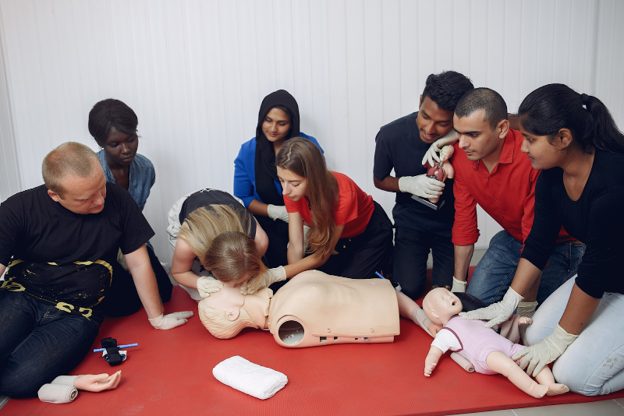
Choking remains one of the most underappreciated acute emergencies in community and clinical settings. It is the fourth leading cause of unintentional injury death globally, and its time-critical nature means that outcomes are almost entirely determined by what happens in the first few minutes, long before any clinical intervention is possible. For healthcare practitioners involved in patient education, community health, and first responder training, building public awareness of choking recognition and response is a practical and high-impact area of preventive care.
What makes choking particularly challenging from a public health perspective is the gap between perceived preparedness and actual readiness to respond. Most adults believe they would know what to do in a choking emergency. In practice, the combination of acute stress, physical technique requirements, and uncertainty about the correct response sequence means that many bystanders hesitate or respond incorrectly at the moment it matters most.
Accurate recognition is the prerequisite for any effective response. Choking presents differently depending on whether the airway obstruction is partial or complete, and misclassifying the severity leads to either unnecessary intervention or dangerous inaction.
A partial obstruction allows some airflow and the person can typically still cough, produce sound, or speak with difficulty. The appropriate response here is to encourage continued forceful coughing and to monitor closely for deterioration. Intervening physically at this stage can interfere with the body’s most effective clearance mechanism.
A severe or complete obstruction is characterised by an inability to speak, cry, or cough effectively, a silent or near-silent effort to breathe, visible distress, cyanosis developing around the lips and fingertips, and the instinctive hands-to-throat gesture. This presentation requires immediate physical intervention and concurrent activation of emergency services. Every minute without intervention at this stage narrows the outcome window significantly.
Infants require particular attention because the signs differ from those in older children and adults. Weak or absent crying, laboured or absent breathing, and progressive colour change in a previously well infant warrant immediate assessment and intervention using age-appropriate technique.
Physical intervention for choking in adults and children over 12 months follows a structured alternating sequence. The person is positioned leaning forward with their chest supported, and five firm back blows are delivered to the centre of the upper back using the heel of the hand. This is followed by five abdominal thrusts, applied from behind with one fist positioned above the navel and below the xiphoid process, covered by the other hand, and directed inward and upward with each thrust.
For practitioners and health educators working with community audiences across Australia, directing people to structured, locally relevant educational resources supports retention and correct application. Patients and caregivers looking to learn about choking first aid in Australia can access guidance specific to the Australian context, covering technique, age-specific variations, and when to escalate beyond standard first aid measures.
The alternating five-and-five cycle continues until the obstruction is cleared, the person loses consciousness, or emergency services take over. If the person becomes unconscious, the response transitions to CPR, beginning with chest compressions, during which the practitioner should visually check for and remove any visible obstruction before each attempt at rescue breaths.
For infants under 12 months, abdominal thrusts are contraindicated due to the risk of organ injury. The correct sequence involves five back blows delivered with the infant face-down along the forearm, followed by five chest thrusts with the infant face-up, using two fingers placed on the lower half of the sternum. This cycle continues until the obstruction clears or emergency services arrive.

Choking response training sits at the intersection of clinical education and community health, an area where healthcare professionals have meaningful leverage. General practitioners, paediatric nurses, allied health practitioners, and community health workers are all well-positioned to introduce choking preparedness as a routine component of consultations with high-risk populations.
These include parents of young children under five, who face the highest paediatric choking risk, elderly patients with dysphagia or reduced swallowing function, caregivers for individuals with neurological conditions that affect swallowing, and family members of anyone with a medical history that increases aspiration risk.
The clinical evidence base for standard choking first aid techniques is well established, and current Australian Resuscitation Council guidelines provide the authoritative reference point for practitioners advising patients on correct technique. Incorporating brief choking preparedness conversations into relevant consultations and directing patients to reliable resources for self-directed learning is a low-time, high-impact component of preventive care.
Device-based adjuncts to standard first aid, including negative pressure suction devices designed for choking emergencies, have entered the market in recent years and are increasingly discussed in community first aid contexts. Practitioners should be aware of these options and their appropriate role as supplementary tools rather than replacements for established first aid techniques.
Preparedness at the community level is one of the most effective levers available for reducing choking mortality. The clinical community plays a direct role in building that preparedness through patient education, targeted health communication, and the normalisation of first aid training as a standard component of health literacy.


Aesthetic medicine has undergone a significant shift over the past decade. What was once a field defined primarily by surgical intervention and injectable treatments has expanded to include a growing …
Connecting innovation decision makers to authoritative information, institutions, people and insights.

Medigy accurately delivers healthcare and technology information, news and insight from around the world.
Medigy surfaces the world's best crowdsourced health tech offerings with social interactions and peer reviews.
© 2026 Netspective Foundation, Inc. All Rights Reserved.
Built on Apr 10, 2026 at 1:08pm