

Managing Editor
@ShahidNShah
@ShahidNShah
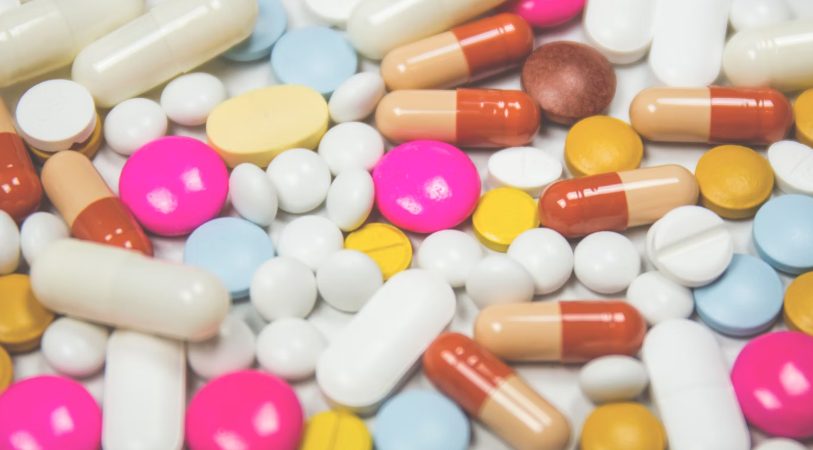
Contract Development and Manufacturing Organizations (CDMOs) serve as strategic partners to pharmaceutical companies by providing comprehensive services from drug development through large-scale manufacturing.
By leveraging CDMOs, drug developers can streamline their operations, reduce the need for heavy infrastructure investment, and accelerate the journey from lab to market.
In general, CDMO services span the entire drug lifecycle, supporting projects at various stages from early formulation of a molecule to its mass production and regulatory approval.
These offerings can be grouped into three key categories, which we will explore below. Understanding these three types of CDMO services will clarify how CDMOs add value as end-to-end solution providers in pharmaceutical development.
One of the core offerings of a CDMO lies in drug development services, particularly process R&D and optimization. CDMOs work closely with a client’s drug candidate in the laboratory, devising efficient and reproducible routes to synthesize the active pharmaceutical ingredient (API).
This includes chemistry and process development to identify the best synthetic pathway, reagents, and reaction conditions that can produce the API with high purity and yield at small scale.
CDMOs employ cutting-edge techniques and industry best practices to refine manufacturing processes, aiming to enhance efficiency, scalability, and compliance with regulatory standards. Process scientists will often perform iterative experiments to improve reaction steps, reduce impurities, and optimize for cost-effectiveness.
In addition to developing the main synthetic route, CDMO development teams conduct process optimization studies — for example, tweaking parameters to improve yield or reduce waste.
They may also carry out process safety assessments and scalability studies, ensuring that what works in the lab can be safely replicated in a pilot plant or manufacturing suite.
Best CDMO services follow Quality by Design (QbD) principles during development, meaning they systematically study how process variables affect product quality and build robust processes with appropriate controls from the outset.
Once a viable process has been established in the R&D phase, CDMOs provide the cGMP manufacturing services needed to produce larger quantities of the drug substance.
Good Manufacturing Practice (GMP) compliance is essential at this stage to ensure that materials for clinical trials or commercial sale are made under strict quality controls and traceability.
Leading CDMOs maintain state-of-the-art production facilities (with reactors, cleanrooms, etc.) capable of handling scale-up from gram quantities to multi-kilogram or ton-scale batches. They invest in specialized equipment and infrastructure so that pharmaceutical clients don’t have to, allowing sponsors to utilize ready-made manufacturing capacity and expertise.
During scale-up, the CDMO’s engineering and production teams transition the process from lab scale to pilot and commercial scale, troubleshooting any scale-related challenges.
CDMO services also support functions like raw material sourcing and supply chain logistics to ensure a consistent supply of quality materials. By offering flexible production capacity and multi-phase manufacturing (from clinical trial material to commercial supply), CDMOs enable pharma companies to meet demand without delay or the need to build their own factories.
Top CDMOs offer extensive analytical and quality support alongside development and manufacturing. This includes analytical method development and validation for the new drug: CDMOs devise robust methods (e.g. HPLC, GC, mass spectrometry techniques) to accurately measure potency, purity, and impurities in the API.
State-of-the-art instrumentation and techniques are used so that every product meets strict quality control specifications before it is released. Stability studies are also conducted to establish the drug’s shelf life and ensure it remains stable and effective.
Quality assurance (QA) oversight is integrated throughout all CDMO services. CDMOs maintain comprehensive QA systems to oversee compliance with cGMP norms — including regular internal audits, staff training, deviation management, and ensuring inspection readiness.
Many leading CDMOs have a track record of successful inspections by regulators like the U.S. FDA or European EMA, which gives sponsors confidence in the robustness of the production and quality systems.
CDMOs often have in-house regulatory experts who help compile the Chemistry, Manufacturing and Controls (CMC) data generated during development into the required formats for submissions. They ensure that all regulatory requirements and guidelines are met, and that the product’s development history is well-documented.
They make sure that every process, test, and batch aligns with applicable standards, certifications, and filing expectations, facilitating smooth approvals and market entry for the drug.
With these three pillars of CDMO services – development, manufacturing, and compliance support – working together, pharmaceutical innovators can significantly accelerate and de-risk their path to market.
A CDMO that offers integrated services allows a seamless handoff from development to production to regulatory filing, eliminating gaps or delays between stages.
For instance, Neuland Labs – a global CDMO specializing in small-molecule and peptide APIs – exemplifies the advantages of a full-service partner. With over 40 years of experience honing chemistry capabilities,
Neuland Labs helps design, develop, and manufacture complex APIs for clients worldwide. This depth of expertise and end-to-end capability make it one of the best CDMO service providers for pharmaceutical companies seeking a reliable development and manufacturing ally.
By partnering with such a CDMO service, drug developers gain access to world-class scientific teams and production facilities without the overhead, allowing them to focus on their core mission of discovering lifesaving therapies.
Q1. How early should a pharmaceutical company engage a CDMO?
Ideally, a CDMO should be involved during early development or preclinical stages to ensure seamless process design, regulatory alignment, and scalable manufacturing pathways from the outset.
Q2. What are some risks of switching CDMOs mid-project?
Switching CDMOs late can cause data loss, delays in tech transfer, and inconsistencies in quality or regulatory documentation. Continuity is key to preserving development insights and maintaining regulatory compliance.
Q3. Can CDMOs assist with patent strategy or IP protection?
While not their core function, many CDMOs offer guidance on process patenting, confidentiality agreements, and secure data handling to support a sponsor’s broader intellectual property strategy.
Q4. What industries beyond pharma use CDMO services?
CDMO services are increasingly utilized by sectors like nutraceuticals, agrochemicals, and specialty chemicals where outsourced process development and GMP-grade manufacturing are beneficial.

Artificial intelligence is reshaping how dermatologists diagnose skin conditions, personalize treatments, and manage patient care across Austin. What began as experimental technology has evolved into …
Posted Feb 25, 2026 Artificial Intelligence Dermatology
Connecting innovation decision makers to authoritative information, institutions, people and insights.

Medigy accurately delivers healthcare and technology information, news and insight from around the world.
Medigy surfaces the world's best crowdsourced health tech offerings with social interactions and peer reviews.
© 2026 Netspective Foundation, Inc. All Rights Reserved.
Built on Apr 10, 2026 at 1:08pm