

Managing Editor
@ShahidNShah
@ShahidNShah
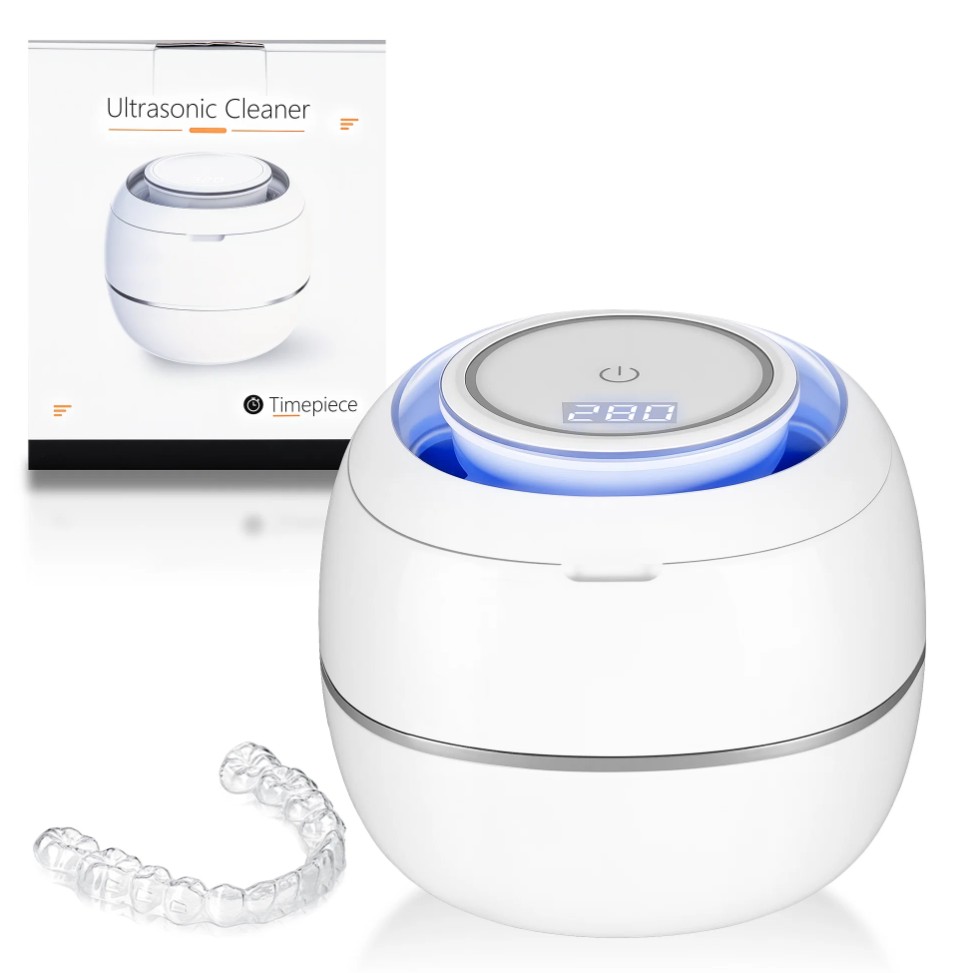
After orthodontic treatment, maintaining the position of the teeth is an important part of long-term appliance care. Retainers help support the alignment achieve during treatment. Because they are worn repeatedly and their surfaces can come into contact with saliva, food particles and plaque. The regular cleaning help keep compatible removable appliances fresh and free from visible buildup.
Traditional cleaning methods can remove everyday debris from retainer. However some curved surfaces and smaller areas may be less convenient to clean with toothbrush alone. The Ultrasonic cleaning uses high-frequency sound waves in water or suitable solution to help loosen deposits from compatible removable dental appliances. For some patients this provides an additional approach to routine appliance care.
Selecting the right cleaner involves more than comparing price or cleaning power. Patients should consider appliance compatibility, cleaning cycles, tank capacity, ease of operation, and maintenance. For those looking for a practical option, the Ultrasonic Retainer Cleaner can provide a convenient approach to routine appliance care. A suitable device can fit naturally into a patient’s daily oral-hygiene routine while making removable retainer maintenance easier.
Ultrasonic cleaning is practical option for patients who regularly care for removable orthodontic and dental appliances. High-frequency sound waves travel through liquid and create microscopic bubbles within cleaning solution. For patients who wear retainers, an Ultrasonic Retainer Cleaner can provide an additional method for loosening deposits from compatible appliance surfaces. When these bubbles form and collapse, they produce movement within the liquid. This action can reach around different areas of an appliance without relying entirely on direct brushing. It may therefore be useful for curved surfaces, edges, and other areas that are less convenient to clean manually.
Ultrasonic technology is available in different types of dental cleaning equipment. This depends on model, devices may support retainers, aligners, dentures, mouth guards and other compatible items. For patients who care for removable dentures, an Ultrasonic Denture Cleaner can also provide convenient cleaning option when it is suitable for denture material. Patients should always check appliance compatibility before use. The technology should be viewed as an additional cleaning method. Patients should continue following the care instructions provided by their dentist, orthodontist, or appliance manufacturer.
Cavitation is an important part of how an Ultrasonic Cleaner works. Pressure changes created by ultrasonic waves can produce tiny bubbles in the liquid. Their formation and collapse create fluid movement around the appliance, which may help loosen some deposits from compatible surfaces. This process can be useful when cleaning removable dental appliances with curved surfaces and small areas. These features can sometimes make direct manual cleaning less convenient. Ultrasonic cleaning provides a different type of cleaning action by surrounding the appliance with moving liquid.
Results can vary depending on several factors. These include ultrasonic frequency, cleaning time, liquid level, appliance material, and type of deposit. A longer cleaning cycle is not automatically suitable for every appliance. Patients should use the cleaning cycle recommended by the manufacturer. They should also avoid using solutions or cleaning methods that are not approved for their appliance. When an appliance has special care requirements, professional dental advice should be followed.
The first consideration should be appliance compatibility. Retainers are made in different designs and materials. Some may include metal components, while others are made mainly from clear plastic. Patients should therefore confirm that the selected Ultrasonic Retainer Cleaner is appropriate for their specific appliance.
| Dental Cleaner | Key Specifications & Features | Cleaning Options | Practical Application |
| Ultrasonic Cleaner: Dental Cleaning Pod (2026 Model) | Ultrasonic vibration cleaning; up to 300 ml capacity; one-touch operation; compact and portable design; multiple colour and plug options | 5- and 10-minute cleaning cycles | Retainers, dentures, aligners, mouth guards, night guards, jewellery, watches, and other small personal items |
| Zima Dental Pod | 42 kHz ultrasonic technology; designed specifically for dental and oral appliances | 5-minute automatic cleaning cycle | Dental appliances, including retainers and other oral appliances |
| iSonic DS180 | 36–41 kHz frequency; 25 W full-wave ultrasonic power; detachable power adapter | 3-minute automatic shutoff | Retainers, dentures, aligners, mouth guards, and small jewellery |
| Sonic Dental Sonic Spa Pro | 43 kHz ultrasonic cleaning; UV-C technology | 3- and 5-minute cleaning modes | Aligners, retainers, night guards, dentures, and toothbrush heads |
For patients comparing different options, choosing a cleaner with practical features and versatile everyday use can make appliance care easier. The Ultrasonic Cleaner: Dental Cleaning Pod (2026 Model) is designed to provide a simple and flexible cleaning solution for compatible dental appliances. With up to 300 ml capacity, one-touch operation, 5- and 10-minute cleaning cycles, compact design, and portability, it is convenient for use at home or while travelling.
Unlike some ultrasonic cleaners with limited applications or fewer cleaning options, the Dental Cleaning Pod supports retainers, aligners, dentures, mouth guards, night guards, jewellery, watches, and other small personal items. Its wider usability, flexible cycles, practical capacity, and simple operation make it a strong choice for patients seeking an everyday Ultrasonic Retainer Cleaner.
Retainers can collect saliva, food particles, plaque, and other deposits during regular wear. Consistent appliance cleaning can help manage everyday surface buildup. For patients looking for an additional cleaning method, an Ultrasonic Retainer Cleaner may help loosen some deposits from compatible appliance surfaces.
Biofilm is a collection of microorganisms that can develop on surfaces. Removable dental appliances can provide a surface where deposits accumulate during use. However, ultrasonic cleaning should not be presented as a guaranteed way to eliminate microorganisms or prevent dental conditions. Manual cleaning can still be useful for visible debris. A soft brush and an appliance-safe cleaning method can provide direct cleaning of accessible areas. Patients should avoid aggressive brushing because some retainer materials may be scratched or damaged.
For routine appliance care, patients can consider:
If a retainer develops persistent discoloration, an unusual odor, cracks, or changes in shape, the patient should contact their dental professional. A damaged appliance may need assessment rather than additional cleaning.
A retainer cleaner machine can provide a convenient method for caring for compatible removable orthodontic appliances. Patients considering a Dental cleaning machine should first confirm that the device is suitable for their specific retainer, aligner, mouth guard, or other appliance. Different appliances can have different care requirements. Clear retainers, for example, may require different handling from appliances containing metal components. Reviewing the manufacturer’s instructions before starting an ultrasonic cycle can help patients avoid unsuitable cleaning methods.
Using the machine is generally straightforward when the appliance and device are compatible. The appliance is placed inside the cleaning tank, the recommended liquid is added, and the selected cycle is started. The appliance can then be rinsed according to its care instructions. Simple controls and preset cycles can make routine cleaning easier to incorporate into an established appliance-care routine. This can be particularly useful for patients who clean removable appliances regularly.
The machine itself also needs appropriate maintenance. The tank should be emptied, rinsed, and maintained according to the manufacturer’s instructions. A retainer cleaner machine is an appliance-care tool and does not replace dental examinations or orthodontic follow-up.
The right Dental cleaning machine should match the patient’s appliance and intended cleaning routine. Patients who regularly care for removable dentures may also consider an Ultrasonic Denture Cleaner when the device is designed for and compatible with their denture material.
A patient who only cleans one removable retainer may prefer a compact device. Someone caring for several compatible appliances may prefer greater capacity or multiple cleaning cycles. Practical features should therefore be considered alongside the basic ultrasonic function. Before purchasing, patients should review specifications such as ultrasonic frequency, tank capacity, cleaning duration, appliance compatibility, and power requirements. These details can help users understand how a particular machine is intended to operate.
For patients comparing equipment, useful considerations include:
An appropriate Dental cleaning machine can provide an additional option for routine appliance maintenance. However, not every ultrasonic device is suitable for every dental appliance. Material compatibility and manufacturer instructions should remain important considerations. For denture wearers, an Ultrasonic Denture Cleaner may be another option for compatible removable appliances. Patients should follow the recommended cleaning method and avoid unsuitable solutions or cycles.
An Ultrasonic Retainer Cleaner can provide a convenient cleaning option for compatible removable dental appliances. Ultrasonic technology uses cavitation to create movement within a cleaning liquid. This may help loosen certain deposits from areas that can be less convenient to reach through manual cleaning. The most suitable device depends on factors such as appliance compatibility, tank capacity, cleaning cycles, controls, portability, and maintenance. Patients should select cleaner that is based on their specific appliance rather than simply choosing most powerful or expensive option.
A Dental cleaning machine can be incorporated into broader appliance-care routine. Rinsing, appropriate manual cleaning, safe storage and regular dental guidance remain important. Similarly, an Ultrasonic Denture Cleaner should only be used when it is suitable for particular denture material and according to manufacturer’s instructions. Ultrasonic cleaning can support convenient appliance maintenance but it does not replace professional dental care.


Continuity of care is a fundamental component for delivering healthcare that is safe, effective and centered on the individual. Communication plus coordinated treatment are necessary as patients move …
Posted Aug 23, 2026 Healthcare
Connecting innovation decision makers to authoritative information, institutions, people and insights.

Medigy accurately delivers healthcare and technology information, news and insight from around the world.
Medigy surfaces the world's best crowdsourced health tech offerings with social interactions and peer reviews.
© 2026 Netspective Foundation, Inc. All Rights Reserved.
Built on Oct 8, 2026 at 6:09pm