

Managing Editor
@ShahidNShah
@ShahidNShah
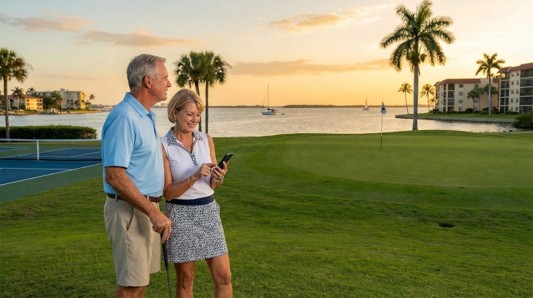
You juggle golf tee times, waterfront sunsets, and weekend pickleball—cloudy cataracts shouldn’t slow that rhythm.
Across Southwest Florida, cataract surgeons now marry bladeless laser precision with premium intraocular lenses (IOLs) such as the Light Adjustable Lens, PanOptix trifocal, and Vivity extended-depth lens to give you sharp, glasses-free sight from phone to fairway. But “premium” is personal: the best lens depends on your lifestyle, eye health, and even hurricane-season timing.
This short guide trims the jargon, compares options side by side, and shares real-world results so you can walk into your consult ready to choose with confidence—and keep your eyes on the Florida horizon.
If you live anywhere between Naples and Cape Coral, you’ve probably spotted the Snead Eye Group logo on a billboard or heard a neighbor rave about their “new 20/20.”
Led by the Snead Eye physicians, board-certified cataract specialists who have served Southwest Florida for more than 25 years, five offices line the I-75 corridor so biometry tests, postop checks, and those crucial lens-selection chats stay close to home. Convenience matters when every extra mile feels like a chore after dilation.
Technology sets this practice apart. Surgeons combine the LenSx femtosecond laser with optical coherence tomography, guiding cataract removal and premium lens placement with a digital blueprint accurate to microns. That precision can trim strokes off your golf game, sharpen depth perception, and boost night-road confidence.

Snead Eye Group cataract surgeons and Southwest Florida clinic
Just as important, the clinic keeps the full premium lineup on the shelf: the Light Adjustable Lens for post-op fine-tuning, PanOptix for true near-to-far range, Vivity for crisp vision with minimal glare, and toric variants that flatten astigmatism in the same sitting. No single lens fits everyone, so the team treats the process like a fitting room: test, measure, match, refine.
Cost clarity ranks high, too. Staff review Medicare basics, map out upgrade fees, and can split payments through CareCredit for a few hundred dollars a month. You walk out knowing both the visual upside and the financial facts.
In short, Snead Eye Group delivers premium cataract care through a data-driven approach that fits Southwest Florida’s active routine.
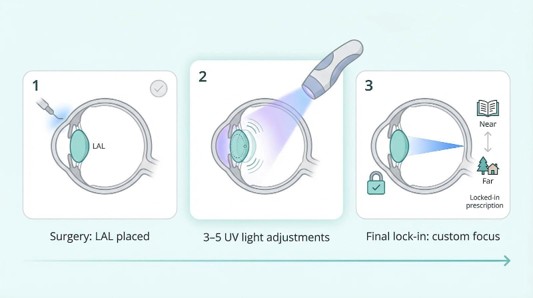
Standard lenses lock your prescription the moment they enter the eye. The Light Adjustable Lens (LAL) changes that pattern. Surgeons place a photosensitive silicone lens, let the eye heal, then use a painless ultraviolet light to nudge the optics into perfect focus. Each light session lasts about 90 seconds, and most patients need three to five tweaks before the final “lock-in.”
That extra step pays off. In a U.S. registry, 91 percent of LAL eyes landed within 0.50 diopter of target, and almost every patient reached 20/20 distance vision after both eyes were treated. Traditional monofocals can miss that mark, especially after prior LASIK or with unusual corneal shapes.
The takeaway: if you want LASIK-level accuracy from a premium cataract lens but missed the window for laser vision correction, LAL offers a second chance without another surgery.
Picture reading a text, glancing at your car’s speedometer, then spotting a distant sail on the Gulf. Each scene stays crystal clear without swapping glasses—that is the promise of the PanOptix trifocal premium lens.
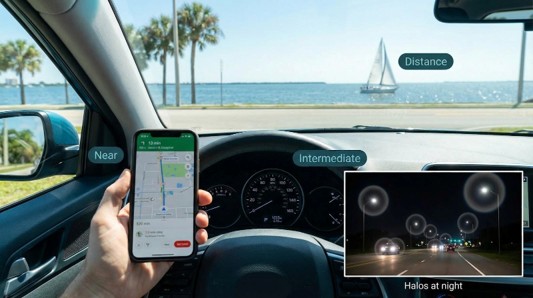
The design uses three precisely arranged focal zones. Light splits to serve near (about 14 inches), intermediate (computer-friendly 24 inches), and far vision at once, so your brain shifts tasks without noticing. In real-world follow-ups, 96 percent of PanOptix-Toric wearers reported zero need for spectacles at any distance, and average binocular acuity held at 20/20 for reading and road signs.
Freedom comes with one trade-off. A 580-patient meta-analysis found 43 percent of trifocal users noticed halos around bright lights, though only five percent called them bothersome. Most people adapt within weeks, but frequent night drivers should weigh this quirk before signing the consent form.
Need astigmatism correction? The PanOptix-Toric version builds that power into the optic, often leaving residual cylinder too small to measure at six months. Southwest Florida surgeons align the lens with femtosecond guidance on a digital corneal map, so rotation stays near zero and clarity lasts.
Bottom line: if you crave spectacle independence across every range and can accept a light show around headlights, PanOptix delivers multitasking vision that keeps pace with an active Florida lifestyle.
Extended depth-of-focus lenses aim for a simple goal: stretch your focal range without the light-splitting rings that cause glare. Alcon’s Vivity achieves this with a gentle wavefront shape, so the optic stays bright and contrasty.
What does that feel like day to day? Most patients read a menu at arm’s length, drive at dusk, and binge-watch TV with no halo drama. In a head-to-head study, only six percent of Vivity eyes reported halos, compared with 65 percent of multifocal eyes—a tenfold difference night drivers appreciate.

Every lens asks for a compromise. Near focus fades sooner than with a full trifocal, so you might keep slim readers for fine print. Still, intermediate tasks such as laptop work, a dashboard glance, or a chip-in on the green sit squarely in Vivity’s range. Add a mini-monovision tweak (one eye set slightly nearer) and many Florida patients live reader-free.
If you want a premium lens that keeps vision bright and clear while sparing you starburst headlights on US-41, Vivity delivers peace of mind without giving up freedom at arm’s length.
Astigmatism blurs everything—scorecards, cell-phone fonts, traffic signs. Good news: you don’t need a second procedure or corneal cuts to fix it. A toric premium cataract lens builds cylinder power into the optic, so cataract removal and astigmatism correction finish in the same 20-minute session.
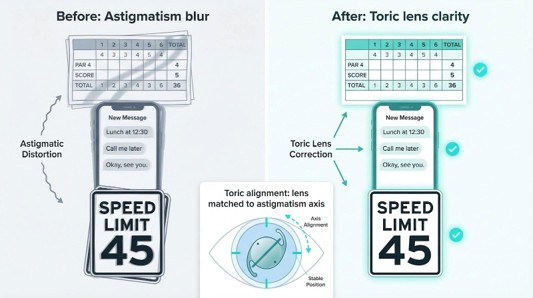
Alignment is the key. Southwest Florida surgeons map each cornea with digital topography, then guide the LenSx laser to mark a reference axis inside the eye. The lens clicks into that map and stays put; current toric models show almost zero rotation at six-month checks, so your clarity lasts through golf season and beyond.
Even better, toric pairs with every focal style: Light Adjustable, PanOptix, or Vivity. Pick your range first, then let your surgeon dial in cylinder so the image snaps into place. Patients who once juggled progressive glasses and night-driving contacts often leave 20/20 with no lenses at all.
Bottom line: if your glasses script lists more than 1.00 D of cylinder, ask for a toric version. It costs a bit more upfront, but it spares decades of double vision and squinting at the scorecard.
Sticker shock sidelines more cataract patients than fear of the scalpel, so let’s make the math as clear as your future vision.
Medicare covers the surgeon’s fee and a basic monofocal lens. Anything that fixes reading, computer, or astigmatism counts as a refractive upgrade, and that cost falls to you.
Across Southwest Florida, premium cataract lenses typically add $2,000–$3,000 per eye, based on 2026 quotes from Snead, Tyson, Frantz, and Collins practices. Laser assistance adds another $800–$1,000 because the femtosecond platform isn’t covered. Plan for surgical-center copays and postoperative drops, although those are small next to the lens itself.
Most clinics publish fee sheets online and review them with you before you book surgery. Almost all work with CareCredit or similar plans, so you can spread the upgrade over 6, 12, or 24 months, often at 0 percent interest if you stay on schedule. A common financing example is about $270 per month for both eyes.
If you have Medicare Advantage, call the number on your card. Some plans offer a small credit toward premium IOLs, but confirm in writing. Health savings accounts also qualify, letting you pay with pre-tax dollars.
Takeaway: premium vision is elective but predictable. Know the upgrade range, note any coverage gaps, and pick a payment rhythm that feels like another utility bill, not a budget crisis. Then you can focus on eyesight, not invoices.
Southwest Florida doesn’t hibernate. We boat, bike, and host grandchildren year-round, glare bouncing off water and sand straight into the macula.
That outdoor bias pushes many patients toward lenses that mute brightness. Vivity’s low-halo design wins with sunset drivers on the Tamiami Trail. Pilots and anglers who rely on distance accuracy lean toward the Light Adjustable Lens, then fine-tune power under clinic lights once swelling settles.
Seasonal timing matters too. Snowbirds often book cataract surgery in January, recover during mild months, and fly north with stable vision. If that’s your calendar, multifocals like PanOptix shine because follow-ups wrap up quickly, with no extra UV visits that LAL needs.
Hurricane season adds another wrinkle. Surgeons schedule elective cases around June to November storms, but EDOF or monofocal plans feel safer if a post-op power outage could cancel light-adjustment sessions.
Finally, consider hobbies. Avid golfers crave fluid near-to-far sight to read putts and track drives; a trifocal checks that box. Nighttime pickleball under LEDs? Fewer halos keep the ball crisp, favoring Vivity. Reading a beach novel—or the fine print on marina bills—still nudges some toward mini-monovision tweaks or a slim pair of readers.
Tip: list five weekly activities you refuse to skip, hand that list to your surgeon, and let those pursuits steer the premium lens conversation.
| Feature | Light Adjustable Lens | PanOptix trifocal | Vivity EDOF |
| FDA clearance | 2017 | 2019 | 2020 |
| Focus range | Custom, surgeon-set after surgery | Near • Mid • Far | Distance • Extended mid |
| Post-op visits | 3–5 light sessions | Standard follow-ups | Standard follow-ups |
| Halo / glare risk | Very low | Moderate | Very low |
| Spectacle independence | High for distance; readers for fine print | Highest at all ranges | High for distance / intermediate |
| Astigmatism option | Yes, Toric-LAL | Yes, PanOptix-Toric | Yes, Vivity-Toric |
| Typical SWFL upgrade fee† | ≈ $3,500 per eye | ≈ $2,500 per eye | ≈ $2,500 per eye |
| Ideal fit | Post-LASIK or “precision first” | Total glasses freedom | Night drivers, contrast lovers |
† Fees reflect 2026 quotes from four local practices and include laser assistance where required.
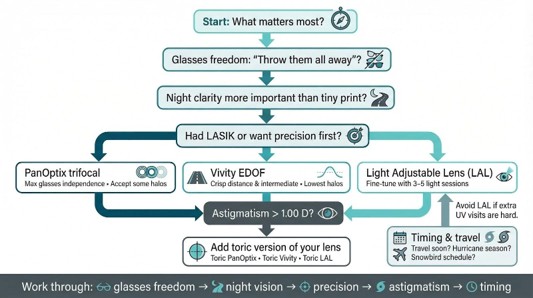
If the answer is “throw them all away,” PanOptix rises to the top. It covers near, computer, and distance in a single step, and more than 90 percent of users stay spectacle-free. You’ll notice halos at night, but most drivers adapt within weeks.
If you prize night clarity over tiny print, pivot to Vivity. Its wavefront design keeps headlights clean while stretching focus far enough for laptops and menus. Keep a slim reader in your golf bag for fine print and enjoy glare-free sunsets on the Caloosahatchee.
If your mantra is precision or bust, especially after past LASIK, pick the Light Adjustable Lens. You’ll invest three to five extra visits, yet leave with a surgeon-tuned prescription that feels like a custom club fitting for your eyes.
Next, layer in astigmatism. A script showing more than 1.00 D of cylinder is your cue to ask for a toric version of any premium lens above. One surgery, problem solved.
Finally, check the calendar. Traveling soon? Skip LAL’s extra UV sessions. Worried about hurricane-season power outages? Choose a lens that doesn’t rely on light boosts. Flying north for summer? Finish follow-ups before your departure.
Work through these filters in order: glasses freedom, night vision, precision adjustment, astigmatism, and timing. You’ll land on the premium lens that matches your life, not the surgeon’s default. Bring that short list to your consult and watch the appointment turn into a true collaboration.


Brain injury cases demand strong legal expertise because they often involve complex medical evidence, long-term consequences, and significant financial damages. Proving how the injury occurred, …
Posted Mar 17, 2026 Legal & Compliance #HealthLaw
Connecting innovation decision makers to authoritative information, institutions, people and insights.

Medigy accurately delivers healthcare and technology information, news and insight from around the world.
Medigy surfaces the world's best crowdsourced health tech offerings with social interactions and peer reviews.
© 2026 Netspective Foundation, Inc. All Rights Reserved.
Built on Apr 10, 2026 at 3:35am