

Managing Editor
@ShahidNShah
@ShahidNShah
Nearly 345 million people opened a fitness app in 2024, turning phones into training partners more often than real-world gyms. According to Bonafide Research, analysts peg the category to top $150 billion by 2029, with AI coaching doing the heavy lifting.
Last year’s “smart” routines simply tracked your reps; this year they anticipate your next move. According to Tom’s Guide, Google’s conversational Fitbit coach, for example, can build a week of workouts during a quick chat.
So which apps deserve a spot on your phone? We tested more than 20 platforms and narrowed the field to nine that personalize, protect your data, and respect your budget.
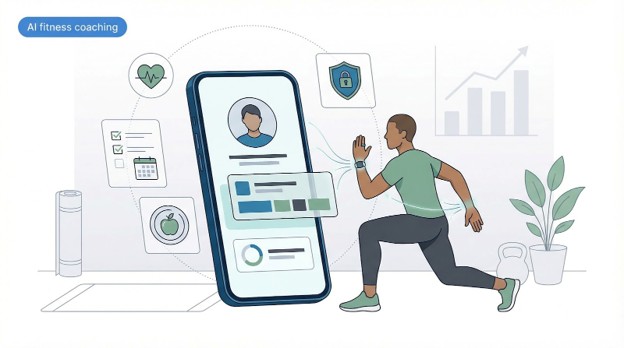
You deserve a list you can trust, not another copy-and-paste roundup. We began with more than twenty AI fitness apps, logged every feature, read user reviews, and stress-tested each platform ourselves.
We scored every app on six factors: AI personalization, workout depth, overall experience, real-world results, data privacy, and value for money. Personalization and effectiveness carried the most weight because an appealing interface means little if the plan fails to adjust as your body changes.

Each app could earn up to fifty points. A perfect ten in personalization required live adjustments based on your performance, recovery, and schedule, not a one-time quiz. For value, we rewarded fair pricing only when outcomes justified the cost; free, generic programs scored lower than premium services that delivered real coaching.
We then validated our scores with real users. Praise such as “saved me hours in the gym” and complaints about aggressive upselling kept us honest. The result is a nine-app shortlist that blends adaptive AI with the elements that keep you logging back in: clear guidance, visible progress, and respect for your data.
Hoola feels like a boutique studio, a nutritionist, and a friendly game overlay in one tidy app. Open it on Monday and a video HIIT session sits next to a dinner recipe that nails your macros. Skip Wednesday legs? The plan quietly trims today’s volume so you stay on track instead of feeling punished.
With unlimited on-demand classes and an AI calorie-optimization engine that recalibrates your targets in real time, the Hoola fitness app feels like a boutique studio, a nutritionist, and a friendly game overlay in one tidy app.
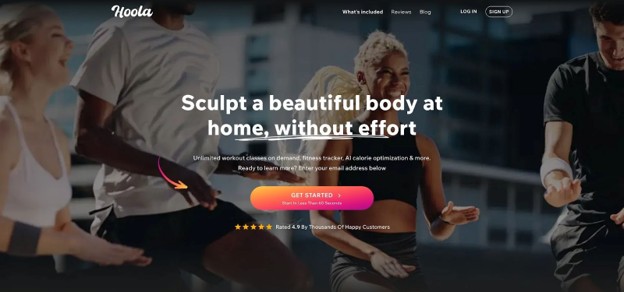
The calorie-optimization engine does the heavy lifting. Log a meal, finish a workout, or miss a session and your burn-and-intake targets update before you notice. That constant recalibration helps weight-loss seekers avoid plateaus and strength fans keep progressing.
A fitness-RPG layer keeps the mood light. Finish a Pilates flow and you earn Flexibility points; crush kettlebell swings and your Strength bar lights up. It looks playful but drives consistency better than raw charts.
Pricing lands in the sweet spot—roughly the cost of a streaming subscription after the free trial—yet you get hundreds of classes, recipe guidance, and mindfulness breaks. The trade-off: no live instructor feedback, so form purists may pair Hoola with a camera-based tool.
If you want a holistic, stay-at-home routine that adapts as fast as life changes, Hoola deserves the first download.
WallPilates is built for people who want real results at home without turning workouts into a second job. All you need is a wall, a small patch of space, and ten to twenty minutes. Open the app and its free WallPilates daily routine workouts challenge, a 28-session program rated 4.9/5 by thousands, guides you from gentle wall-supported moves on day one to tougher flows as your control and endurance improve.
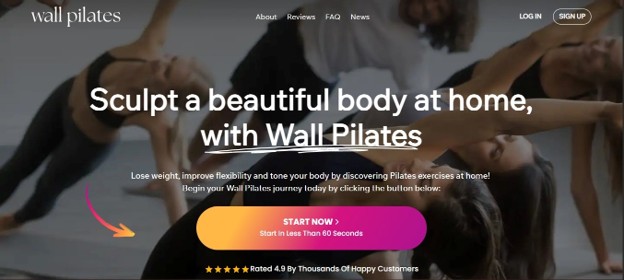
The wall support is magic. It stabilizes your body so form stays cleaner, core work feels more targeted, and low-impact sessions still deliver that satisfying burn. Instead of overwhelming you with endless choices, WallPilates leans on simple routines you can repeat often—glutes, abs, posture, flexibility—so progress comes from consistency, not complexity.
The experience is streamlined and beginner-friendly, with gentle cues and habit-style momentum that keeps you coming back. The trade-off: it won’t replace progressive overload for serious lifters. But if your goal is a sustainable home routine that’s easy to start and hard to quit, WallPilates earns its spot.
Freeletics earned its name with taxing body-weight drills, and the 2026 Coach is sharper than ever. After each session you rate difficulty; the algorithm learns immediately and tweaks next week’s burpee count or swaps in a low-impact move if your feedback signals that it was too tough.
Because every workout relies on body-weight, sessions travel well. Hotel room, city park, or living-room floor—Freeletics recalculates rest times so intensity stays high without equipment.
The app now layers in run plans and mindset audio, turning short sweat sessions into a fuller habit. Add a generous free tier and it is clear why Freeletics remains the top choice for busy people chasing big cardio gains in compact packages.
Future pairs real coaches with smart software. Sign up and you are matched with a certified trainer who messages daily, tweaks your plan each week, and celebrates every milestone. In the background, an AI engine scans your Apple Watch data, spots recovery dips, and suggests load changes the coach approves in a tap.
The setup feels personal yet stays flexible. Flying across time zones? Ask your coach and tomorrow’s workout shifts to hotel-band moves instead of barbell squats. Skip a session and you receive a polite nudge plus a reshuffled calendar—never guilt.
The service costs more than the other apps on this list, yet it is still far cheaper than traditional personal training. If accountability is your missing piece, few tools turn plans into action as consistently as Future.
BetterMe speaks to newcomers who want clear marching orders, not spreadsheets. The onboarding quiz sets calorie targets, schedules bite-size workouts, and slots mindfulness breaks between meetings. Check one task off, and the next appears, building momentum you feel by day three.
Its adaptive engine keeps the program approachable. Lose a few pounds? Portions adjust. Mark a circuit as too tough, and the following session dials back intensity without stalling progress. Guidance stays gentle yet firm, like a friend who knows when to push and when to ease off.
Nutrition leads the way. Daily menus arrive with grocery lists and swaps for allergies or cultural staples, so compliance feels natural. Add water reminders, sleep tips, and a social challenge board, and you have a complete wellness routine that fits busy schedules.
Aggressive marketing emails aside, BetterMe wins loyalty by making lifestyle change feel doable. For anyone starting at square one—or restarting for the fifth time—it offers a reassuring hand on the shoulder that delivers real results.
Peloton still delivers studio-style excitement from your living room. The latest recommendation engine studies your schedule—yoga on Monday, strength on Thursday—and surfaces fresh classes that match the rhythm, cutting decision time to seconds.
Pair the app with the Guide camera and feedback turns visual. If squat depth slips, an on-screen cue appears before your knees lock out. Each rep auto-logs, so personal records track themselves while you focus on form.
Even without hardware, adaptive training programs weave dozens of classes into goal-based tracks. Finish a four-week beginner strength plan and the next round scales weight cues and duration so progress keeps climbing.
Peloton costs less than a single boutique studio membership yet offers thousands of live and on-demand sessions across yoga, cycling, strength, and more. If group energy fuels your consistency and gentle AI nudges keep you exploring new formats, Peloton remains a top pick.
Serious lifters live or die by smart periodization, and JuggernautAI nails it. Enter your current maxes, schedule, and any meet date, and the app returns a block plan that mirrors work from veteran strength coaches.
Each week the algorithm checks your set feedback, adjusts percentages, and inserts deloads right when fatigue creeps in. Miss reps on heavy squats? Next session drops load and raises volume to rebuild confidence instead of grinding you deeper.
The interface stays lean—just numbers, cues, and demo clips—so nothing pulls focus from the bar. Users report steady personal records at a fraction of custom-program costs.
If you crave chalk-dusted spreadsheets that update in real time, JuggernautAI turns your phone into a powerlifting brain trust.
HealthifyMe puts food logs ahead of burpees. Snap in yesterday’s curry or burger and the in-app AI, Ria, returns an instant macro breakdown plus smarter swap ideas. Over time, those nudges trim calories without any manual math.

HealthifyMe Nutrition-First AI Diet and Wellness App Homepage Screenshot
Workouts are solid—body-weight flows, dumbbell circuits, yoga—but think of them as seasoning on the main dish of dietary insight. Sync a wearable and calorie targets shift automatically, teaching the simple equation of eat, move, adjust.
A global food database is HealthifyMe’s ace. It recognizes dal as easily as doughnuts, so users across continents see accurate numbers instead of “generic stew.” Pair that inclusivity with a generous free tier and the app becomes an easy on-ramp to healthier habits.
If your scale success depends more on the plate than the plank, Ria offers a pocket dietitian who keeps pace with every bite.
Tempo shrinks the smart-gym idea into a tidy stand that docks your iPhone. Point the camera, grab a dumbbell, and the computer-vision engine begins coaching in real time. Hips rise early in a deadlift? A pop-up cue asks you to reset before habits stick.
Processing stays local. Video never leaves the device, yet rep counts, range of motion, and tempo speed appear instantly on screen. Each session ends with a highlight reel of form wins and misses so you know what to polish next time.
Class variety matches boutique studios, offering strength splits, mobility flows, and metabolic finishers. Subtle AI tweaks raise weight suggestions once your movement quality lands in the green zone. The upfront hardware costs more than a pure app, but you gain a virtual spotter that protects joints and speeds skill growth.
If you love lifting but lack a watchful trainer, Tempo turns one corner of the living room into a feedback-rich strength lab.
Today’s smartest apps already feel intuitive, but the next wave will push personalization deeper into daily life. Fitbit’s upcoming conversational coach hints at a future where you chat through knee pain or sleep setbacks and receive an adjusted plan in real time. The line between chatbot, trainer, and wellness guide is fading.
Wearables will fuel much of that shift. Heart-rate variability, gait symmetry, and even skin temperature will flow into algorithms that decide whether you need hill sprints or restorative yoga. As sensors shrink, expect earbuds that critique running form and smart rings that prompt breathing drills before stress spikes derail progress.
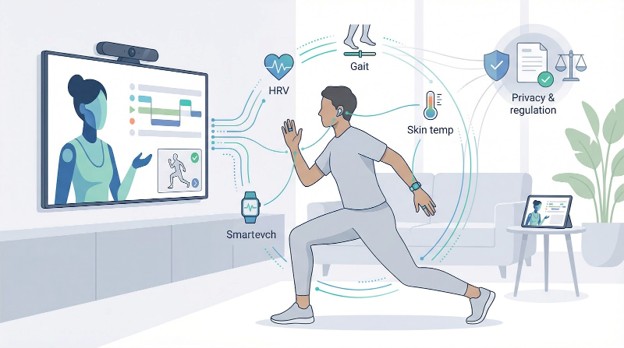
Hardware and software will also merge at home. Computer-vision mirrors, once a luxury, are sliding toward mass-market prices, letting weekend athletes see form cues once reserved for one-on-one coaching. Not every smart coach needs a sensor-stacked screen, though. The 28-day wall-supported program inside WallPilates turns the wall itself into both prop and resistance, guiding core-sculpting moves with nothing more than a phone for timing and tips. At the other end of the spectrum, that same camera tech will soon live in laptops and TVs, pushing AI coaching deeper into the living room for users who want motion tracking without buying extra gear.
Regulation is on the horizon. Health agencies in Europe and the United States are drafting guidelines that call for clearer claims and tighter privacy controls. That is good news for users: the next generation of apps should be both smarter and more transparent about how your data shapes every rep and recipe.
Start with your goal, not the shiniest feature. Want stronger lifts? Choose a strength-focused platform. Chasing weight loss or healthier eating? Pick an app that centers nutrition. Need daily accountability? A human-guided hybrid wins every time.
Here’s a one-minute litmus test:

Now layer in lifestyle. Tight budget? Choose apps with generous free tiers like Freeletics or HealthifyMe. Need community energy? Peloton’s live classes add hype you can feel through the screen. Prefer a real human nudge? Future sends that timely text when you might skip a session.
Finally, consider data comfort. Camera-based feedback from Tempo or Peloton Guide means sharing movement visuals, while Fitbod relies on workout logs. Review privacy settings before you hit download, then dive in. The best app is the one you will open tomorrow, and the plan above will lead you there.


Healthcare today relies on advanced tools, electronic systems, and digital records to improve care safety and accuracy. These innovations help improve diagnosis, treatment planning, and coordination …
Posted Feb 2, 2026 Healthcare Innovation Mobile Health Patient Data Patient Safety
Connecting innovation decision makers to authoritative information, institutions, people and insights.

Medigy accurately delivers healthcare and technology information, news and insight from around the world.
Medigy surfaces the world's best crowdsourced health tech offerings with social interactions and peer reviews.
© 2026 Netspective Foundation, Inc. All Rights Reserved.
Built on Apr 8, 2026 at 3:47am