

Managing Editor
@ShahidNShah
@ShahidNShah

Compulsive risk behaviors such as gambling, excessive trading, impulsive spending, or thrill-seeking activities can quietly evolve from habits into conditions that disrupt mental health, relationships, and financial stability.
A common question from individuals and families navigating this challenge is whether residential treatment programs are available and appropriate for these behaviors. The short answer is yes. Residential treatment programs do exist for compulsive risk behaviors, and when designed thoughtfully, they can provide the structured, clinically informed environment needed for lasting recovery.
As behavioral health science and medical technology advance, residential care is no longer limited to substance use disorders. In this article, Medigy reviews how modern programs increasingly recognize behavioral addictions and impulse-control disorders as legitimate, treatable conditions that benefit from immersive, evidence-based care.
Compulsive risk behaviors are characterized by repeated engagement in high-risk actions despite negative consequences. Gambling disorder is the most widely recognized example, but similar patterns appear in compulsive trading, extreme sports obsession, or chronic risk-taking linked to mood and impulse regulation.
Clinically, these behaviors are often rooted in dysregulation of the brain’s reward system, particularly involving dopamine signaling, executive function, and emotional processing. Many individuals also experience co-occurring anxiety, depression, trauma exposure, or neurodivergent traits that complicate recovery.
Recognizing these behaviors as behavioral health conditions rather than moral failings has been a major shift in treatment philosophy. This reframing opens the door to residential treatment models that address both the neurological and psychological drivers of risk-taking.
Residential treatment programs provide 24-hour care in a structured, therapeutic environment. For individuals with compulsive risk behaviors, this setting offers separation from triggering environments while allowing clinicians to observe patterns, emotional responses, and coping strategies in real time.
Unlike outpatient care, residential treatment creates continuity. Therapy, psychiatric evaluation, behavioral coaching, and recovery planning happen within a single coordinated system. This is especially important for people whose impulsivity or environmental access makes relapse likely without containment.
Programs such as those modeled after Icarus Behavioral Health Nevada demonstrate how residential care can be adapted to treat complex behavioral conditions, not just chemical dependency. The emphasis is on stabilization, insight development, and skill-building rather than crisis management alone.
Medical technology has become central to how residential behavioral health programs assess and treat compulsive risk behaviors. Digital assessment tools now allow clinicians to measure impulsivity, risk tolerance, emotional regulation, and cognitive flexibility with greater precision.
Wearable devices and biometric monitoring can help track sleep patterns, stress responses, and physiological arousal factors closely linked to impulsive decision-making. When integrated ethically and transparently, these tools give clinicians actionable data to personalize treatment plans.
Telepsychiatry platforms also play a role, allowing residential programs to consult with specialists in gambling disorder, behavioral neuroscience, or financial therapy. This expands access to expertise without fragmenting care. Technology does not replace human connection, but it enhances clinical insight and continuity.
Gambling disorder is one of the most well-researched compulsive risk behaviors, and residential treatment has proven particularly effective for individuals with severe or treatment-resistant symptoms. Many people ask whether inpatient care is excessive for a behavior that does not involve substances. In practice, the severity of impairment matters more than the category of addiction.
Residential programs offering accredited gambling addiction treatment typically focus on impulse control, financial recovery planning, emotional regulation, and relapse prevention. They also address the shame and secrecy that often prevent individuals from engaging fully in outpatient care.
Accreditation matters because it signals adherence to clinical standards, ethical guidelines, and evidence-based practices. An accredited gambling addiction treatment program is more likely to integrate psychiatric care, trauma-informed therapy, and measurable outcomes into its model.
Compulsive risk behaviors rarely exist in isolation. Depression, bipolar spectrum disorders, ADHD, PTSD, and anxiety disorders frequently co-occur. Residential treatment allows for comprehensive psychiatric assessment over time rather than relying on single-point evaluations.
Medical technology supports this process through longitudinal data collection. Mood tracking apps, cognitive testing platforms, and medication response monitoring help clinicians adjust treatment dynamically. This is particularly important when impulsivity is linked to mood instability or executive function challenges.
Residential settings also provide consistency in medication management, reducing the risk of nonadherence or misuse. For individuals whose risk behaviors escalate during emotional dysregulation, this stability can be transformative.
One of the most important goals of residential treatment is helping individuals learn how to tolerate uncertainty and emotional discomfort without resorting to risky behaviors. Therapy focuses on building awareness of internal triggers and developing alternative coping strategies.
Cognitive-behavioral therapy and dialectical approaches are commonly used, but newer programs also integrate neurocognitive training and biofeedback. These interventions help clients recognize physiological cues that precede impulsive decisions and practice regulation in real time.
Medical technology enhances these efforts by making internal states visible. When a person can see how stress or sleep deprivation affects their decision-making, insight becomes experiential rather than abstract.
The environment plays a powerful role in compulsive risk behaviors. Access to gambling platforms, financial markets, or high-risk activities can undermine early recovery efforts. Residential treatment removes these environmental triggers temporarily, allowing the brain’s reward system to recalibrate.
This controlled environment is not about restriction for its own sake. It is about creating space for learning and neurobiological healing. Over time, individuals practice decision-making skills in increasingly complex scenarios, often supported by simulated or technology-assisted exercises.
Programs inspired by models like Icarus Behavioral Health Nevada emphasize gradual reintegration rather than abrupt discharge. This approach recognizes that sustainable change requires rehearsal, feedback, and support.
Families often ask whether residential treatment excludes them from the recovery process. In reality, many programs actively involve families through education, therapy sessions, and technology-enabled communication.
Understanding compulsive risk behaviors as medical and psychological conditions helps families move from blame to support. Secure digital platforms allow clinicians to share progress updates and educational resources while respecting privacy.
Family involvement is particularly important in gambling disorder, where financial and relational consequences are often significant. Residential treatment provides a structured setting to address these issues constructively.
There is no universal length of stay for residential treatment for compulsive risk behaviors. Duration depends on severity, co-occurring conditions, and individual progress. Some individuals benefit from shorter stabilization periods, while others require extended care to address deeply ingrained patterns.
Medical technology assists in determining readiness for step-down care by tracking symptom trends and functional improvements. Decisions are increasingly data-informed rather than purely time-based.
The goal is not indefinite treatment but meaningful change that can be sustained in real-world environments.
Transition planning is a critical component of effective residential care. Individuals often step down to partial hospitalization, intensive outpatient programs, or technology-supported aftercare.
Digital relapse prevention tools, teletherapy, and remote monitoring help bridge the gap between residential treatment and independent living. These tools allow ongoing support without recreating the intensity of inpatient care.
Programs that offer accredited gambling addiction treatment often emphasize long-term engagement rather than episodic intervention, recognizing that recovery from compulsive risk behaviors is a process, not a single event.
Not everyone with compulsive risk behaviors requires residential treatment. However, for individuals experiencing significant impairment, repeated relapse, or co-occurring psychiatric conditions, residential care can provide a level of support that outpatient settings cannot.
The key is individualized assessment. Advances in medical technology allow clinicians to make more accurate recommendations based on behavioral data, psychological testing, and functional outcomes.
When thoughtfully designed, residential treatment programs offer more than containment. They offer insight, skill development, and a foundation for sustainable recovery.
As behavioral health continues to evolve, residential treatment programs are becoming more specialized, data-driven, and humane. The integration of neuroscience, digital health tools, and personalized care models is reshaping how compulsive risk behaviors are treated.
Organizations influenced by innovative frameworks like Icarus Behavioral Health Nevada demonstrate that residential care can be both clinically rigorous and deeply human. By combining evidence-based therapy with medical technology, these programs address the full complexity of behavioral addictions.

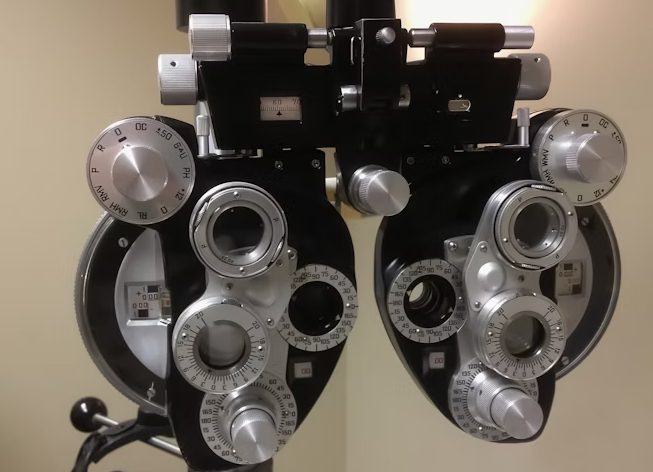
Eye care has undergone significant changes over the last decade. What once relied heavily on manual testing and visual checks is now guided by advanced medical technology. Today, specialists in …
Posted Dec 15, 2025 Ophthalmology
Connecting innovation decision makers to authoritative information, institutions, people and insights.

Medigy accurately delivers healthcare and technology information, news and insight from around the world.
Medigy surfaces the world's best crowdsourced health tech offerings with social interactions and peer reviews.
© 2026 Netspective Foundation, Inc. All Rights Reserved.
Built on Apr 2, 2026 at 12:49pm