

Managing Editor
@ShahidNShah
@ShahidNShah
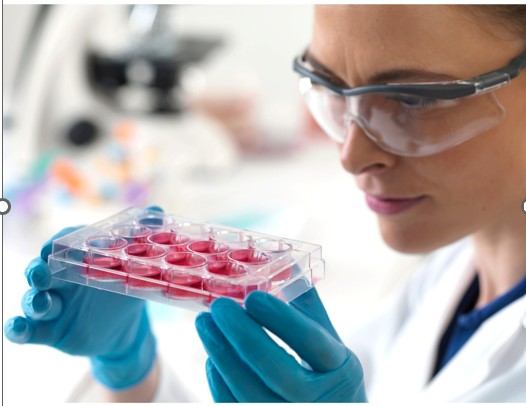
Antibody discovery has shifted from a largely linear process into a data-driven discipline built around scale, comparison, and early decision-making. Instead of advancing a small number of candidates in sequence, research teams can now generate and evaluate broad antibody panels in parallel. This change has less to do with speed alone and more to do with improving the quality of early choices, when uncertainty is highest.
Modern antibody discovery services support this transition by integrating diverse discovery technologies with structured screening strategies. Their role is not simply to produce antibodies, but to help researchers determine which candidates are most likely to perform well in downstream research applications. This article examines the core technologies behind antibody discovery services, how screening strategies are designed, and where these platforms add the most value across research workflows.
Early antibody discovery once focused primarily on identifying binders with acceptable affinity. While binding remains an important starting point, it is no longer sufficient on its own. Researchers now need early insight into specificity, functional relevance, and basic technical behavior to avoid advancing candidates that fail later.
Antibody discovery services have evolved to reflect these needs. Rather than separating discovery from screening, many platforms are designed to generate leads and evaluate them within a single workflow. This integration produces datasets that are easier to compare and interpret, which becomes increasingly important as candidate numbers grow.
No single discovery technology is suitable for every target or research objective. Most antibody discovery services rely on one or more complementary platforms, selected based on antigen characteristics, biological context, and project timelines.
Display technologies, such as phage display, remain widely used for in vitro antibody discovery. Their main strength is flexibility. Selection conditions can be adjusted to favor specific binding profiles, competition behavior, or antigen presentation formats.
These platforms are especially useful when antigen-specific B cells are unavailable or when targets are difficult to immunize. Display-based workflows also scale efficiently and integrate well with sequencing-based analysis, helping reduce redundancy while maintaining antibody diversity during lead selection.
Single B cell discovery works by isolating human B cells that recognize a specific antigen and recovering their naturally paired heavy and light chain sequences. High-throughput workflows typically involve antigen labeling, cell sorting, sequencing, rapid antibody expression, and functional screening.
This approach is particularly useful when immune history is important, such as after infection or vaccination. Preserving natural antibody pairing, it offers clearer insight into epitope recognition and specificity, especially when supported by sequencing data.
Transgenic animals designed to produce human antibodies provide a biologically driven approach to antibody discovery. Antibodies generated in these systems undergo in vivo affinity maturation, which can be beneficial for certain targets.
Although these platforms can produce high-quality leads, they are not suitable for every project. Factors such as development timelines, target immunogenicity, and experimental constraints determine whether a transgenic approach is the right choice.
Discovery technology alone does not determine success. The screening strategy plays an equally important role in determining which candidates advance.
Effective antibody discovery services use multi-stage screening strategies that go beyond basic binding tests. Early screens typically assess affinity and specificity, while later stages examine functional activity, cross-reactivity, and key indicators of developability.
Functional screening is particularly important. Antibodies that bind strongly do not always modulate biological pathways in the intended way. Aligning screening assays with the expected mechanism of action helps reduce the risk of advancing candidates that perform well in simplified systems but fail in more relevant contexts.
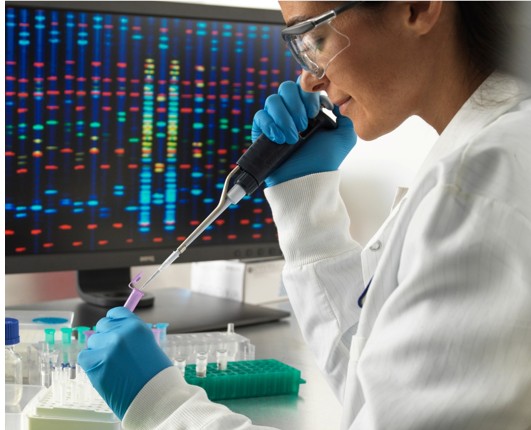
High-throughput discovery can generate large numbers of antibody candidates, but volume alone does not guarantee value. Without careful redundancy management, discovery efforts can become inefficient and difficult to interpret.
Antibody discovery services often apply sequence analysis, clustering, and enrichment tracking to reduce redundancy early in the process. This helps focus screening efforts on diverse candidates instead of testing related clones. Maintaining diversity at this stage provides greater flexibility when unexpected findings arise later in development.
Antibody discovery services support a wide range of research applications, particularly those that benefit from comparative evaluation.
In immuno-oncology, broad antibody panels enable exploration of different epitopes and functional mechanisms. In infectious disease research, discovery services help rapidly identify antibodies with different neutralization profiles. In autoimmune and inflammatory studies, early specificity screening is important when targets belong to closely related protein families. Diagnostic development also relies on discovery services to find antibody pairs that perform consistently across different sample types.
Across these applications, the primary advantage is not speed alone, but clarity. Structured discovery and screening reduce uncertainty at early decision points.
When evaluating antibody discovery services, it is more useful to consider how decisions are supported rather than which technologies are offered. Important factors include how screening stages are structured, whether functional assays reflect the intended biology, and how technical risks are identified early in the process. Equally important is how results are delivered. Clear, comparable datasets make it easier for research teams to rank candidates and understand trade-offs rather than relying on isolated readouts.
Data from antibody discovery services should always be interpreted in light of the platform used and how the screening was designed. No discovery system can fully capture biological complexity, so early results are best treated as guidance rather than final answers.
Best practice is to combine discovery data with complementary assays, confirm findings in biologically relevant models, and clearly document assumptions and limitations. When applied this way, antibody discovery services provide a solid foundation for confident downstream research and development.
Modern antibody discovery generates more data and more options than ever before. The challenge for research teams is no longer access to antibodies, but the ability to interpret early results and make confident decisions about which candidates to advance. Technologies and screening strategies only add value when they are integrated into workflows that prioritize comparison, relevance, and clarity.
Well-designed antibody discovery services help researchers manage this complexity by combining multiple discovery approaches with structured screening and clear data interpretation. By prioritizing the quality of early decisions over the volume of outputs, these services enable more efficient research progress and reduce uncertainty at critical early stages.

Chief Editor - Medigy & HealthcareGuys.
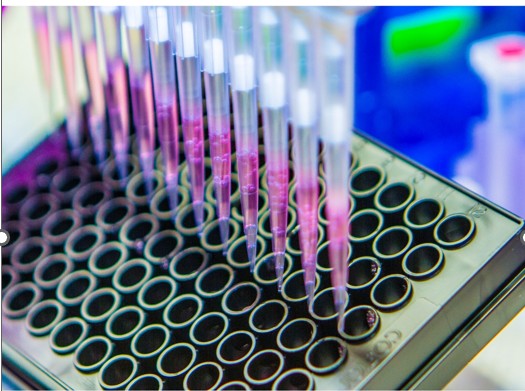
Enzyme-Linked Immunosorbent Assay (ELISA) is a plate-based laboratory technique used to detect and quantify specific proteins, antibodies, hormones, or other molecules in a sample. This method relies …
Posted Mar 22, 2026 Clinical / Medical Research Fundamental Technologies
Connecting innovation decision makers to authoritative information, institutions, people and insights.

Medigy accurately delivers healthcare and technology information, news and insight from around the world.
Medigy surfaces the world's best crowdsourced health tech offerings with social interactions and peer reviews.
© 2026 Netspective Foundation, Inc. All Rights Reserved.
Built on Mar 23, 2026 at 3:29pm