

Managing Editor
@ShahidNShah
@ShahidNShah
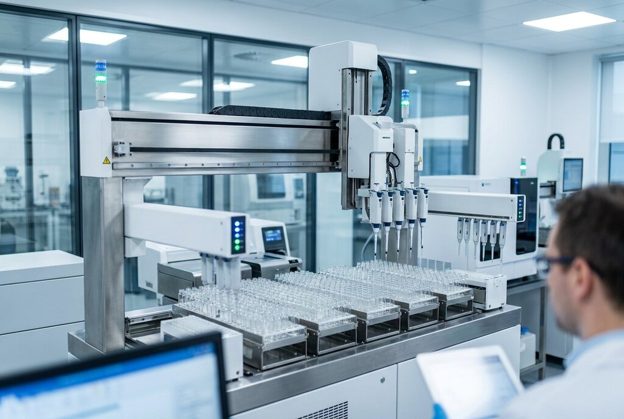
High-resolution column separation, automated sample preparation, advanced filtration, interoperable software interfaces, and scalable analytical setups enable instant disease detection.
They provide artificial intelligence and electronic health record systems with the flawlessly structured biological data they require to diagnose patients accurately.
Digital health platforms promise unprecedented speed and precision, but that promise is only as durable as the physical and chemical data entering the system. Before a diagnostic confidence interval reaches an AI dashboard, it must be generated accurately at the analytical level.
These five analytical technologies represent the hardware and software bridge that makes rapid, reliable disease detection analytically defensible.
Whether you are a clinician evaluating a diagnostic tool or a health IT professional assessing data pipelines, the upstream analytical layer shapes every downstream clinical outcome.
By utilizing solutions from industry leaders like Restek, laboratories ensure that selecting the right high-performance chromatography equipment allows testing facilities to generate clean, consistent biological inputs.
Chromatography remains the gold standard for separating and quantifying biological compounds within complex biological matrices.
In the context of digital health, these precise chemical separations represent the critical infrastructure where clinical-grade molecular data is produced.
AI-driven diagnostic models and electronic health record decision tools require highly structured, high-resolution datasets with documented reproducibility to function effectively.
Chromatographic analysis provides one of the most reliable pathways to generating that baseline data.
For instance, the hemoglobin A1c is considered a gold standard test for diagnosing diabetes and is routinely measured using liquid chromatography.
Over the past decade, this analytical technique has evolved from an isolated laboratory function into a fully integrated component of digital health infrastructure.
It now feeds laboratory information management systems, informs massive AI training datasets, and enables the longitudinal patient profiling required for personalized medicine.
The rigorous reproducibility standards shaping clinical diagnostics were validated over decades in pharmaceutical quality control and environmental testing.
These industries are places where batch-to-batch analytical consistency has long been a regulatory requirement and a patient safety issue.
To maintain this consistency, laboratories increasingly rely on secondary reference standards that are traceable to national institutes.
Here are five specific innovations in analytical technology that are quietly accelerating the digital diagnostics revolution. Understanding each one reveals what it means for the reliability of the disease detection tools reshaping clinical practice.
Early disease detection using AI depends on identifying subtle, compound-level deviations in a patient biomarker profile.
However, when the chromatographic data feeding those AI models contains co-eluting peaks or ambiguous compound identities, the algorithm inherits that uncertainty.
Signal noise from column bleed amplifies this issue across thousands of patient records.
High-resolution separations are not an optional refinement in clinical contexts because they are a prerequisite for building AI training datasets that hold their validity over time.
Gas chromatography and liquid chromatography generate the compound-specific, quantitative data that machine learning models require for pattern recognition. Peak resolution and signal-to-noise ratios are not merely instrument performance metrics.
They are data quality variables that determine how cleanly a biomarker profile maps to a diagnostic category. Ultra-low bleed column technology reduces the chemical noise that would otherwise corrupt these critical datasets.
AI models trained on one analytical dataset must remain valid when applied to subsequent sample runs.
Longitudinal patient data in integrated systems depends on the analytical column performing identically across months or years of use.
Vertically integrated manufacturing that controls production from raw fused silica to finished column makes this consistency achievable at a clinical scale.
Recent peer-reviewed literature confirms that cleaner data inputs yield highly defensible diagnostic results at the point where AI meets patient care.
| Warning/Important: AI algorithms are only as reliable as their training data. Signal noise from column bleed or co-elution can lead to false positives, corrupting the long-term validity of your diagnostic models. |
High-volume telehealth labs operate under intense time and consistency pressures that manual sample preparation cannot sustainably meet at scale. Inconsistent sample prep is not just a laboratory efficiency issue, but rather a fundamental data pipeline problem.
Research indicates that biospecimen preanalytical variability can significantly hinder the development of predictive biomarkers.
Variability introduced at the extraction stage propagates through instrument response and directly into the structured datasets exported to cloud analytics platforms.
Originally designed for agricultural testing, automated extraction methodologies have evolved into a comprehensive design philosophy for high-throughput analytical standardization.
Automated kits reduce operator-to-operator variability, shorten preparation time, and produce extract quality that meets rigorous input specifications.
For health IT professionals, the primary benefit is flawless data consistency across the board. Standardized extracts produce predictable chromatographic outputs that map cleanly to structured data formats used in cloud environments.
When every sample enters the instrument under the exact same preparation conditions, the dataset the platform receives is inherently comparable and auditable.
Laboratories supporting remote patient monitoring at scale face the same standardization imperative that pharmaceutical labs addressed years earlier.
Ultimately, a sample preparation protocol that can be replicated identically across diverse laboratory locations is essential. It provides the structural foundation on which geographically distributed diagnostic networks are built.

Machine learning models utilized in personalized medicine are meticulously calibrated to detect subtle compound-level variations indicative of highly individual patient profiles.
Unfortunately, particulate contamination or filter-leachable chemical artifacts introduced during sample prep can create false signals.
A spurious peak caused by a filter membrane artifact can easily trigger a false positive in a diagnostic algorithm. It can also suppress a genuine biomarker signal beneath a noise threshold, carrying severe patient safety implications in personalized medicine.
Syringe filtration plays a critical role in protecting both the analytical instrument and the integrity of the data it generates.
Particulate matter shortens column life and contaminates sensitive detector sources, making filter chemistry a fundamental data quality decision. Different membrane materials interact differently with biological matrices and can leach plasticizers or extractables into the sample.
Selecting the appropriate filter for a specific application is a vital analytical validity choice.
Targeted sample preparation tools offer specialized cleanup capabilities for the complex biological matrices frequently encountered in modern diagnostics.
Clean, artifact-free inputs substantially reduce noise in training and validation datasets, directly improving model sensitivity and specificity.
These are the two primary performance metrics that dictate whether a personalized medicine diagnostic tool can be trusted in clinical deployment. Filtration integrity marks the difference between a patient’s genuine molecular signature and a contaminated approximation of it.
| Key Insight: Filter selection is a critical data quality decision. Artifacts from improper membranes can mimic biological markers, leading AI to generate incorrect patient profiles in personalized medicine applications. |
The interoperability gap between analytical instruments and clinical decision systems is not purely an IT integration challenge. It begins with exactly how chromatographic data is structured, exported, and validated at the software level.
A chromatogram that requires significant post-run manual correction introduces undocumented variability into the dataset that the management system receives.
Downstream clinical decisions then inherit that variability without any visibility into its source.
Chromatography-native software actively contributes to data standardization by generating inherently structured and reproducible analytical outputs.
The dynamic between a laboratory management system and an electronic health record depends entirely on consistent data formats.
This data must be auditable in origin and machine-readable without manual transformation. Method development software that accurately models chromatograms before runs even occur significantly reduces post-run data correction.
This ensures the data arriving at the interface is exceptionally clean, directly usable, and backed by a traceable validation history.
Clinical and pharmaceutical labs operating under regulatory review require thoroughly documented method validation. Software tools that generate auditable method records minimize friction in regulatory review and audit trail requirements.
Interoperable, software-validated chromatographic outputs reduce the manual data transformation steps between the instrument and the clinical decision.
| Pro Tip: Reduce manual data correction by using modeling software like Pro EZGC. Structured, software-validated outputs streamline LIMS integration and minimize the manual errors that often delay clinical reporting. |
Rapid and accurate identification of infectious agents is foundational to the point-of-care diagnostic tools that push results directly into digital health platforms.
However, speed without analytical consistency produces results that clinicians simply cannot reliably act on. Distributed diagnostic networks spanning hospital systems and regional testing centers require standardized analytical methods.
These methods must be deployed consistently across wide geographic locations without any risk of method drift.
Scalable chromatography setups seamlessly support the rigorous analytical demands of rapid pathogen screening, where turnaround time is a vital clinical variable.
When the same column format performs identically across diverse instrument platforms in different locations, the diagnostic method produces universally comparable results.
Column technology designed specifically for rapid throughput applications ensures that extreme resolution and speed can coexist without compromising data integrity.
This batch-to-batch consistency allows point-of-care results to be integrated into a unified electronic system without requiring site-specific calibration corrections.
When scalable and reproducible analytical testing connects to a digital platform capable of transmitting results in near-real time, the true promise of digital health is realized.
Instant disease detection becomes analytically defensible not simply because the technology has moved faster, but because the data it carries has become trustworthy.
Taken together, these innovations describe not just a set of laboratory tools but a new kind of analytical infrastructure. This robust system is quietly becoming the load-bearing foundation of the entire digital diagnostics revolution.
The five innovations explored here are deeply constitutive of modern digital health infrastructure rather than merely adjacent to it.
The AI model, the integration platforms, and the personalized medicine algorithms are all downstream expressions of vital decisions made at the analytical hardware level.
Investing in the analytical foundation of digital health is not a separate laboratory concern but a critical investment in diagnostic reliability.
Clinicians and health IT professionals who understand this deep connection are much better positioned to evaluate and procure effective diagnostic tools.
Chromatography is an actively evolving contributor to AI and telehealth infrastructure that has been validated by decades of regulatory-grade performance. As diagnostic platforms continue to scale, examining the upstream analytical layer of these digital health tools becomes increasingly essential.
Accessing comprehensive application note libraries and scientific support resources provides critical technical context for understanding exactly how these platforms function.
The convergence of analytical precision and digital innovation demands rigorous data integrity from everyone building or deploying diagnostic technology.
| Author Profile: Restek is a specialized manufacturer and supplier of chromatography consumables and analytical testing solutions, operating since 1985. |


Making the decision to enter addiction treatment is life-changing, but it is entirely normal to feel terrified about what comes next. Fear of the unknown keeps thousands of people from getting the …
Posted Apr 30, 2026 Rehabilitation Addiction
Connecting innovation decision makers to authoritative information, institutions, people and insights.

Medigy accurately delivers healthcare and technology information, news and insight from around the world.
Medigy surfaces the world's best crowdsourced health tech offerings with social interactions and peer reviews.
© 2026 Netspective Foundation, Inc. All Rights Reserved.
Built on Oct 14, 2026 at 5:06am