

Managing Editor
@ShahidNShah
@ShahidNShah
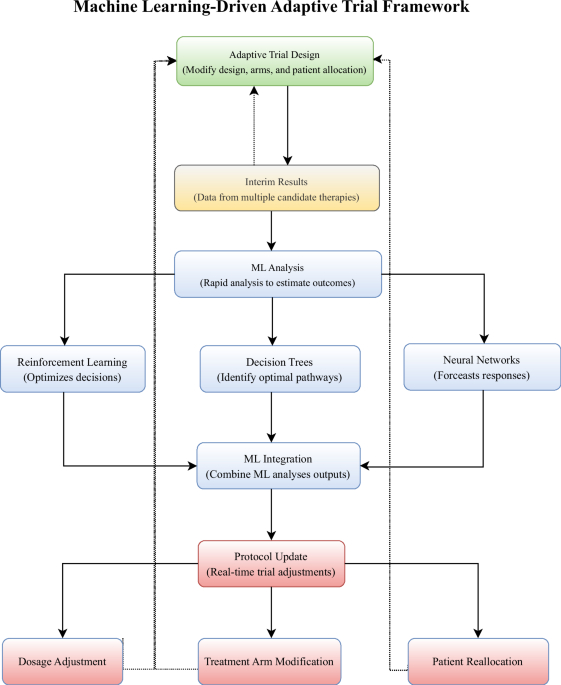
Clinical Trials (CTs) are the gold standard in evidence-based medicine, but their successful design and implementation face several challenges. Substantial operational costs associated with a well-executed CT are a barrier to entry for many therapies. Despite feasibility efforts, many trials struggle with accrual. Elaborate protocols and stringent eligibility criteria impede the efficiency of participant identification and recruitment. For trials that do complete enrollment, patient cohorts may not be representative of the broader real-world patient populations that may benefit from the trial treatments. Moreover, the public’s perception of CTs—complicated by the complex terminology and schedule of events—can lead to hesitancy in enrolling or maintaining adherence. Thus, there is a pressing need for innovative solutions. Advances in Artificial Intelligence (AI) algorithms, including machine learning (ML) and Large-Language Models (LLMs), together with high-performance computing, hold significant potential to disrupt the status quo.
AI‑driven tools can broaden eligibility criteria, optimize participant matching, enable real‑time protocol adjustments, and simulate in‑silico trials, helping make clinical research more efficient, inclusive, and cost‑effective while improving representation of diverse U.S. patient populations.
Continue reading at nature.com

Modern healthcare domain incorporates a feature of digital accessibility to ensure seamless flow of online services for the patients. However, this feature of digital accessibility poses a challenge …
Connecting innovation decision makers to authoritative information, institutions, people and insights.

Medigy accurately delivers healthcare and technology information, news and insight from around the world.
Medigy surfaces the world's best crowdsourced health tech offerings with social interactions and peer reviews.
© 2026 Netspective Foundation, Inc. All Rights Reserved.
Built on Mar 27, 2026 at 12:44pm
