

Managing Editor
@ShahidNShah
@ShahidNShah

Artificial intelligence (AI) is rapidly reshaping the landscape of health care, from clinical diagnostics and disease surveillance to the prediction of individual health risks. Yet, its immense promise will only materialize if the tools we deploy work for everyone. Algorithms trained on incomplete or biased datasets risk embedding historical health disparities and can replicate patterns of uneven data representation, thereby limiting accuracy and generalizability across population groups. Addressing algorithmic bias should be treated as a core health quality standard, comparable in importance to safety and efficacy evaluations, to ensure consistent performance across all segments of the population.
The study highlights that bias in AI systems can undermine public health decisions, emphasizing the need for bias-mitigated AI to build more reliable and resilient healthcare systems.
Continue reading at publichealth.jmir.org
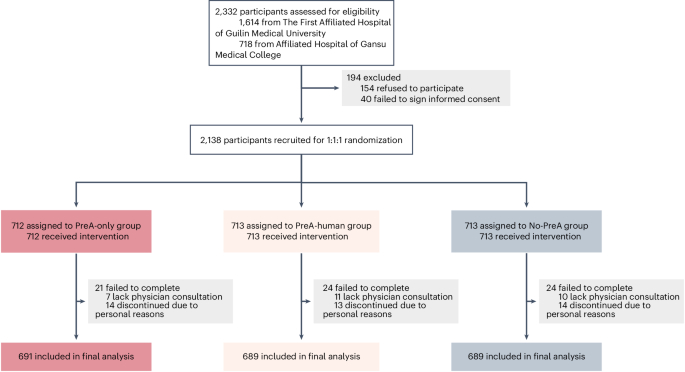
Patient-facing large language models (LLMs) hold potential to streamline inefficient transitions from primary to specialist care. We developed the preassessment (PreA), an LLM chatbot co-designed with …
Connecting innovation decision makers to authoritative information, institutions, people and insights.

Medigy accurately delivers healthcare and technology information, news and insight from around the world.
Medigy surfaces the world's best crowdsourced health tech offerings with social interactions and peer reviews.
© 2026 Netspective Foundation, Inc. All Rights Reserved.
Built on Mar 26, 2026 at 3:36pm
